Are you a disaster survivor looking for help? Click here
This Week in Disasters
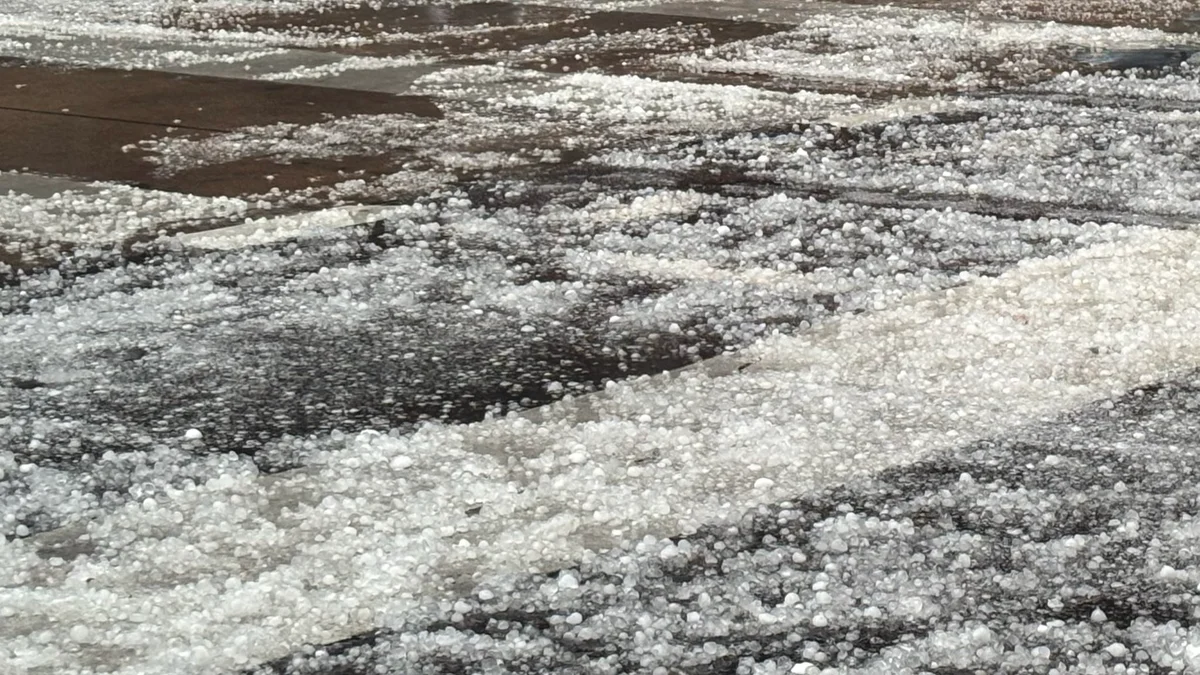
Source: Hail in Denver. Source: cchristinachen/X
Plus: The discipline Chauncia Willis-Johnson built to catch the failures nobody intends.
Welcome back to This Week in Disasters! This newsletter combines expert perspectives with a weekly roundup of upcoming threats, recent natural disasters, and available survivor assistance. If you’re a Risk, Insurance, Employee Assistance, NGO or Emergency Management professional (or you’re just really curious about disasters in the United States!) you’re in the right place.
Major Disasters of the Last Week
Golf ball-sized hail struck the Denver metropolitan area and eastern Colorado on June 1, with hailstones reaching 1.75 inches in northwest Denver and 2-inch hail recorded along the eastern plains near Strasburg. The storm caused extensive damage to vehicles and structures, marking the largest hail recorded in the county in 35 years. Read more. |
A severe thunderstorm with winds of 60–75 mph swept through northeastern Elbert County on Monday, downing numerous trees and causing structural damage to residential and institutional buildings, including the roof of New Bethel United Methodist Church. The storm hit the Rock Branch community with widespread tree damage in yards and on homes. Read more. |
The Seven Cabins Fire in New Mexico's Capitan Mountains was the nation's largest active wildfire this week, spreading across 31,867 acres and reaching about 64% containment as of June 4, with crews burning out land to slow its advance and forest closures still in place across Lincoln County. The fire started May 14 from a medical-transport plane crash near Ruidoso. Read more. |
Forecasted Risks for Next Week
A multi-day severe storm threat sets up across the Plains and Midwest this weekend. Large hail and damaging winds are expected from the central Plains into the mid-Missouri and mid-Mississippi Valleys Friday evening, then shift to the upper Ohio Valley, Northeast, and northern High Plains on Saturday and the northern Plains on Sunday, where very large hail is possible.
Heat returns to the Plains and Midwest midweek. A building ridge should push temperatures well above normal from the Plains through the Mississippi and Ohio Valleys and into the Great Lakes around June 10–11, and it's early enough in the season that few people are acclimated to it yet.
Strong winds across the West Coast and interior late next week. Coastal California and the Pacific Northwest face a wind event around June 10–12; layered over fuels that are already cured, it elevates near-term fire-weather risk.
Fire potential continues to build across the Southwest and Rockies. Above-normal significant fire potential is expanding into the Southwest, the Front Range, Northern California, and the Inland Northwest as heat dries fuels, with the season already running well ahead of its typical June pace.
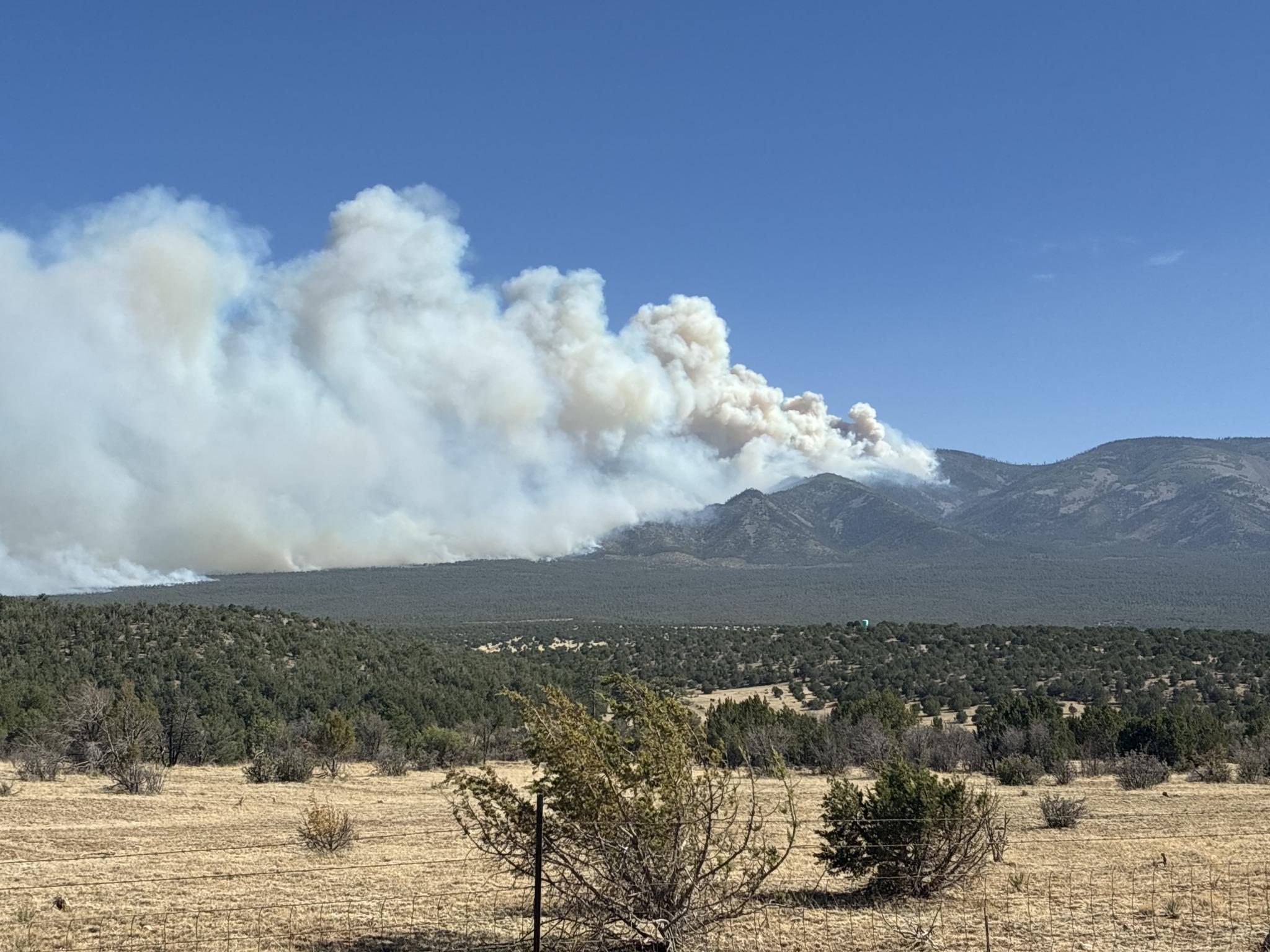
Seven Cabins Fire. Source: Inciweb
Disasters in the Headlines
AI improves flood projections under climate change
Get Ready for a Smoky Summer
Natural-Disaster Insurance Gap Now Exceeds $420 Billion Globally
A Helpful Resource
The Resiliency Companyhas released "Rebuilding with Resilience," a practical guide for homeowners, architects, and builders to design and rebuild fire-safe homes, grounded in IBHS evidence-based standards and validated by post-fire investigations. Developed for Los Angeles with nationwide application, the manual translates wildfire safety science into concrete design decisions. You can read it here.
PRO PERSPECTIVE
Disaster Equity Was Never a Slogan. She Made It an Operation

When the United States rolled out COVID vaccines, it placed many of the centers in places urban residents could not easily or safely reach. Then it screened recipients by whether they had traveled internationally. The people who had never boarded a plane but rode crowded buses to work were the ones getting exposed, and they died at higher rates. No one designed that outcome. It came from a plan that worked for most people and missed everyone else.
Inequity in disaster recovery is rarely intentional. It is an operational accident, a default no one stopped to question. "Even in something where you didn't intend to do anything that would have an inequitable outcome, it still had a very inequitable outcome that resulted in lives lost," says Chauncia Willis-Johnson, co-founder of the Institute for Diversity and Inclusion in Emergency Management and the person many colleagues call the godmother of disaster equity.
Catching that kind of failure before it costs lives takes more than good intentions. It takes discipline, and Willis-Johnson has spent about 26 years building it. "There was no conversation [on equity]" she says. "We started the conversation." What began as a conversation is now an operating discipline.
Reading behavior before reading the map
The discipline has a specific root. Willis-Johnson came up through psychology, and it still drives her method. "A lot of what we do is based on the study of human behavior," she says. That lens is why she catches the gaps a logistics plan misses. When a jurisdiction stages every resource in one neighborhood and tells residents to come get it, the plan looks efficient on paper. "It never considers that everyone doesn't have a car," Willis-Johnson says. It does not consider that not everyone is safe or welcome walking into that neighborhood. The map says the aid is available. Behavior says half the people cannot reach it.
Before the trucks roll
That behavioral read is why her work starts before arrival, not after. Her equity response teams collect data on a community and build profiles of it before anyone deploys, identifying who is most likely to be ignored: tribal and indigenous groups, residents who do not speak English, the elderly. In the early days, the work was even more upstream. Agencies asked her to write the job descriptions for the chief equity officers they wanted to hire, defining a role that barely existed. Equity is not a value statement. It is staffing, data collection, and profiling done before the disaster declaration, so the people who usually fall through are accounted for from the first hour.
The test that takes courage
Operations only matter if you check whether they worked. A full checklist is not proof. "Don't assume that just because you got a lot done on your checklist and you moved a lot of resources and money that you did a great job," she says. "Go back and ask the most overburdened, under-resourced community. And then you'll know. But that takes a lot of courage." The measure of a recovery is not what you moved. It is whether the people most likely to be missed say you reached them.
What travels and what doesn't
The same discipline reads differently abroad. Willis-Johnson took this interview from a new center of excellence in Ghana, and the global vantage sharpens the point. The United States, she says, is the best in the world at structure and order in emergency management, at restoring function and putting people and resources back into working condition after a disaster, which is why American experts get flown out to advise other countries. What does not export as cleanly is the instinct for equitable outcomes. She traces that to the country's founding: "The United States was built on an economy of subjugation, and it shows up." The competence is real. The default toward fairness is not, which is precisely why it has to be engineered into operations rather than assumed.
What survives the politics
Building equity into operations takes political will, and lately that will has thinned. The harder question is whether equity becomes a priority again. Willis-Johnson is honest about it. "I always have hope," she says. "I'm ever hopeful, but I do believe that the damage has been done and it is irreparable in so many ways." The government follows its own incentives, she adds: people prioritize what benefits them, and equity gets funded when it is in someone's interest to fund it.
What lasts is not in the government's hands. It is in the people who run recoveries. "Emergency managers know that we need to be looking out for the most vulnerable now," she says. "They know they need to plan for those who are suffering with no recourse for recovery." A vaccine center placed where the people who need it cannot reach it is now the kind of failure a trained emergency manager catches before it happens, whether or not the word equity is in favor. Willis-Johnson turned a value into a practice. A practice does not answer to an election.
Active Federal Major Disasters
There is usually a 60 day window to apply for help after a disaster is declared. The following disasters are still actively taking applications from survivors for financial support.
The following disasters are actively taking applications from survivors for financial support. To apply, survivors can visit DisasterAssistance.gov or call the FEMA Helpline at 1-800‑621‑3362.
Mississippi - Severe Winter StormSTATUS Major Disaster declared February 6, 2026; IA applications accepted in eligible counties until June 10, 2026. AFFECTED COUNTIES Adams, Alcorn, Attala, Benton, Bolivar, Calhoun, Carroll, Claiborne, Coahoma, DeSoto, Grenada, Holmes, Humphreys, Issaquena, Jefferson, Lafayette, Lee, Leflore, Marshall, Mississippi Choctaw Indian Reservation, Montgomery, Panola, Pontotoc, Prentiss, Quitman, Sharkey, Sunflower, Tallahatchie, Tate, Tippah, Tishomingo, Tunica, Union, Warren, Washington, Yalobusha, Yazoo |
Tennessee - Severe Winter StormSTATUS Major Disaster declared February 6, 2026; IA applications accepted in eligible counties until June 10, 2026. AFFECTED COUNTIES Benton, Carroll, Cheatham, Chester, Clay, Davidson, Decatur, Dickson, Dyer, Fayette, Hardeman, Hardin, Henderson, Hickman, Lewis, Macon, Madison, Maury, McNairy, Montgomery, Perry, Robertson, Rutherford, Shelby, Sumner, Trousdale, Wayne, Williamson, Wilson |
Washington - Severe Storms, Straight-line Winds, Flooding, Landslides, and MudslidesSTATUS Major Disaster declared April 7, 2026; IA applications accepted in eligible counties until June 10, 2026. AFFECTED COUNTIES Chehalis Indian Reservation, Chelan, Grays Harbor, King, Lewis, Lummi Indian Reservation, Muckleshoot Indian Reservation, Nisqually Indian Reservation, Nooksack Indian Reservation, Pacific, Pierce, Puyallup Indian Reservation, Quinault Indian Reservation, Samish (TDSA), Sauk-Suiattle Indian Reservation, Shoalwater Bay Reservation, Skagit, Snohomish, Squaxin Island Indian Reservation, Stillaguamish Indian Reservation, Swinomish Indian Reservation, Thurston, Tulalip Indian Reservation, Upper Skagit Indian Reservation, Whatcom |
Hawaii - Kona Low Weather SystemsSTATUS Major Disaster declared April 7, 2026; IA applications accepted in eligible counties until June 14, 2026. AFFECTED COUNTIES Hawaii, Honolulu, Maui |
Commonwealth of the Northern Mariana Islands - Super Typhoon SinlakuSTATUS Major Disaster declared April 23, 2026; IA applications accepted in eligible counties until June 22, 2026. AFFECTED COUNTIES Northern Islands, Rota, Saipan, Tinian |
[NEW] Crow Tribe of Montana - Severe Winter Storm and Straight-Line WindsSTATUS Major Disaster declared May 29, 2026; IA applications accepted in eligible counties until August 1, 2026 AFFECTED COUNTIES Crow Indian Reservation |
[NEW] San Carolos Apache Tribe - Severe Storms and FloodingMajor Disaster declared May 29, 2026; IA applications accepted in eligible counties until August 1, 2026 AFFECTED COUNTIES San Carlos Indian Reservation |
North Carolina - Flooding and Storm Damage from Tropical Storm ChantalSTATUS SBA disaster declaration approved July 26, 2025; applications open for residents and businesses in eight NC counties. The deadline to return economic injury applications has been extended to September 30, 2026. APPLY NOW AFFECTED COUNTIES Alamance, Caswell, Chatham, Durham, Granville, Orange, Person, Wake Counties |
Sign up for This Week in Disasters here.