This Week in Disasters
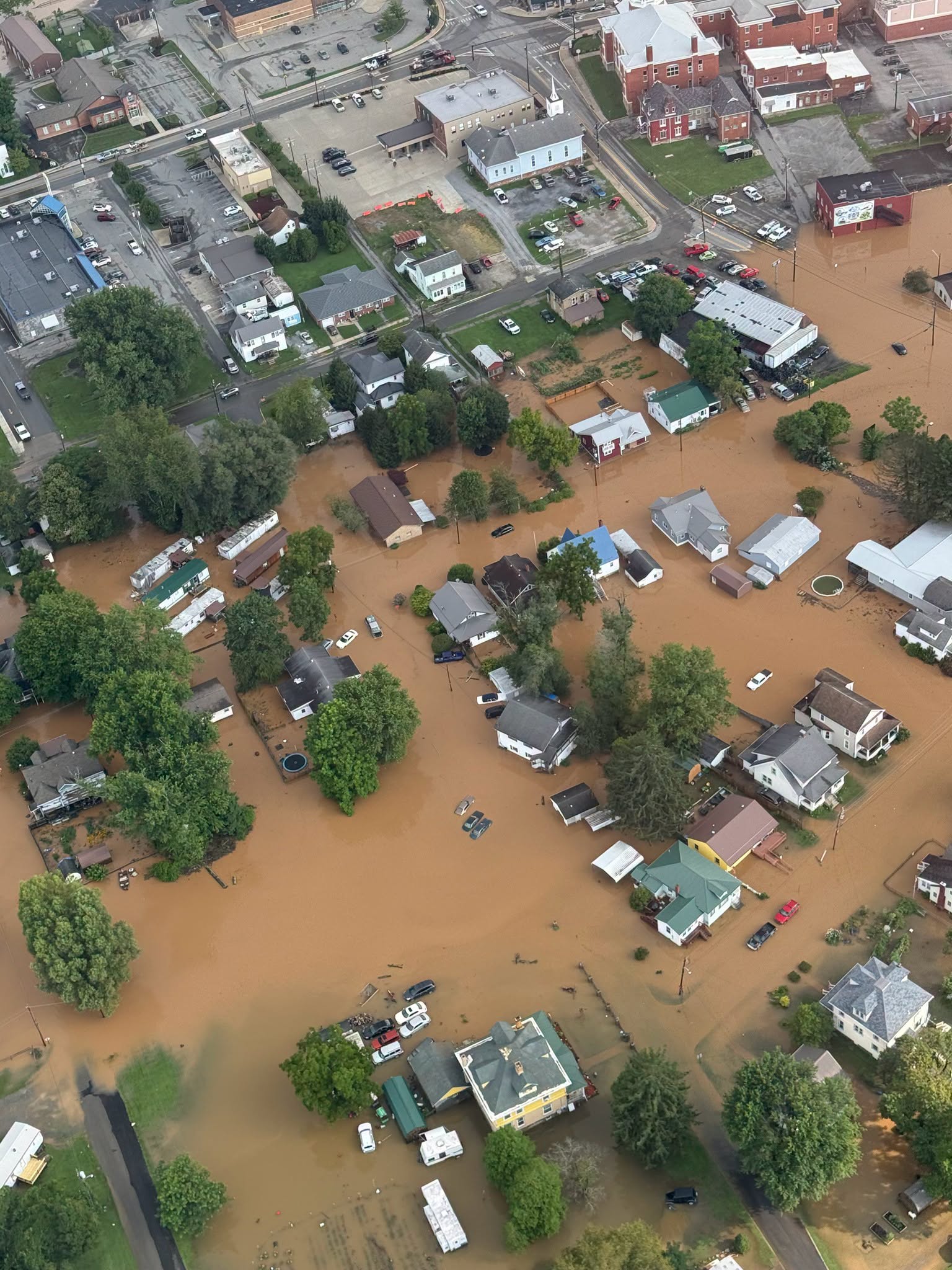
Flooding in West Virginia. Source: Office of Governor Patrick Morrisey
Plus, all 55 West Virginia counties are under emergency after flooding
Welcome back to This Week in Disasters! This newsletter combines expert perspectives with a weekly roundup of upcoming threats, recent natural disasters, and available survivor assistance. If you’re a Risk, Insurance, Employee Assistance, NGO or Emergency Management professional (or you’re just really curious about disasters in the United States!) you’re in the right place.
Major Disasters of the Last Week
Up to 7 inches of rain sent flash floods through central West Virginia on July 21, driving the Sand Run near Buckhannon to a record crest that broke the November 1985 mark. Gov. Patrick Morrisey declared a state of emergency for all 55 counties and deployed hundreds of National Guard members as crews carried out dozens of water rescues. Read more. |
A week after storms first hit, the Nueces River in Uvalde County was confirmed to have crested at a record 28.01 feet. Floodwaters destroyed part of the FM 481 bridge southwest of Uvalde, cutting the connection to Eagle Pass. Preliminary assessments identified damage to at least 490 homes and 100 businesses in Kerr County plus roughly 100 homes in neighboring Kendall County. The federal government approved an emergency declaration for the flooding on July 18. Read more. |
Tropical Storm Bertha, the season's second named storm, came ashore in southeastern Louisiana's St. Bernard Parish on July 22 before moving inland near the Texas-Louisiana border with maximum sustained winds near 45 mph. The system was forecast to drop 2 to 4 inches of rain, with isolated totals up to 6 inches, along the Texas coast and to raise water up to 2 feet in some coastal areas. Read more. |
Forecasted Risks for Next Week
Tropical Storm Bertha's remnants keep a rain and coastal-flooding threat along the upper Texas coast and into South Texas. Isolated flash flooding is possible in urban areas as the weakening system tracks inland through Friday.
A Moderate Risk of flash flooding covers coastal and central South Carolina and southeast North Carolina through Friday night. A stalled front is wringing out tropical moisture left behind by Bertha. Forecasters have raised the threat to Level 3 of 4 over already-wet ground.
Monsoon thunderstorms bring near-daily downpours and localized flash flooding to Arizona, New Mexico, Utah, and Nevada. Afternoon and evening storms are the main threat, with the fastest runoff over dry desert soils, canyons, and burn scars.
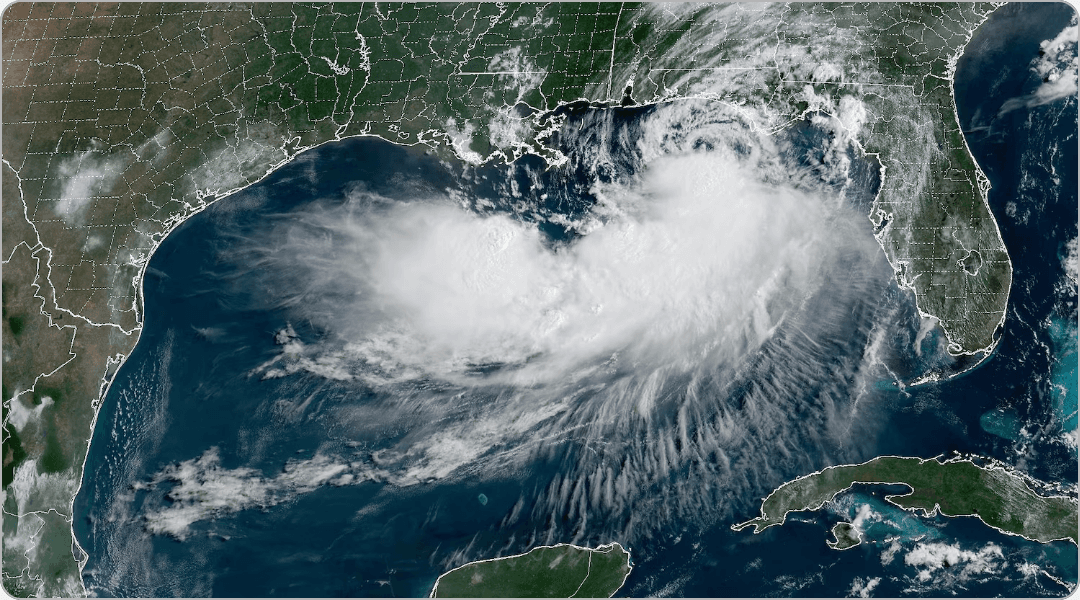
Tropical Storm Bertha. Source: NOAA
The AIDE Initiative
Weeks like this one, with record flooding in two states, are exactly the pressure a new initiative believes AI can help emergency managers meet. The frequency and intensity of natural disasters are increasing, threatening lives, livelihoods, and causing immense economic impacts. At the same time, state and local emergency management teams continue to face resource constraints. The AI for Disasters + Emergencies (AIDE) Initiative is an effort to leverage human-centered AI for public good to help emergency managers and communities better prepare for, respond to, and recover from natural disasters. To learn more about the Initiative and the upcoming AIDE Summit on September 8-9 in Austin, Texas, visit aideinitiative.org.
Disasters in the Headlines
July is flash flood emergency season now
Cameron Hamilton’s Nomination Advances as FEMA Begins Its Next Chapter
From Recovery to Resilience: What the ROAD Act Signals for CDBG-DR
25 states sue FEMA and DHS, accusing Trump administration of withholding funding
As Maui recovers from devastating fires, a study offers vision for new rural health model
PRO PERSPECTIVE
Recovery Is About Better Relationships, Not Bigger Checks
By: Marcus T. Coleman Jr., Vice President, Community Resilience Strategy, United Way Worldwide
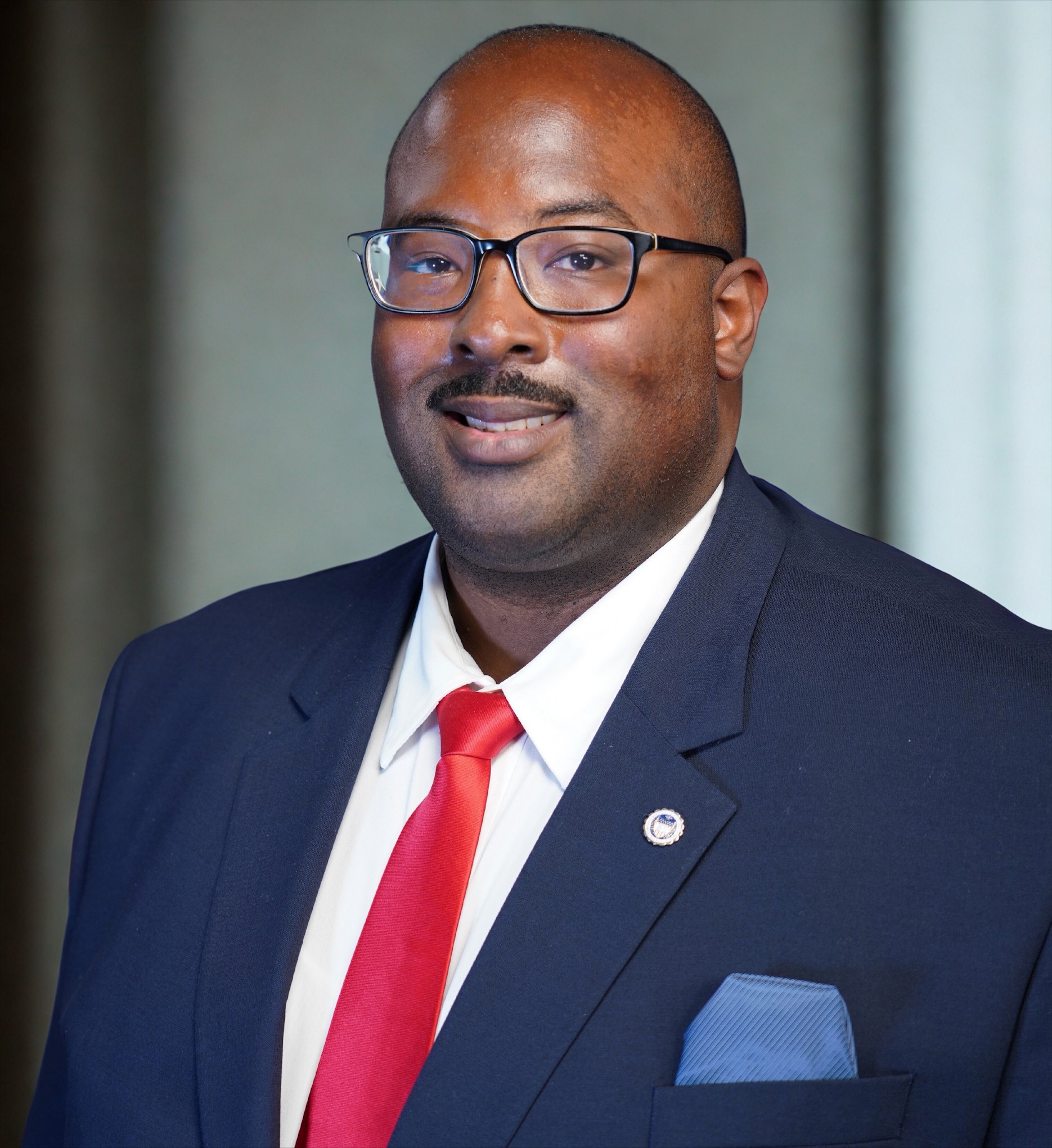
Back in February, Former FEMA Administrator and Bright Harbor’s President Pete Gaynor and I were joined by Melissa Hensley of NRG Energy at the Granting Hope Summit hosted by our friends at the Emergency Assistance Foundation when a corporate social responsibility leader asked a simple question:
"Where do we fit?"
I've been thinking about that question ever since.
Over the last several months, we’ve spent time with corporate leaders, emergency managers, nonprofit executives, funders, and community organizations. What I'm seeing is encouraging. More people are starting to recognize that recovery isn't mainly a funding challenge. It's a coordination and relationship challenge.
In May, I joined a conversation at the U.S. Chamber Foundation's Building Resilience Conference with leaders from Walmart Foundation, Feeding America, and UnidosUS. During the discussion, Dr. Marvin Carr-Ligons from Walmart Foundation shared that their disaster work, hunger work, and social connection efforts had largely been operating separately, even though they all sat within the same organization.
That stuck with me because it reflects a larger reality. Organizations are often organized around programs. Communities aren't.
As the team at Bright Harbor knows, when someone's life has been turned upside down by a disaster, they don't experience housing, food, transportation, employment, and mental health as separate issues. They're all connected. Recovery has always worked that way, whether our systems were built that way or not.
I saw the same thing a month later in Bentonville, where emergency managers, businesses, nonprofits, and government leaders gathered to talk about the future of disaster coordination. A few months earlier, many of us were still asking how our sectors fit together. In Bentonville, we were already starting to build something together.
That's an important shift. People are spending less time asking who owns the problem and more time asking how we solve it together. The more I do this work, the more convinced I become that resilience is about relationships.
Over the last year, I've spent a lot of time exploring how artificial intelligence can support community resilience. What has surprised me most is that its biggest value isn't automation. It's helping people make sense of complicated situations faster. That clarity is what pushes me to look further out.
What is today's problem telling us about six months from now?
The disaster itself is only part of the story. The bigger challenge is understanding what comes next, how today's decisions affect recovery, trust, and community stability months or years down the road. That became very clear during our work supporting earthquakes recovery efforts in Venezuela. The June 24 earthquakes were the events, but the recovery story started long before it and will continue long after the headlines fade.
That's also why I don't think technology changes the fundamentals. Technology, data, and funding all help. But trust matters more. The strongest lesson I've taken from both disaster work and resilience planning is that technology works best when it strengthens relationships and decision-making. It doesn't replace them.So when emergency managers ask what they should look for in nonprofit partners, I encourage them to check out FEMA’s Engaging Faith-Based and Community Organizations: Planning Considerations for Emergency Managers Guide and ask a few simple questions:
How do you share information with other organizations today?
What happens when a survivor needs help from multiple organizations at once?
How do you hand people off without making them start over?
The answers tell you a lot.
When organizations aren't connected, survivors end up paying the price. They tell the same story over and over. Different organizations collect the same information. Help arrives unevenly because nobody has the full picture. Most of the time, the problem isn't a lack of caring. It's a lack of coordination.
The same is true for survivor experience. People shouldn't need to become experts in the recovery system just to get help. The best systems are the ones where coordination happens behind the scenes and partners are already working together before a disaster occurs.
And then there are the handoffs. Over the course of recovery, survivors interact with government agencies, nonprofits, volunteers, businesses, contractors, and neighbors. When those handoffs don't work, survivors end up carrying the burden themselves. They become their own case manager, project manager, advocate, and navigator at the exact moment they're already overwhelmed.
The real test of preparedness isn't what gets said in a meeting. It's whether the relationships already exist. Can people pick up the phone and call each other? Have they worked together before? Do they trust each other enough to solve problems together when things get messy?
Because here's what I've learned: disasters don't create relationships. They reveal them.
The partnerships that matter most during a crisis are usually the ones built long before the crisis arrives. The earthquake in Venezuela didn't create new relationships between businesses, nonprofits, funders, and community leaders. It activated relationships that already existed. So when I think back to that question from February, "Where do we fit?", my answer today is pretty simple.
No single sector can do this alone. The communities that recover best are usually the ones that figured out how to work together before they had to.
Recovery isn't about bigger checks. It's about stronger relationships. And everything else gets easier when those relationships are already in place.
Active Federal Declared Disasters and Deadlines
There is usually a 60 day window to apply for help after a disaster is declared. The following disasters are actively taking applications from survivors for financial support. To apply, survivors can visit DisasterAssistance.gov or call the FEMA Helpline at 1-800‑621‑3362.
Crow Tribe of Montana - Severe Winter Storm and Straight-Line WindsSTATUS Major Disaster declared May 29, 2026; IA applications accepted in eligible counties until August 1, 2026 AFFECTED COUNTIES Crow Indian Reservation |
San Carolos Apache Tribe - Severe Storms and FloodingSTATUS Major Disaster declared May 29, 2026; IA applications accepted in eligible counties until August 1, 2026 AFFECTED COUNTIES San Carlos Indian Reservation |
Mississippi - Severe Storms, Straight-line Winds, Tornadoes, and FloodingSTATUS Major Disaster declared June 30, 2026; IA applications accepted in eligible counties until August 31, 2026 AFFECTED COUNTIES Franklin, Lawrence, Lincoln, Wilkinson |
Wisconsin - Severe Storms, Tornadoes, and FloodingSTATUS Major Disaster declared June 30, 2026; IA applications accepted in eligible counties until August 31, 2026 AFFECTED COUNTIES Bayfield, Brown, Buffalo, Jackson, Jefferson, Juneau, Kenosha, Manitowoc, Marathon, Milwaukee, Outagamie, Oneida Nation, Racine, Rock, Sauk, Vernon, Washington, Waukesha, Waupaca, Winnebago |
Michigan - Severe Storms, Tornadoes, and FloodingSTATUS Major Disaster declared June 30, 2026; IA applications accepted in eligible counties until August 31, 2026 AFFECTED COUNTIES Alcona, Allegan, Alpena, Antrim, Barry, Benzie, Charlevoix, Cheboygan, Crawford, Emmet, Grand Traverse, Gratiot, Iosco, Kalamazoo, Kalkaska, Manistee, Mecosta, Montcalm, Muskegon, Newaygo, Oceana, Osceola, Presque Isle, Roscommon, Saginaw, Washtenaw, Wexford |
Louisiana - Tropical Storm ArthurSTATUS Major Disaster declared June 30, 2026; IA applications accepted in eligible counties until August 31, 2026 AFFECTED COUNTIES Avoyelles, St. Landry, St. Tammany, Terrebonne |
North Carolina - Flooding and Storm Damage from Tropical Storm ChantalSTATUS SBA disaster declaration approved July 26, 2025; applications open for residents and businesses in eight NC counties. The deadline to return economic injury applications has been extended to September 30, 2026. APPLY NOW AFFECTED COUNTIES Alamance, Caswell, Chatham, Durham, Granville, Orange, Person, Wake Counties |
Sign up for This Week in Disasters here.