Are you a disaster survivor looking for help? Click here
This Week in Disasters
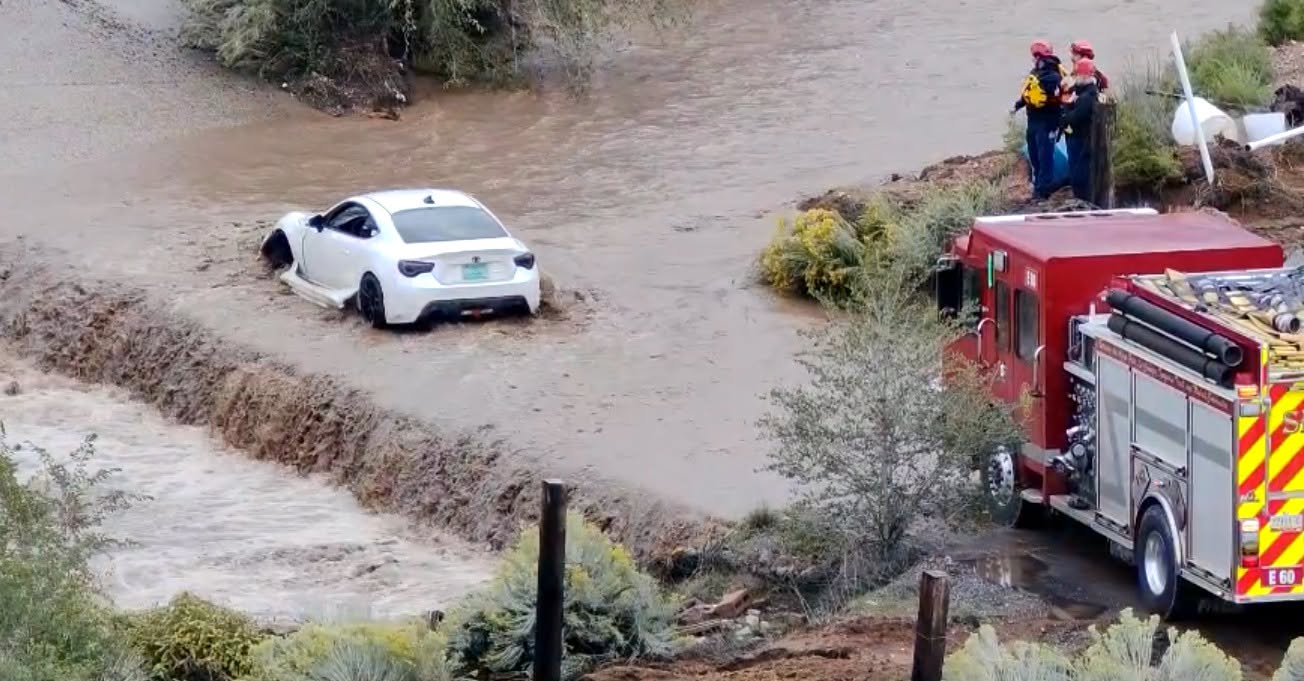
Source: Santa Fe Fire Department
Plus, the remnants of Polo and a nor'easter
Welcome back to This Week in Disasters! This newsletter combines expert perspectives with a weekly roundup of upcoming threats, recent natural disasters, and available survivor assistance. If you're a Risk, Insurance, Employee Assistance, or Emergency Management professional (or you're just really curious about weather in the United States!), you're in the right place.
If you want to receive exclusive news, updates, and job postings, sign up for This Week in Disasters here.
Major Disasters of the Last Week
Remnants of Hurricane Polo drove flash flood emergencies across southern New Mexico on September 29 and 30. Hatch Valley residents were urged to evacuate because McLeod Dam showed signs of failing, and floodwater breached levees near a water treatment plant in Rincon. Arizona authorities reported several water rescues. A flood watch covered 10 states as forecasters called for three straight days of moderate to excessive rainfall risk from the Southwest into the Plains. Read more. |
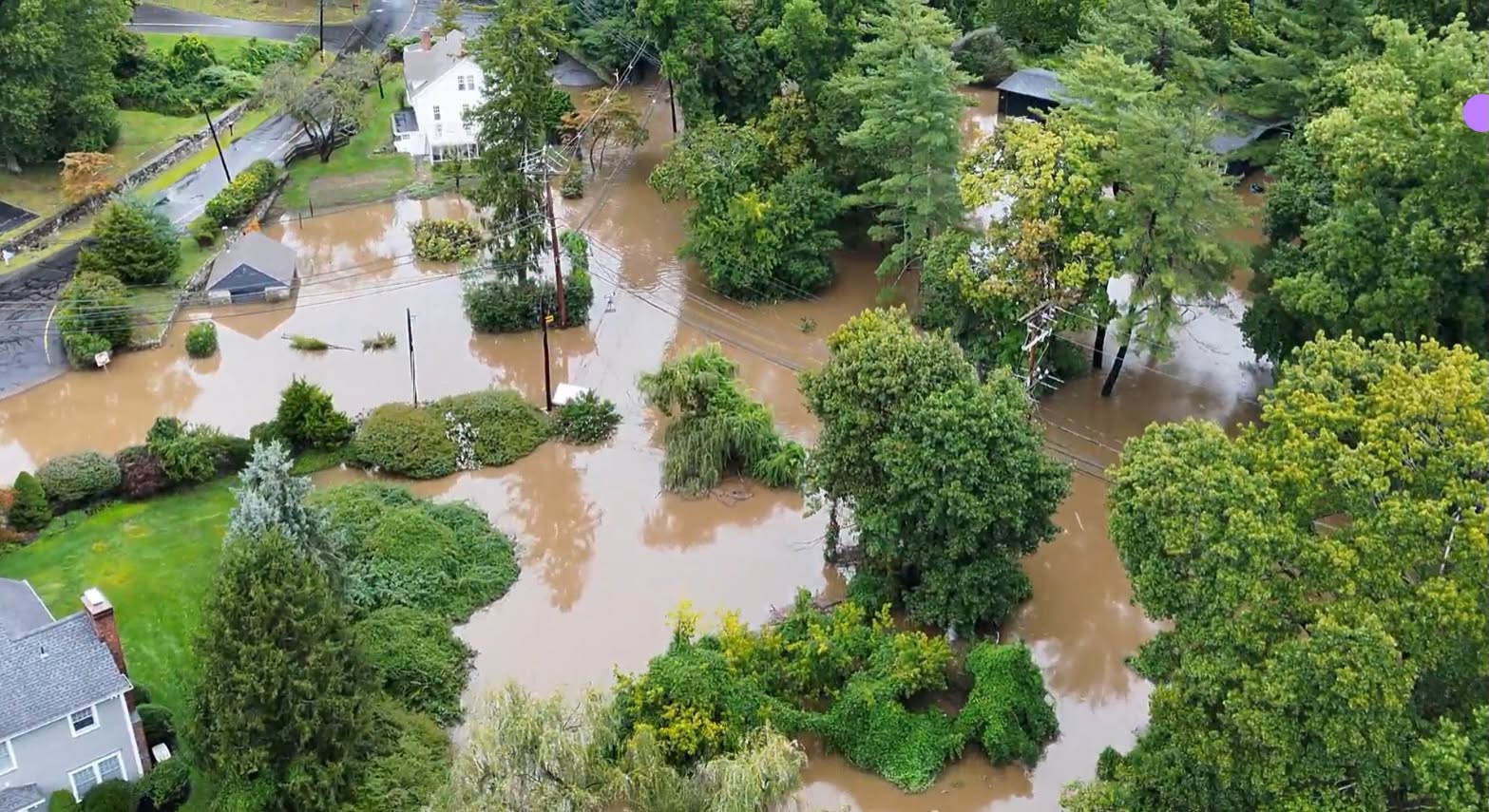
A powerful early-season nor'easter pounded the East Coast on September 26, toppling trees in New York City, flooding communities along the Jersey Shore, and knocking out power for tens of thousands across the Northeast and Mid-Atlantic. Leaders in New York and New Jersey declared states of emergency and urged residents to stay off the roads through the weekend. Read more. |
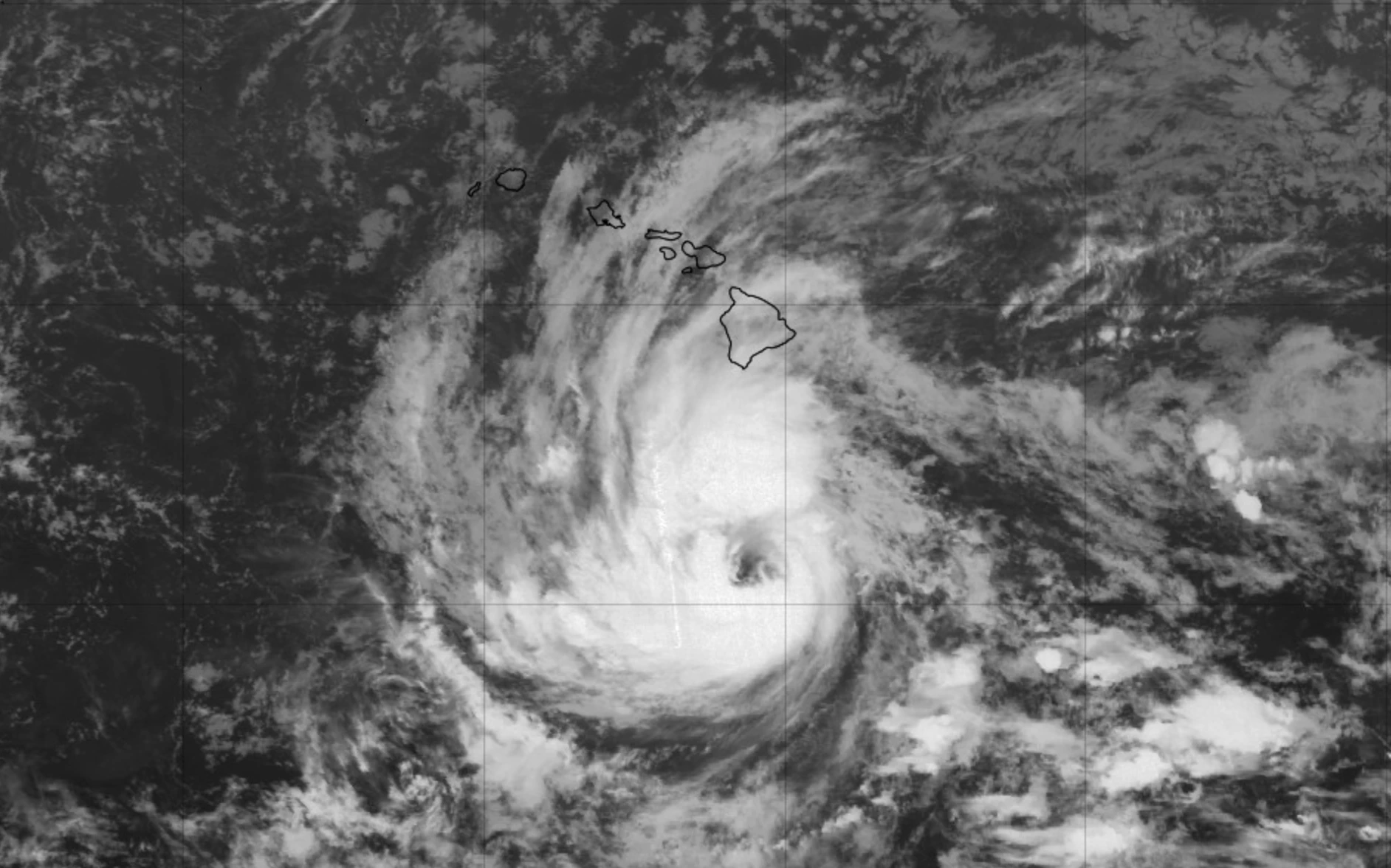
Hurricane Nolo passed within 150 miles of Hawaii's Big Island on September 26 and then stalled. Its outer bands dropped rainfall totals up to 17 inches at the island's highest elevations and closed roads, including a stretch of Highway 11 between Naalehu and Ninole. The storm never made landfall, but it was the fourth named system to bring heavy rain, wind, and large waves to Hawaii this hurricane season. Read more. |
Forecasted Risks to Watch for the Next Week
Hurricane Nolo is forecast to become a major hurricane Saturday as it passes south of Hawaii's Big Island. A Hurricane Watch is in effect for Hawaii County, with 15 to 30 inches of rain forecast for the island's eastern and southern slopes (isolated 35) and forecasters warning of catastrophic, life-threatening flooding and mudslides.
Heavy rain shifts to the Gulf Coast and Southeast this weekend into early next week. The Weather Prediction Center warns of a major excessive rainfall and flooding threat with tropical connections for the South and Southeast, as moisture from the Pacific feeds repeated rounds of storms along a stalled front.
Warm, dry weather raises fire potential across the West into mid-October. The Climate Prediction Center's outlooks give better than 80 percent odds of above-normal temperatures across much of the West for October 4 through 8, with below-normal precipitation favored from the Pacific Northwest through the northern Rockies into the following week.

The nor'easter. Source: NOAA
Disasters in the Headlines
"Millions who need flood insurance the most don’t have it as flawed federal program raises prices"
Assistance caps rise to $44,800 as FEMA redefines the field
PRO PERSPECTIVE
The United States Never Built a Disaster Management System

Shannon McNamee, Founder and CEO of River Mac and author of Strategic Disaster Coordination, has sat on shelter transition teams built from government, the Red Cross, NGOs, community groups, and faith communities, all working to help families find solutions to move out of emergency shelters after months inside them. The big programs built to help them, such as manufactured housing units, took 18 months to two years to deliver. Often, though, what got a family out of the shelter was something small a local group could offer that week: a bus ticket to a city where they had relatives, or a daily ride to work.
The lesson she takes from those families is not that small beats big. "It has to be both," she says. The government still has to provide big solutions. But every month a family spent in a shelter waiting on a housing unit was another month of cascading problems, and the assumption that big solutions are better is one of the myths she is working to break through 15 blog posts, a book, a journal article, and a disaster coordination lab. Her argument: the United States never built a disaster management system. It built an emergency management system and stretched it over disasters. Fixing that means less, not more.
Hazards are not disasters
McNamee lived through Hurricane Andrew as a child. Later, in her career, she worked disasters from the National Response Coordination Center and then went into the field on the same events, helping survivors get out of shelters. Each vantage point loses the others. The operations center "becomes kind of a bubble," and the field loses track of policy and press. Holding both is what let her see how far practice has drifted from the discipline's foundations.
The drift begins with the word itself. Disaster research has defined a disaster by social disruption, not by the size of the hazard, since the 1950s. The EF scale rates tornadoes by damage, PAGER rates earthquakes by human impact, and Red Cross and EOC activation levels turn on how many homes are affected. The only place she has heard of events sized by inches of rain is parametric funding, and she says it "goes directly against disaster management principles." An ordinary rainstorm hitting a weak levee is a disaster. A Category 5 hurricane in the open ocean is not.
The threshold changes the job
That definition sets the operational threshold. An emergency is a fire department handling a fire while the rest of us route around it. A disaster is the point where the local area will be overwhelmed and the public itself becomes part of the work. The government's job flips from commanding and controlling an event to supporting the people doing the work, and that work "is not something that can be rolled up into one operation, one leader at any given point."
That is what she means by community-centric, and it is where readers of her recent article tend to misread her. Community-centric does not mean community-only. In Helene, locals who knew the mountains reached people faster than any government could clear the roads. What they needed from the government was access, tools, and support. That enabling role is the one that made the bus ticket possible.
Why it hasn't happened
The current system was never designed to make that flip from command to support. McNamee says it has "no internal logic," and she traces the reason to how it was assembled. For decades, two camps argued over the field: civil defense, built around national security threats, and disaster management, built around hazards and their effects on communities. September 11 "squished them together" under the new Department of Homeland Security, and the policy that followed was shaped to fit that political structure rather than the problem on the ground. None of this is news inside the profession. McNamee worked on revisions to the National Response Framework and says practitioners saw the gap ten years ago. Her image for it is the cow path: a trail laid down by habit that everyone keeps paving because it is already there. "We build it based on the cow path," she says. "We need to build a city."
Part of what was lost is literacy. In FEMA policy work, she found people did not know the fundamentals, starting with the decades-old idea that individuals, businesses, and governments are always in some phase of the disaster cycle. Quarantelli's research is public and largely unread. Her prescription starts inside the profession. Emergency managers learn the foundations first, then translate them into a common language the public can share: what a recovery arc looks like, when disillusionment sets in, what to expect from each other.
That language cannot be "get a kit, make a plan.” Her public-facing course lays out the problems people face in disasters and how people typically respond, so they can make their own decisions. "That's how it really becomes sticky, when it becomes more of a conversation than an order."
Slim it down
Which brings her to capacity, and a position she expects to be controversial. Her article closed on the risk of pulling trained personnel from across the country when there is no rest of the country left to pull from. Her answer for elected officials is not more people. Because the profession never built disaster management competency, it built a need for trained capacity it should not require. Incident command is not built for consequence management, so agencies add people to make it work, then add managers to manage them, and multistate disasters duplicate the same effort many times over. "We need to skinny down our processes," she says. "We need to get rid of the things that do not actually have value to the outcomes."
Go back to the family in the shelter. Their disaster was never the storm. It was the months they spent waiting on a system built to deliver housing units, when what they needed was someone close enough to see the problem and free to solve it with a bus ticket. McNamee's case is that the country can build for that version of the problem, and that doing so takes fewer people, not more. The hard part is admitting that the system it would replace was never built in the first place.
Active Federal Declared Disasters and Deadlines
There is usually a 60 day window to apply for help after a disaster is declared. The following disasters are actively taking applications from survivors for financial support. To apply, survivors can visit DisasterAssistance.gov or call the FEMA Helpline at 1-800‑621‑3362.
West Virginia - Severe Storm, Straight-line Winds, Tornadoes, Flooding, Landslides, and MudslidesSTATUS Major Disaster declared August 3, 2026; IA applications accepted in eligible counties until October 3, 2026 AFFECTED COUNTIES Lewis, Upshur |
Northern Mariana Islands - Super Typhoon BaviSTATUS Major Disaster declared August 3, 2026; IA applications accepted in eligible counties until October 3, 2026 AFFECTED COUNTIES Rota (Municipality) |
Mississippi - Tropical Storm ArthurSTATUS Major Disaster declared August 3, 2026; IA applications accepted in eligible counties until October 3, 2026 AFFECTED COUNTIES Hancock, Harrison, Pearl River, Stone |
Indiana - Severe Storm, Straight-line Winds, Tornadoes, and FloodingSTATUS Major Disaster declared August 25, 2026; IA applications accepted in eligible counties until October 25, 2026 AFFECTED COUNTIES Hancock, Harrison, Pearl River, Stone |
Hawaii – Kona EarthquakeSTATUS AFFECTED COUNTIES Hawaii |
Oglala Sioux Tribe – Severe Storms, Straight-line Winds and FloodingSTATUS Declared September 1, 2026. Individual Assistance available across the Pine Ridge Reservation. No application deadline has been published yet; check DisasterAssistance.gov. |
Sign up for This Week in Disasters here.