This Week in Disasters

Norte Fire. Source: Orange City Fire.
Plus, Guam can't catch a break with super typhoons
Welcome back to This Week in Disasters! This newsletter combines expert perspectives with a weekly roundup of upcoming threats, recent natural disasters, and available survivor assistance. If you're a Risk, Insurance, Employee Assistance, or Emergency Management professional (or you're just really curious about weather in the United States!), you're in the right place.
If you want to receive exclusive news, updates, and job postings, sign up for This Week in Disasters here.
Major Disasters of the Last Week
Super Typhoon Champi passed within 10 miles of Guam's southern tip early Sunday, October 18, as the equivalent of a Category 4 hurricane. The National Weather Service called its sustained winds, above 130 mph, extremely dangerous and life-threatening. The storm was close enough to damage homes and knock down trees, even though the eye's core of extreme winds stayed mostly offshore. Multiple communities lost power and water, with as many as 170 wells not operating and some water systems still down from Super Typhoon Sinlaku's hit in April. Read more. |
The wind-driven Norte Fire ignited on October 16 in San Clemente and burned into San Juan Capistrano, burning 570 acres and damaging or destroying seven homes, with roughly 16,000 people in the evacuation zone at the fire's peak. Two firefighters were injured, and the fire has since reached 100 percent containment. Read more. |
A possible tornado landed in the Heber-Overgaard community in Navajo County, Arizona, on the night of October 21. It left widespread damage, downed power poles, and outages, with at least one person hurt. Residents described homes crushed by trees, and crews began damage assessments and cleanup Thursday. Read more. |
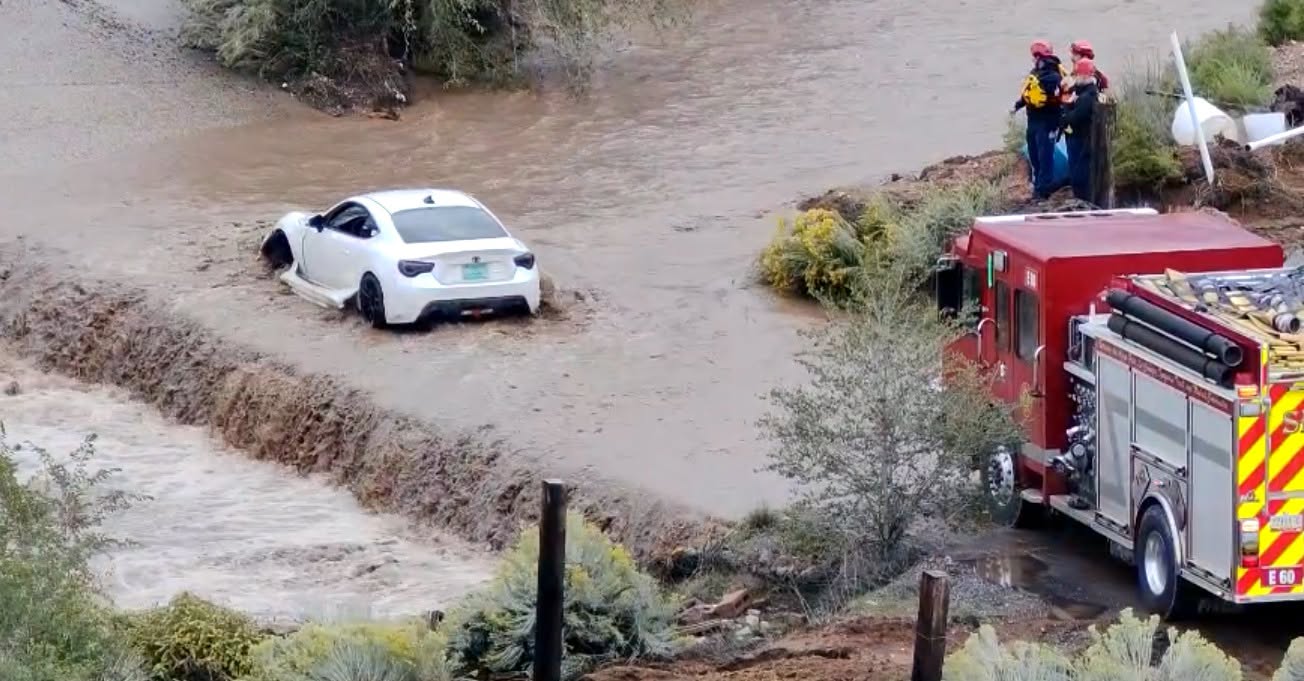
Flash flooding overwhelmed the city of Hurricane in southwestern Utah early Thursday, damaging about 80 homes and 50 RVs at the Willow Wind RV park along with bridges, roadways, and electrical power boxes. Mayor Clark Fawcett declared a local emergency as crews assessed damage and worked to restore access to flooded areas near Gould's Wash. Read more. |
Gov. Josh Stein declared a state of emergency for Dare and Hyde counties Thursday after two coastal storms in a month damaged and closed sections of NC-12 on North Carolina's Hatteras Island, including structural damage between the Marc Basnight Bridge and Rodanthe. NCDOT began 24-hour emergency ferry service between Stumpy Point and Rodanthe, and the state asked the Federal Highway Administration for emergency relief to fund repairs. Read more. |
Forecasted Risks to Watch for the Next Week
Severe storms and heavy rain shift from the Southwest into the western High Plains through the weekend. The Pacific system behind this week's Utah flooding and Arizona severe weather keeps producing strong thunderstorms and locally heavy rain as it moves east, per the NWS national forecast.
The St. Johns River near Astor, Florida could approach major flood stage next week. NWS Melbourne forecasts the river to keep climbing through moderate flood stage into the weekend, with levels potentially nearing major flood stage as northeasterly winds increase.
Heavy rainfall and isolated flash flooding threaten South Florida this weekend into early next week. NWS forecasts repeated rounds of heavy rain with gusty winds across the southern peninsula.

Hurricane City flooding. Source: Hurricane City Power Department.
Disasters in the Headlines
"Giant ‘heat storms’ are scorching the Earth. This is the story of the biggest one on record."
"FEMA Launches New Option to Buy National Flood Insurance Program Policy Online"
PRO PERSPECTIVE
Preparing for the State-Led Future

Sit in on the sessions at the 2026 NEMA Annual Forum, and a shared premise runs underneath them. The AI workshop was built around states taking on more emergency management responsibilities. The rural power panel started from federal disaster support that may decline or become less predictable. The program treated a state-led future as its starting assumption.
Between sessions in Little Rock, October 19 to 22, we asked attendees anonymously for their hottest take. Six responses circled the same conclusion. The people best equipped to decide what a state needs are the ones who have done the work, and the colleagues sitting next to them.
Local Experience Is the Credential
The boldest answer came from an attendee who spent years at the local level before moving into their current role. Having learned local needs and how to meet them firsthand, this attendee bristles at prescriptive direction from outside. "When FEMA tries to tell me this is what you need and this is what we're going to do, it immediately turns me off because they do not know," they said.
The objection is specific. It targets who defines the need. A requirement written far from a jurisdiction misses what years inside one already taught. For anyone designing a program that states will run, the practical move is to put local operators in the room before the requirements are set.
The Shakeup Opens a Policy Window
Knowing what communities need is half the job. The other half is having the authority to act on it. Another attendee sees that authority opening up. With so many changes and shakeups in emergency management, they said, "there's a real opportunity for states to strengthen their regulatory policies and enforcement that promote and support health, safety and welfare of the public."
Regulation and enforcement are levers states already own, and they do their work before disaster strikes. They also answer the local practitioner's complaint head-on. A state that writes and enforces its own rules stops waiting to be told what it needs, and the people closest to the work set the terms.
The Answer Is Usually Another State
Authority helps only when a state knows what works, and no single state has seen everything. The NEMA Annual Forum fills that gap. One attendee's favorite part was having all 50 states and the territories in one place, trading lessons learned and best practices so each could serve its residents better. "This is one of those conferences where it's not about egos, it's not about peacocking," they said.
A first-time attendee saw the same thing from the outside: a big family reunion where everybody already knows everyone. NEMA administers the Emergency Management Assistance Compact (EMAC), the mutual aid agreement adopted nationwide among states. When a state runs out of personnel or equipment, EMAC is how its neighbors send more. In this field, that trust is part of the response plan.
Private Partners Are the Open Question
Peers cover part of the gap. Another attendee pointed to the part states have not solved. With more federal work expected to land on states, they said, many are struggling to define the role of private industry. They see "a lot of gaps to be filled" through public and private partnership. The hard part is capacity: knowing which partners a state needs and building those relationships now, ahead of the challenges coming in the next few years.
Technology Is Catching Up
Many of those partners arrive with technology, and one attendee thinks the timing finally works. Asked for a 2027 prediction, they said, "We're at a time where technology can catch up with ideas." The Forum gave that prediction a classroom. RAND delivered a workshop on AI for disasters and emergencies, funded through the Markle Foundation's AI for Disasters + Emergencies (AIDE) Initiative and built to help emergency managers see what these tools do and where they fit in existing workflows.
Knowing where technology fits starts with knowing the work, which brings the argument back to the local practitioner. Technology chosen from outside a jurisdiction meets the same objection the practitioner raised about federal direction: the people choosing it do not know the need.
The Bottom Line.
The sessions framed a state-led future as something on the way. In the hallways, attendees talked about it as already here. What's left is building the policies, partnerships, and technology to carry it before the next disaster tests them.
Active Federal Declared Disasters and Deadlines
There is usually a 60 day window to apply for help after a disaster is declared. The following disasters are actively taking applications from survivors for financial support. To apply, survivors can visit DisasterAssistance.gov or call the FEMA Helpline at 1-800‑621‑3362.
West Virginia - Severe Storm and FloodingSTATUS Major Disaster declared October 7, 2026; IA applications accepted in eligible counties until December 7, 2026 AFFECTED COUNTIES Fayette, Harrison, Kanawha |
Mississippi - Tropical Storm ArthurSTATUS Major Disaster declared October 7, 2026; IA applications accepted in eligible counties until December 7, 2026 AFFECTED COUNTIES Forest, Outagamie, Vilas, Winnebago |
Indiana - Severe Storm, Straight-line Winds, Tornadoes, and FloodingSTATUS Major Disaster declared August 25, 2026; IA applications accepted in eligible counties until October 25, 2026 AFFECTED COUNTIES Hancock, Harrison, Pearl River, Stone |
Guam - Super Typhoon BaviSTATUS Major Disaster declared October 7, 2026; IA applications accepted in eligible counties until December 7, 2026 |
Ohio - Severe Storm, Straight-line Winds, Tornadoes, Flooding, and LandslidesSTATUS Major Disaster declared October 2, 2026; IA applications accepted in eligible counties until December 1, 2026 AFFECTED COUNTIES Clermont, Franklin, Hamilton, Licking, Morgan, Muskingum, Perry |
Hawaii – Kona EarthquakeSTATUS AFFECTED COUNTIES Hawaii |
Sign up for This Week in Disasters here.