Are you a disaster survivor looking for help? Click here
This Week in Disasters

Source: Washington State Department of Natural Resources
Plus, a permit count won't tell you if a neighborhood returned home
Welcome back to This Week in Disasters! This newsletter combines expert perspectives with a weekly roundup of upcoming threats, recent natural disasters, and available survivor assistance. If you’re a Risk, Insurance, Employee Assistance, NGO or Emergency Management professional (or you’re just really curious about disasters in the United States!) you’re in the right place.
Major Disasters of the Last Week
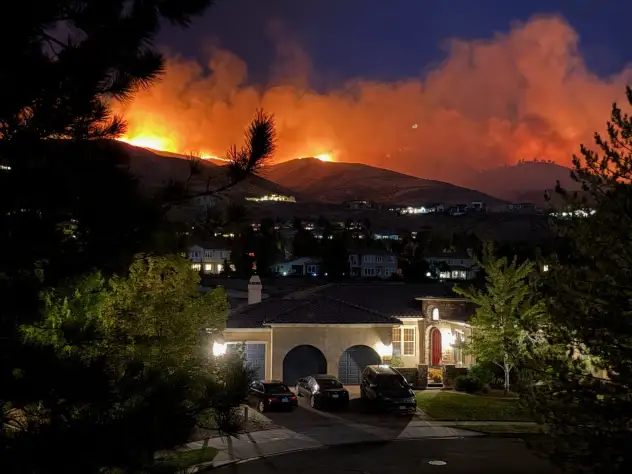
Three fires that broke out around Spokane on August 1, collectively the Spokane Complex, have damaged or destroyed more than 900 structures and forced roughly 67,000 people to evacuate. By August 7 crews had ringed all three fires with containment lines and begun lifting some evacuation orders. Read more. |
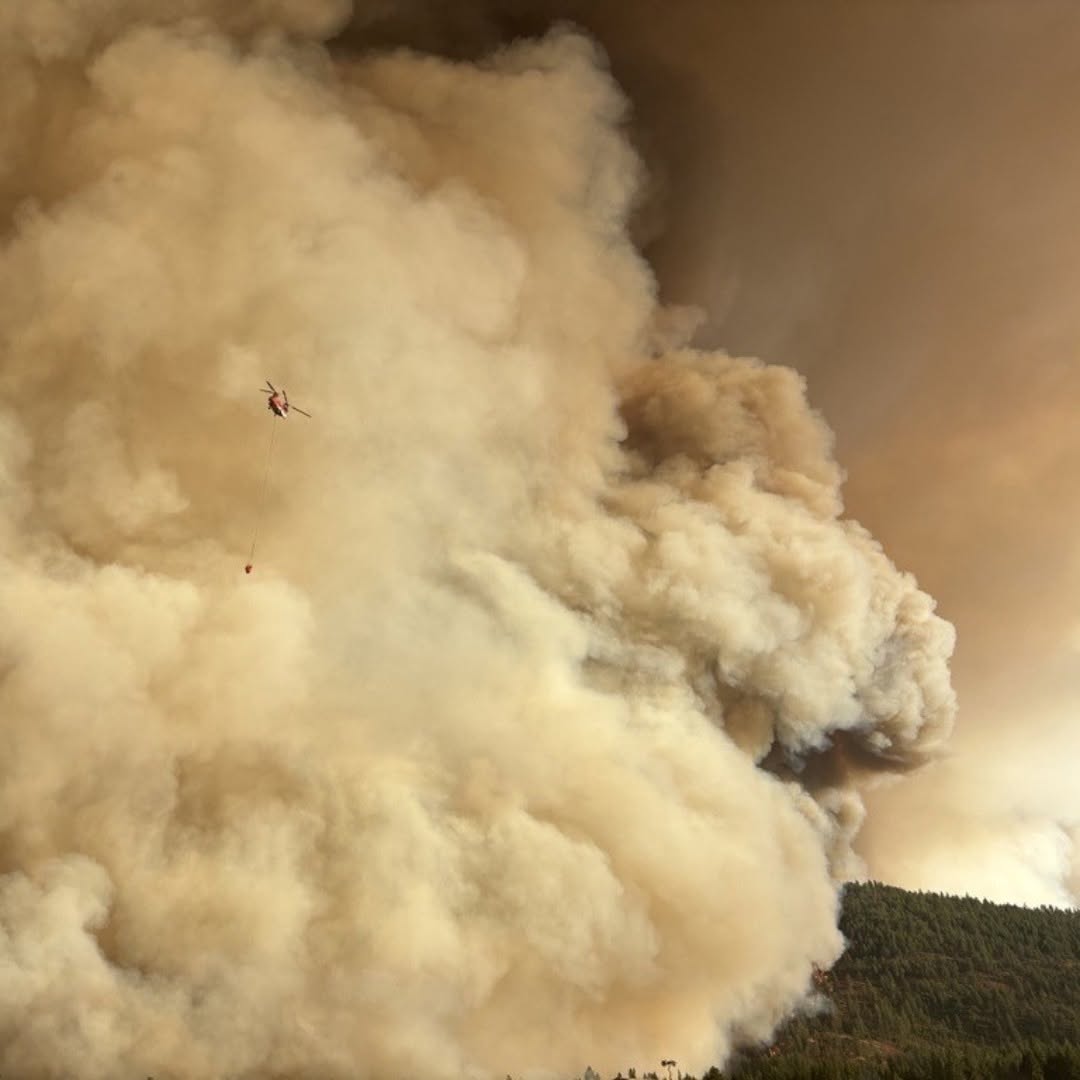
The Kaiser Canyon Fire, the largest active fire in Washington, has burned more than 136,000 acres on the Colville Reservation near Nespelem since a July 16 lightning strike, holding at roughly 45% containment by August 7 as evacuation orders began to ease and State Route 155 reopened. More than 1,000 personnel remain assigned. Read more. |
Forecasted Risks for Next Week
Red flag warnings return to Spokane and eastern Washington on Friday and Saturday. Daytime gusts to 30 mph, single-digit-to-low humidity, and highs in the mid-90s will keep fire danger elevated through the weekend, threatening renewed growth on fires crews have only just begun to contain.
Critical fire weather extends into the northern Rockies. Fire Weather Watches are up Friday and Saturday for parts of southwest Montana and the Flathead area, with afternoon temperatures in the 90s, gusts to 30 mph, and humidity as low as 5%.
Source: Washington State Department of Natural Resources
Disasters in the Headlines
AI Is Taking Control. That May Save Lives.
FEMA flood maps cause 'misunderstanding' among some homeowners, leaving millions without insurance, experts say
Wildfire season is changing. Spokane is showing how.
AI for Disasters + Emergencies: A Way Forward
PRO PERSPECTIVE
Judge the Recovery by Who Comes Home
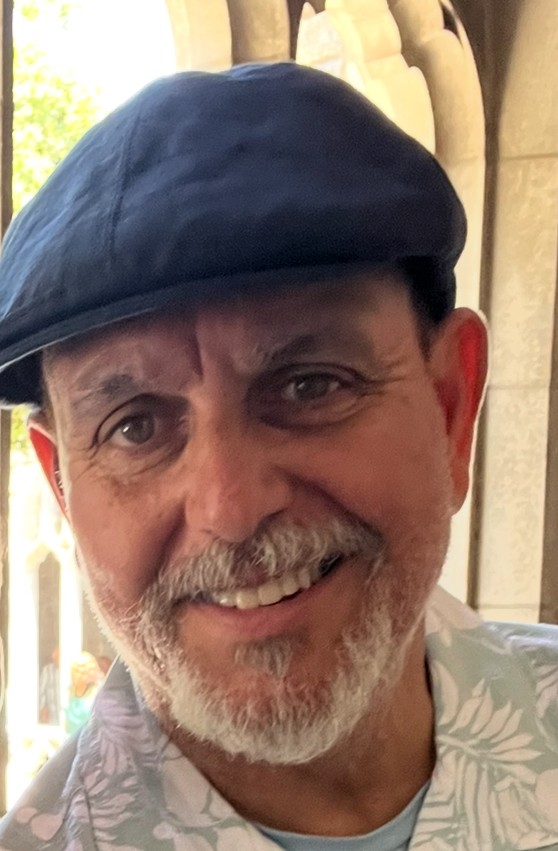
Bill Gould, public health professional, social worker, USC professor, and longtime Altadena resident, has spent his career on the giving end of help. He chose the field after losing his arm as a child and remembering the people who carried him through that experience. On January 8, 2025, the Eaton Fire burned the home he had lived in since 1988 and put him, for the first time in decades, on the receiving end.
The fire destroyed more than 9,400 structures, roughly 6,000 of them Altadena homes. It took 99 percent of his family's belongings, including his prosthetics. What it could not take, he argues, is the community itself. "While buildings can burn, community is much harder to destroy." Eighteen months into his own recovery, Gould has turned that conviction into a policy agenda built on a single question: can recovery be designed to protect what was and what can be enhanced?
What the receiving end teaches
Gould measures what the fire took against a family history built on surviving worse. He is William B. Gould V. His great-great-grandfather escaped slavery in Wilmington, North Carolina, fought for the Union, and kept a Civil War diary for three years, one of only three surviving diaries written by a formerly enslaved person. That diary is safe at the Massachusetts Historical Society. A second family diary burned in the Altadena house before Gould could copy it.
"I didn't write a Civil War diary," he says. "But I've had my own battles in life, including this latest chapter." Eighteen months of insurance, permits, and contractors, navigated while advocating for neighbors in the same fight, showed him what recovery measurement gets wrong. Los Angeles County counts permits issued. "The bigger measure is how many families return home."
REACT: a framework written by a survivor, not for one
Families home is the measure. REACT is Gould's plan for reaching it. A friend pushed him to coin the acronym so the ideas would stick: five commitments, each aimed at a specific advocacy action keeping families away.
Resource materials collectively. Cost keeps families from rebuilding. Tariffs, war in the Gulf, and inflation pushed construction prices up, and post-disaster rates spiked further. Gould proposes bulk purchasing of building materials at fixed rates, staged on Altadena's vacant burned lots, so thousands of families rebuilding at once stop bidding against each other.
Empower local leadership. Confusion keeps families stuck. Community groups should guide residents through insurance and permitting, the way block captain Annie Carrillo, who lost her own home, still organizes Gould's street.
Acquire and protect land. Displacement keeps families out permanently. Community land trusts are Gould's answer, and the pillar he has pushed furthest.
Cultivate economic renewal. Families return to neighborhoods with jobs and open storefronts. Gould wants grants and low-interest loans aimed at small, locally owned businesses.
Transfer funds directly. Money raised for survivors should reach survivors. Benefit concerts have come and gone while residents still ask where the proceeds went.
The pillar with the most at stake
Land is where the framework meets its hardest math. A California Community Foundation survey of fire survivors found a median gap of $500,000 between what insurance pays and what rebuilding costs. His own family is about $1 million short. When a family cannot close that gap, the lot sells, and it sells to whoever can build the most on it. Developers bought the houses above and below Gould's property. Elsewhere in Altadena, builders are putting ten homes on parcels that held one.
Land trusts attack that mechanism directly. Gould recently met with the San Gabriel Valley Community Land Trust to explore how the model could work locally: the trust invests in a property so the family can stay, preserving affordability for seniors and working families without replacing private ownership. "You want neighbors to enjoy that rebirth," he says. The rebuild will happen either way. This pillar decides who it happens for.
One recovery fight, not fifty
Cost, confusion, and displacement are not unique to Altadena. Gould took the framework's logic to Washington, D.C. alongside survivors of the Texas floods, North Carolina's hurricane, and the St. Louis tornado. The effort runs nationally through Organizing Resilience and locally through LA Voice, which organizes through churches. Different disasters, identical obstacles: insurance battles, opaque government programs, emotional exhaustion, and the fear of losing their communities. His position is that disaster declarations and FEMA allocations should follow need, not electoral maps. "Disaster should be one of those issues that's cross-cutting."
Five years from now, Gould pictures children playing in rebuilt neighborhoods, longtime residents back home, local businesses open, and Altadena serving as a national model for equitable recovery. A permit count will not tell him whether that happened. Only being home will. The buildings burned in a night and will rise again wherever the money reaches. Whether the community rises with them is a design decision, the decision REACT exists to force. Gould built a career on meeting people where they are. Now he is asking the recovery field to do the same. "Every family who returns helps preserve the soul of our community."
Active Federal Declared Disasters and Deadlines
There is usually a 60 day window to apply for help after a disaster is declared. The following disasters are actively taking applications from survivors for financial support. To apply, survivors can visit DisasterAssistance.gov or call the FEMA Helpline at 1-800‑621‑3362.
Mississippi - Severe Storms, Straight-line Winds, Tornadoes, and FloodingSTATUS Major Disaster declared June 30, 2026; IA applications accepted in eligible counties until August 31, 2026 AFFECTED COUNTIES Franklin, Lawrence, Lincoln, Wilkinson |
Wisconsin - Severe Storms, Tornadoes, and FloodingSTATUS Major Disaster declared June 30, 2026; IA applications accepted in eligible counties until August 31, 2026 AFFECTED COUNTIES Bayfield, Brown, Buffalo, Jackson, Jefferson, Juneau, Kenosha, Manitowoc, Marathon, Milwaukee, Outagamie, Oneida Nation, Racine, Rock, Sauk, Vernon, Washington, Waukesha, Waupaca, Winnebago |
Michigan - Severe Storms, Tornadoes, and FloodingSTATUS Major Disaster declared June 30, 2026; IA applications accepted in eligible counties until August 31, 2026 AFFECTED COUNTIES Alcona, Allegan, Alpena, Antrim, Barry, Benzie, Charlevoix, Cheboygan, Crawford, Emmet, Grand Traverse, Gratiot, Iosco, Kalamazoo, Kalkaska, Manistee, Mecosta, Montcalm, Muskegon, Newaygo, Oceana, Osceola, Presque Isle, Roscommon, Saginaw, Washtenaw, Wexford |
Fort Peck Tribe - Severe Winter Storm and Straightline WindsSTATUS Major Disaster declared May 29, 2026; IA applications accepted in eligible counties until August 31, 2026 AFFECTED COUNTIES Fort Peck Indian Reservation |
Louisiana - Tropical Storm ArthurSTATUS Major Disaster declared June 30, 2026; IA applications accepted in eligible counties until August 31, 2026 AFFECTED COUNTIES Avoyelles, St. Landry, St. Tammany, Terrebonne |
[NEW] West Virginia - Severe Storm, Straight-line Winds, Tornadoes, Flooding, Landslides, and MudslidesSTATUS Major Disaster declared August 3, 2026; IA applications accepted in eligible counties until October 3, 2026 AFFECTED COUNTIES Lewis, Upshur |
[NEW] Northern Mariana Islands - Super Typhoon BaviSTATUS Major Disaster declared August 3, 2026; IA applications accepted in eligible counties until October 3, 2026 AFFECTED COUNTIES Rota (Municipality) |
[NEW] Mississippi - Tropical Storm ArthurSTATUS Major Disaster declared August 3, 2026; IA applications accepted in eligible counties until October 3, 2026 AFFECTED COUNTIES Hancock, Harrison, Pearl River, Stone |
Sign up for This Week in Disasters here.