Are you a disaster survivor looking for help? Click here
This Week in Disasters
Source: Town of Westport Fire Department
Plus, AI pilots in emergency management and we're hiring!
Welcome back to This Week in Disasters! This newsletter combines expert perspectives with a weekly roundup of upcoming threats, recent natural disasters, and available survivor assistance. If you're a Risk, Insurance, Employee Assistance, or Emergency Management professional (or you're just really curious about weather in the United States!), you're in the right place.
Major Disasters of the Last Week
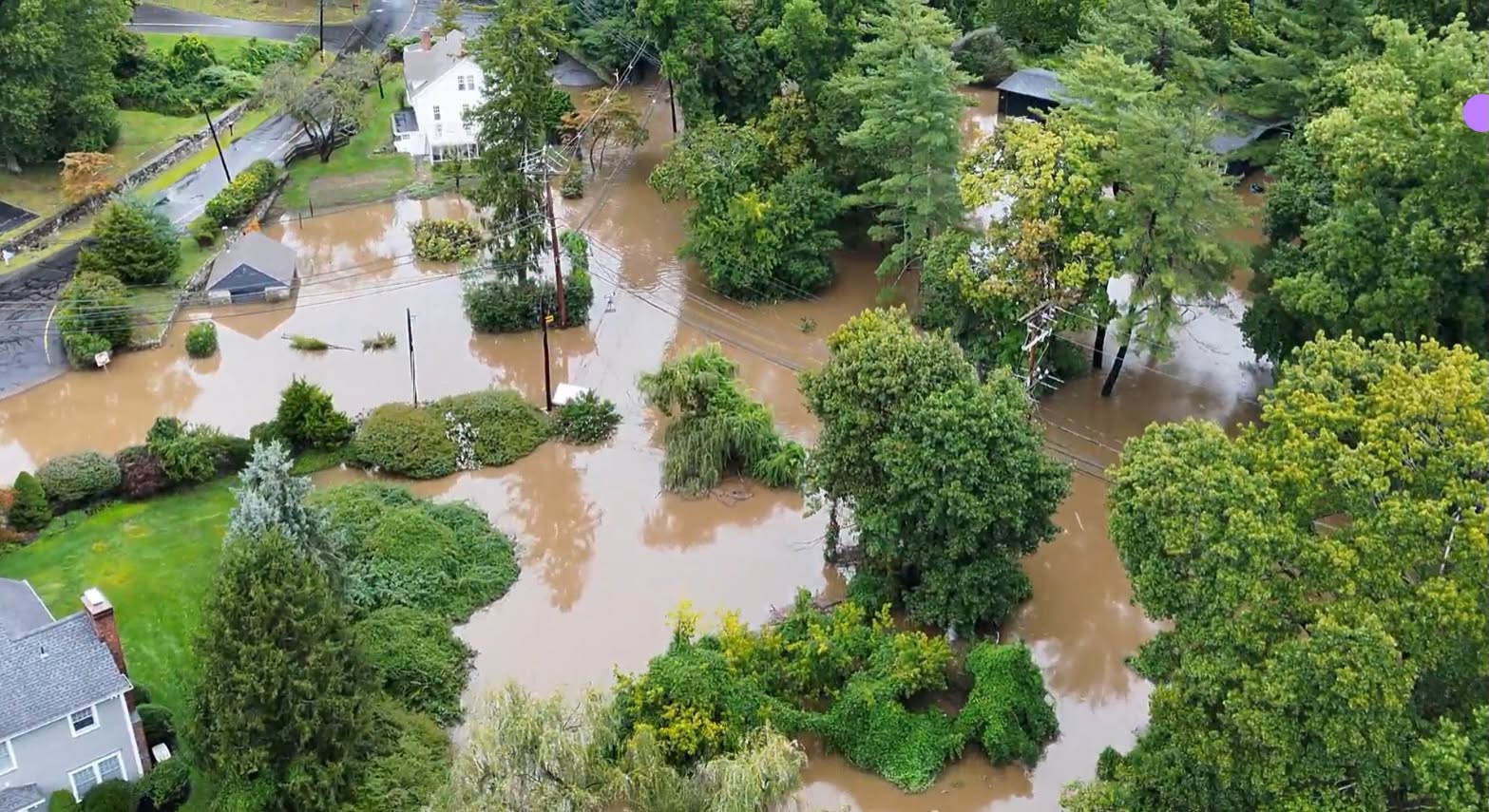
Slow-moving downpours dropped 6 to 7 inches of rain on Connecticut's coast Sunday morning at rates reaching 4 inches an hour, flooding the corridor from Norwalk to Westport and swamping northern New Jersey and New York's Westchester County. Westport crews made 13 rescues of people trapped in vehicles, Bridgeport firefighters deployed boats to pull residents from flooded neighborhoods, and Paterson, New Jersey rescued about 20 people from rising water. Metro-North and Amtrak service to New Haven ran delayed or canceled. Read more. |
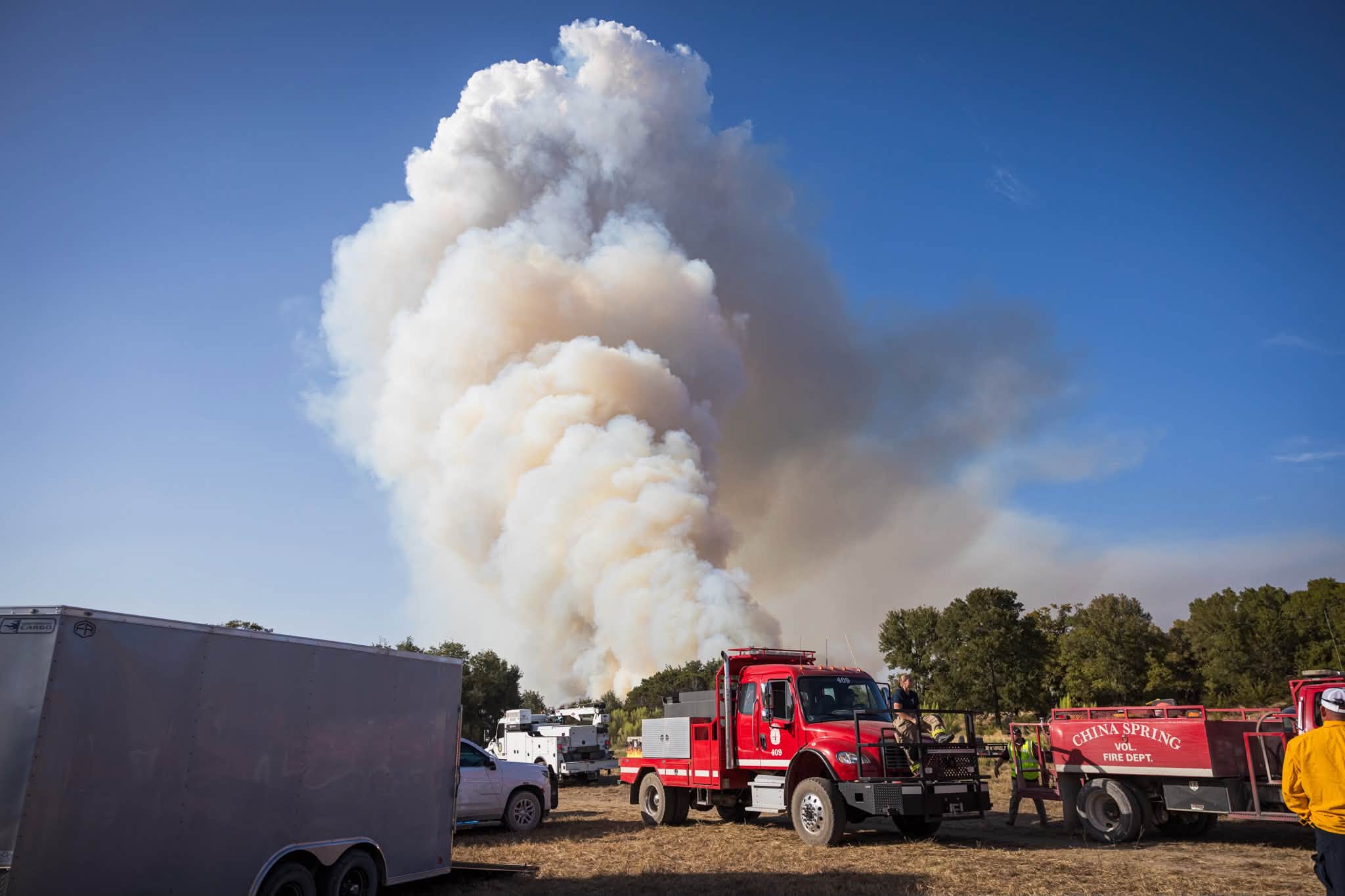
Crews held the Hydra Fire at its containment lines Wednesday, with the fire at 1,100 acres and 25% containment, a day after it breached the containment area and forced a mandatory evacuation of the entire city of Meridian. Residents returned home Tuesday night, Meridian ISD canceled Wednesday classes, and FEMA approved a Fire Management Assistance Grant. Read more. |
A powerful monsoon storm swept Tucson on Monday, September 14, prompting at least three swift-water rescues along the Alamo Wash and a fourth in the Brawley Wash as flooding closed roads across Pima County and snapped power poles. Nearly 16,000 Tucson Electric Power customers lost electricity. Read more. |
Forecasted Risks to Watch for the Next Week
A disturbance near Bermuda could still become Tropical Storm Fay into the weekend, though the system remains disorganized under wind shear and forecasters put its odds of earning the name low
Monsoonal storms return to the Southwest early next week as an East Pacific disturbance feeds moisture back over washes still running full from Monday's Tucson flooding.
Multiple days of heavy rain begin across South Florida this weekend as a mid-level disturbance meanders near the peninsula.
Source: Texas Division of Emergency Management
Disasters in the Headlines
People’s houses are collapsing into the ocean. FEMA gives them no other option
Post-Disaster Protection Act advances through the House Transportation & Infrastructure Committee
Six Strangers Connected by Disaster
Communities Mobilize to Take On Flood Preparedness with Queens Rain Ready
The Second Best Time to Invest in Resilience Is Right After a Disaster Hits
PRO PERSPECTIVE
Inside AIDE's Plan for AI in Emergency Management

In October 2019, Jeremy Greenberg left FEMA's response operations to take a detail in external affairs at then Administrator Pete Gaynor's request. He had never worked a day in the function. He arrived planning to pace himself, take a beat, and find the weak points before fixing them. He got three months. In January 2020 an earthquake hit Puerto Rico. In March, COVID started, and he ran congressional, intergovernmental, and social messaging through the first six months of the pandemic knowing none of it, but relying on the experts on the team.
He calls it the best experience of his career. He also treats it as a rule. What carries you through an incident is the work you finished before it started.
That is the standard Greenberg now applies to artificial intelligence. A tool counts when someone reaches for it during an activation without stopping to think, and nothing about the activation itself will produce that reflex. "We want this to be native and something that's easily adopted in the high stress space of a disaster response," he said. The failure he is designing against is the capability that performed in the exercise and got skipped on the real day.
Greenberg formed that view from both ends of a disaster. He spent more than two decades in federal service, ending as head of FEMA's Response Operations Division, and ran a parallel volunteer career that started with an ambulance company at sixteen and a fire department at eighteen. He now runs Provincial Strategies and leads the AI for Disasters and Emergencies Initiative (AIDE) at Aspen Digital, which put more than 200 practitioners, technologists, and researchers in one Austin ballroom for a day last week.
Find the failure first
What Greenberg keeps running into, in Austin and well before it, is the drop from the abstract to the tactical. Agentic AI means something different to everyone until you ask what it does inside an EOC, and that gap only closes beforehand. So AIDE's practitioner playbook builds exercising into its own step, and Greenberg's standard for it comes from operations. "You train the way you fight." The practice environment always flatters the tool. "No matter how realistic your environment is, it's not going to replicate the panic," he said. It will not replicate system degradation either. Run the tool at the highest stress you can manufacture. That is the last chance to find where its capacity ends and a person takes over, on terms you set.
No time to learn a new tool
The same reasoning explains why AIDE's funded pilots are focused on using the tools already available to a jurisdiction. The pilots start in January and run roughly a year. Greenberg looks first for buy-in that reaches past the director to the rank and file, ideally to everyone who walks into the EOC during an activation. His second requirement is based on existing technology. "The pilot projects are not designed to procure or buy new technology," he said. The work is workflow, training, and alignment against the stack already in the building. Nobody learns a new tool during a disaster.
That rule also means a one or two person office is not disqualified for having nothing to spend, and those offices are where some of the biggest returns are turning up. Basic LLMs already absorb administrative load in a shop that small, which is capacity in the most literal sense. When the tools and the staff still fall short, the next resource is also one a jurisdiction already has. Call an office your size, or the next one up, and ask for mutual aid.
Trust runs on the same clock
Mutual aid and a lighter admin load both buy capacity, which is half the problem. Asked which is harder to solve, capacity or trust, Greenberg answered, "Yes." Emergency management is a risk business, and "risk goes hand in hand with trust." The public gets asked to do counterintuitive things at the worst moment, starting with leaving a house and everything in it. Nobody builds the credibility for that instruction while giving it.
Inside the organization, the same timing problem decides who owns AI adoption. It belongs to everyone, but the best outcomes come where a CIO, CTO, or chief innovation officer holds a mandate for proactive adoption rather than network security alone. That person can hear "this introduces risk" and answer that the capacity is worth it. The argument gets settled before the activation, not during it. That decides what the tool is allowed to do, not who makes the call. The tools augment intelligence and assist decisions, in his framing, while judgment stays with the person. Keep a human "not just in the loop, but at the front of that loop."
Recovery starts early too
Readiness built before the incident decides the recovery side too, which is why Greenberg rejects the clean seam between response and recovery. Both start in preparedness, and the first recovery decisions get made while the response is still running.
It starts with how bad bad actually is, and whether the damage is isolated or widespread. A tornado can devastate one block and leave the next three intact. An earthquake runs wide, with secondary and tertiary impacts. That answer sets recovery posture immediately. Next is the survivor's experience, including people who cannot reach a device inside an impact area, which makes delivery the design problem. Then public assistance, sequencing debris removal, power restoration, and transportation for most people.
Six months from the AIDE Summit, Greenberg will judge progress by three signals: AI literacy has risen, procurement has become an open conversation, and the field is seriously discussing governance and standards. Each is work that can only happen between disasters. The test arrives on a schedule nobody sets. The exercise, the risk conversation, and the recovery plan all get settled before the disaster, or the disaster settles them.
Active Federal Declared Disasters and Deadlines
There is usually a 60 day window to apply for help after a disaster is declared. The following disasters are actively taking applications from survivors for financial support. To apply, survivors can visit DisasterAssistance.gov or call the FEMA Helpline at 1-800‑621‑3362.
Louisiana - Tropical Storm ArthurSTATUS Major Disaster declared June 30, 2026; IA applications accepted in eligible counties until October 1, 2026 AFFECTED COUNTIES Avoyelles, St. Landry, St. Tammany, Terrebonne |
West Virginia - Severe Storm, Straight-line Winds, Tornadoes, Flooding, Landslides, and MudslidesSTATUS Major Disaster declared August 3, 2026; IA applications accepted in eligible counties until October 3, 2026 AFFECTED COUNTIES Lewis, Upshur |
Northern Mariana Islands - Super Typhoon BaviSTATUS Major Disaster declared August 3, 2026; IA applications accepted in eligible counties until October 3, 2026 AFFECTED COUNTIES Rota (Municipality) |
Mississippi - Tropical Storm ArthurSTATUS Major Disaster declared August 3, 2026; IA applications accepted in eligible counties until October 3, 2026 AFFECTED COUNTIES Hancock, Harrison, Pearl River, Stone |
Indiana - Severe Storm, Straight-line Winds, Tornadoes, and FloodingSTATUS Major Disaster declared August 25, 2026; IA applications accepted in eligible counties until October 25, 2026 AFFECTED COUNTIES Hancock, Harrison, Pearl River, Stone |
Hawaii – Kona EarthquakeSTATUS AFFECTED COUNTIES Hawaii |
Oglala Sioux Tribe – Severe Storms, Straight-line Winds and FloodingSTATUS Declared September 1, 2026. Individual Assistance available across the Pine Ridge Reservation. No application deadline has been published yet; check DisasterAssistance.gov. |
Sign up for This Week in Disasters here.