This Week in Disasters
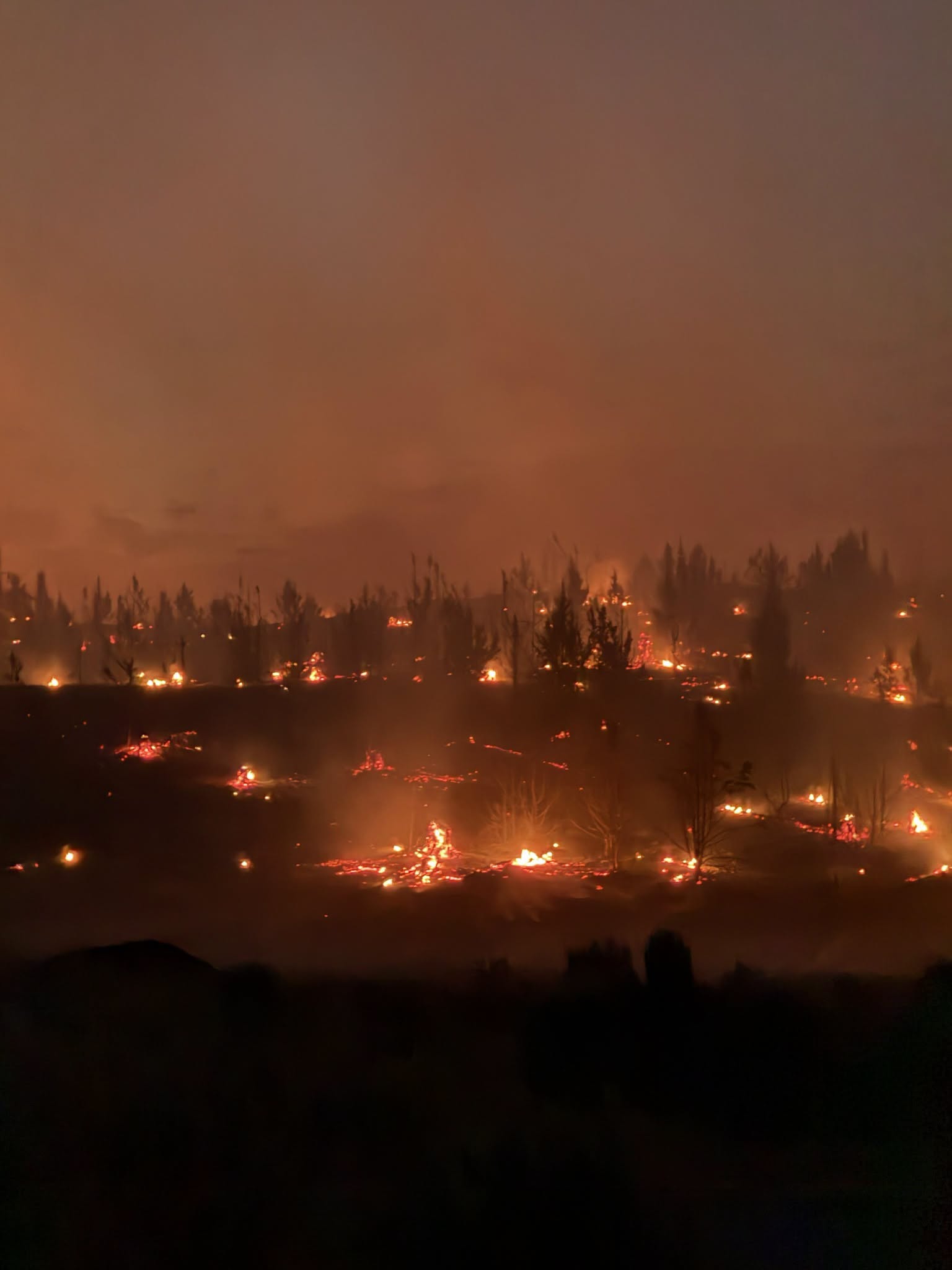
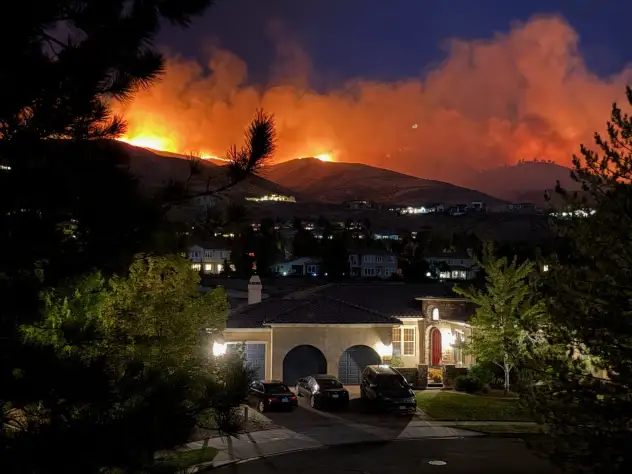
Fires in Oregon. Source: Oregon Department of Forestry
Plus, a 140 mph tornado in Wisconsin
Welcome back to This Week in Disasters! This newsletter combines expert perspectives with a weekly roundup of upcoming threats, recent natural disasters, and available survivor assistance. If you’re a Risk, Insurance, Employee Assistance, NGO or Emergency Management professional (or you’re just really curious about disasters in the United States!) you’re in the right place.
Major Disasters of the Last Week
A preliminary EF3 tornado tore a 12-mile path through the Wisconsin cities of Appleton, Menasha, and Neenah on Monday, July 27, destroying homes and businesses. Governor Tony Evers declared a state of emergency the next day. Read more. |
Oregon has burned nearly 1.84 million acres this fire season, closing in on the 1.93 million-acre record set in 2024, with the state's most dangerous stretch of the season still months ahead. The state is fighting 30 large wildfires, and new megafires tore across the southeast grasslands on July 30, including the Big Grass Fire at 301,000 acres on the Idaho line and the uncontained Coleman Creek Fire at 200,000 acres. Read more. |
Flash flooding inundated eastern Pennsylvania, New Jersey, and New York on July 28 and 29, with 3 to 6 inches of rain falling in a few hours. States of emergency were declared, water rescues were reported across eastern Pennsylvania and New Jersey, and Amtrak suspended Empire/Hudson service between New York City and Albany. Read more. |
Forecasted Risks for Next Week
Critical fire weather continues across interior Oregon and Washington and into Idaho and Montana. Repeated dry, windy frontal passages on the edge of the Western ridge threaten new ignitions and rapid growth on fires already burning; Oregon officials have flagged the coming weekend as a concern.
Rapid-onset drought threatens parts of the Plains and Midwest. Two weeks of above-normal heat and below-normal rain raise the risk of flash drought across the central U.S.
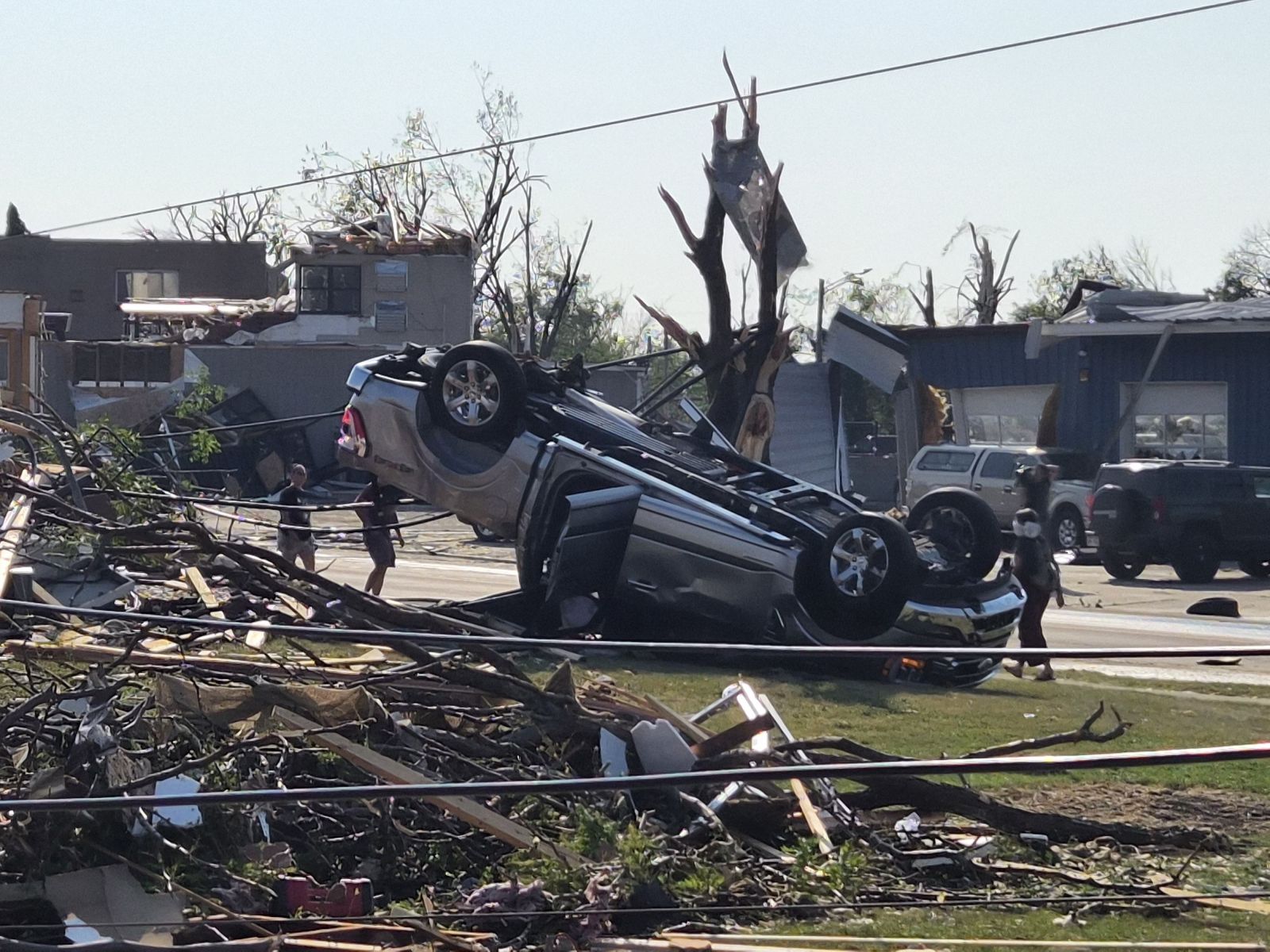
Aftermath of the tornado in Wisconsin. Source: NWS Greenbay
Disasters in the Headlines
The Caribbean Knows Disaster Response. Now It Must Lead on Risk Governance.
Resilience Finance Guidebook for Local Governments
Natural disaster losses below average in H1, but El Niño risk looms
PRO PERSPECTIVE
Disaster Recovery Has a Plot Problem

The United States spends more on disaster recovery than most developed countries. Most of the people likely to need that money have no idea it exists. This is a communications problem with operational cost, and the cost is paid by the communities that go into the next storm underinsured and underprepared.
We are back with Sarah Labowitz. In her last Pro Perspective, the Carnegie Endowment for International Peace senior fellow walked through why the federal system that rebuilt Joplin is not the system rebuilding St. Louis. This time, she names the cause: policy has a plot problem, and disinformation fills the silence it leaves behind.
Much of how the country funds infrastructure and resilience runs through these recovery programs, and Labowitz's concern is that the public, including people in repeatedly hit communities, has no idea. "Even those that are affected repeatedly by disaster, people just do not know that there is this money available, that it could be used to rebuild in a more resilient way."
She traces part of the problem to her own profession. The traditional think tank model is a closed loop. "We basically just talk to other experts and we write papers for other experts," she says. "It's a pretty small club." That circle no longer sets the agenda by itself. Policymakers are now shaped by social media and by people directly affected by an issue, which means the experts have to show up where those people already are.
For Labowitz, showing up meant a collaboration she did not see coming. Her research assistant, Debbra Goh, cold-emailed weather influencers for a webinar. One of them was Edgar ONeal, known online as Edgar the Storm Chaser. The two clicked, and they are now building a long-form video project on disaster recovery that pairs her policy knowledge with his command of an audience.
Policy communication fails because it removes the very things that make people pay attention. "So often in policy, we strip out the things that make something interesting. We have a plot problem. We take out the characters and events and emotions that make us want to pay attention."
This is not a pitch for experts to become TikTok stars, and Labowitz is direct that the "everyone can just make videos" assumption is wrong. The model she favors is co-creation. She knows federal disaster funding. Edgar knows how to hold an audience. "It's not about me being in front of the camera."
The same logic, she argues, should reshape how official agencies should communicate. FEMA needs something closer to "a war room of disaster communicators," built around the local voices a community already knows and trusts. People take information from people they have an existing relationship with. The earnest administrator video is, in her words, "necessary, but insufficient."
She is equally clear about what does not work: treating communication as pay-to-play. Real influencers earn attention because they know their audience and what engages them. The job is to find people who authentically care about their communities and want to talk about this, and to make the relationship mutual rather than transactional.
There is an adversary on the other side of the gap. Disinformation follows a predictable script after disasters, Labowitz notes, from the 2023 Ohio train derailment to the rumor that FEMA would seize property if it knocked on your door. She points to research suggesting that foreign governments fuel that disinformation, because the period right after a disaster is a vulnerable window for accelerating in government. A communications vacuum does not stay empty. Someone fills it.
The most practical reframe Labowitz offers is about the data itself. People do not experience recovery as a spreadsheet. "The way that people think about their own disaster recovery is really the story of that disaster." A survivor thinks "this is my disaster," not "Kansas received this much money." Information organized around that lived experience is information people actually use.
For emergency managers, resilience professionals, and anyone responsible for getting recovery information to the public, the implications are operational, not cosmetic. Build standing relationships with trusted local messengers before the storm, not contracts during it. Treat disinformation as a known adversary and pre-position credible voices to meet it. Organize your data around the survivor's own story rather than the agency's reporting lines. And simplify the back end, because plain language on the front end usually requires plainer programs behind it.
The opportunity sits right next to the problem. There is a window after every disaster when people are open to imagining something better. Fill it with stories that show what rebuilding differently actually looks like, told by people they trust, and the communications gap starts to close.
Active Federal Declared Disasters and Deadlines
There is usually a 60 day window to apply for help after a disaster is declared. The following disasters are actively taking applications from survivors for financial support. To apply, survivors can visit DisasterAssistance.gov or call the FEMA Helpline at 1-800‑621‑3362.
Crow Tribe of Montana - Severe Winter Storm and Straight-Line WindsSTATUS Major Disaster declared May 29, 2026; IA applications accepted in eligible counties until August 1, 2026 AFFECTED COUNTIES Crow Indian Reservation |
San Carolos Apache Tribe - Severe Storms and FloodingSTATUS Major Disaster declared May 29, 2026; IA applications accepted in eligible counties until August 1, 2026 AFFECTED COUNTIES San Carlos Indian Reservation |
Mississippi - Severe Storms, Straight-line Winds, Tornadoes, and FloodingSTATUS Major Disaster declared June 30, 2026; IA applications accepted in eligible counties until August 31, 2026 AFFECTED COUNTIES Franklin, Lawrence, Lincoln, Wilkinson |
Wisconsin - Severe Storms, Tornadoes, and FloodingSTATUS Major Disaster declared June 30, 2026; IA applications accepted in eligible counties until August 31, 2026 AFFECTED COUNTIES Bayfield, Brown, Buffalo, Jackson, Jefferson, Juneau, Kenosha, Manitowoc, Marathon, Milwaukee, Outagamie, Oneida Nation, Racine, Rock, Sauk, Vernon, Washington, Waukesha, Waupaca, Winnebago |
Michigan - Severe Storms, Tornadoes, and FloodingSTATUS Major Disaster declared June 30, 2026; IA applications accepted in eligible counties until August 31, 2026 AFFECTED COUNTIES Alcona, Allegan, Alpena, Antrim, Barry, Benzie, Charlevoix, Cheboygan, Crawford, Emmet, Grand Traverse, Gratiot, Iosco, Kalamazoo, Kalkaska, Manistee, Mecosta, Montcalm, Muskegon, Newaygo, Oceana, Osceola, Presque Isle, Roscommon, Saginaw, Washtenaw, Wexford |
Louisiana - Tropical Storm ArthurSTATUS Major Disaster declared June 30, 2026; IA applications accepted in eligible counties until August 31, 2026 AFFECTED COUNTIES Avoyelles, St. Landry, St. Tammany, Terrebonne |
North Carolina - Flooding and Storm Damage from Tropical Storm ChantalSTATUS SBA disaster declaration approved July 26, 2025; applications open for residents and businesses in eight NC counties. The deadline to return economic injury applications has been extended to September 30, 2026. APPLY NOW AFFECTED COUNTIES Alamance, Caswell, Chatham, Durham, Granville, Orange, Person, Wake Counties |
Sign up for This Week in Disasters here.