This Week in Disasters
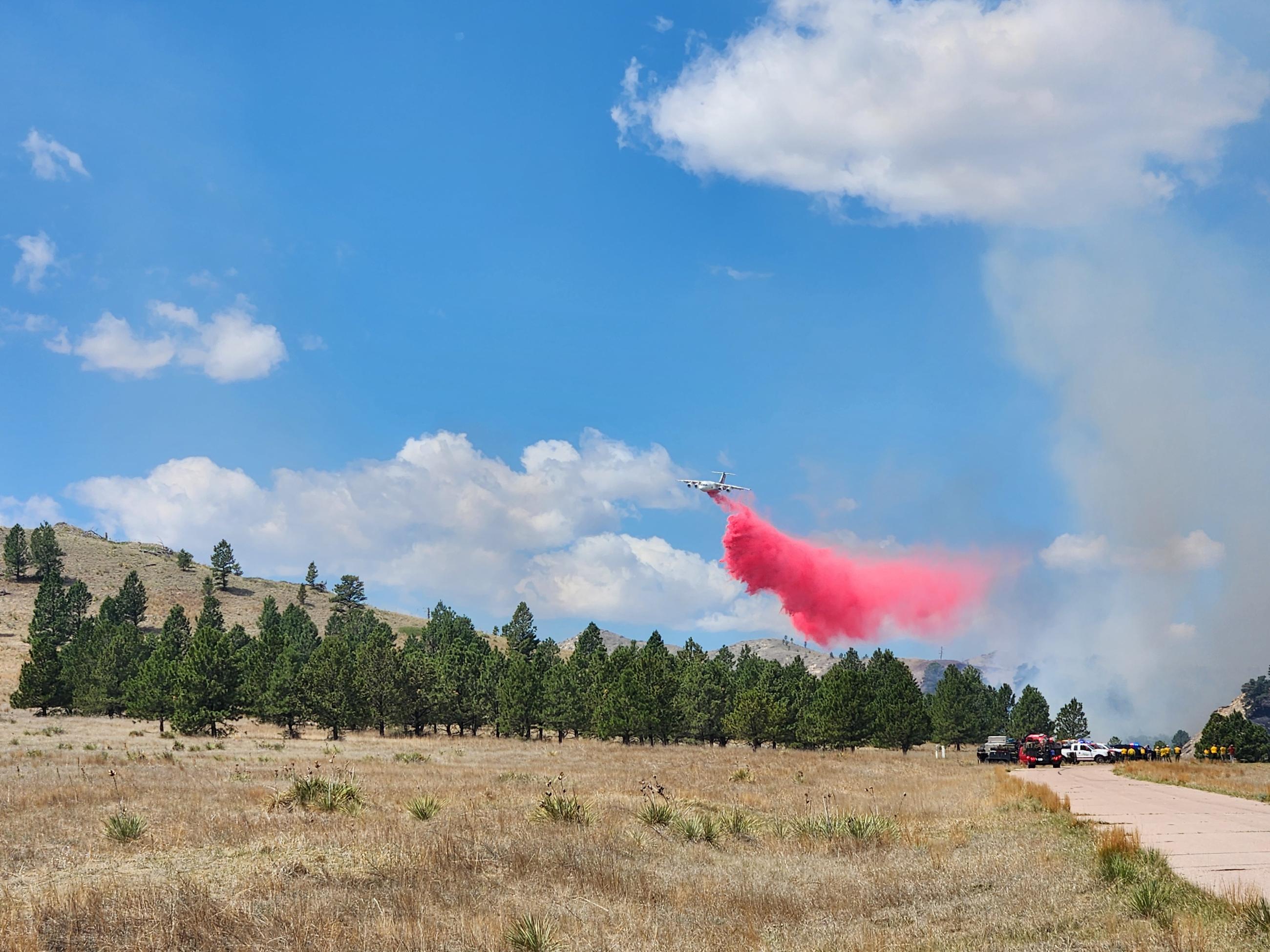
South Fork Fire. Source: Nebraska National Forest
Plus: The part of disaster response you cannot automate
Welcome back to This Week in Disasters! This newsletter combines expert perspectives with a weekly roundup of upcoming threats, recent natural disasters, and available survivor assistance. If you’re a Risk, Insurance, Employee Assistance, NGO or Emergency Management professional (or you’re just really curious about disasters in the United States!) you’re in the right place.
Major Disasters of the Last Week
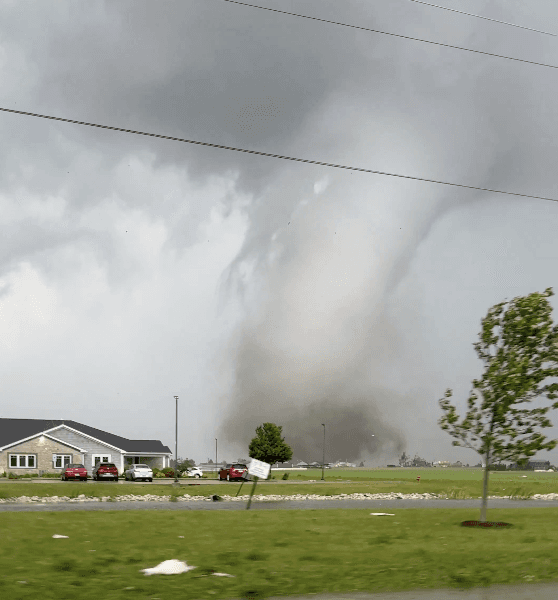
A derecho tracked more than 350 miles on June 10, starting in Iowa and blasting through Illinois, Wisconsin, Michigan, and Indiana with wind gusts up to 90 mph and a damaging tornado in Missouri. Nearly half a million customers had lost power by Thursday morning, with Cook County, Illinois the hardest hit at more than 189,000 outages. Crews in Joliet and Seneca worked to clear downed trees and power lines blocking roads. Read more. |
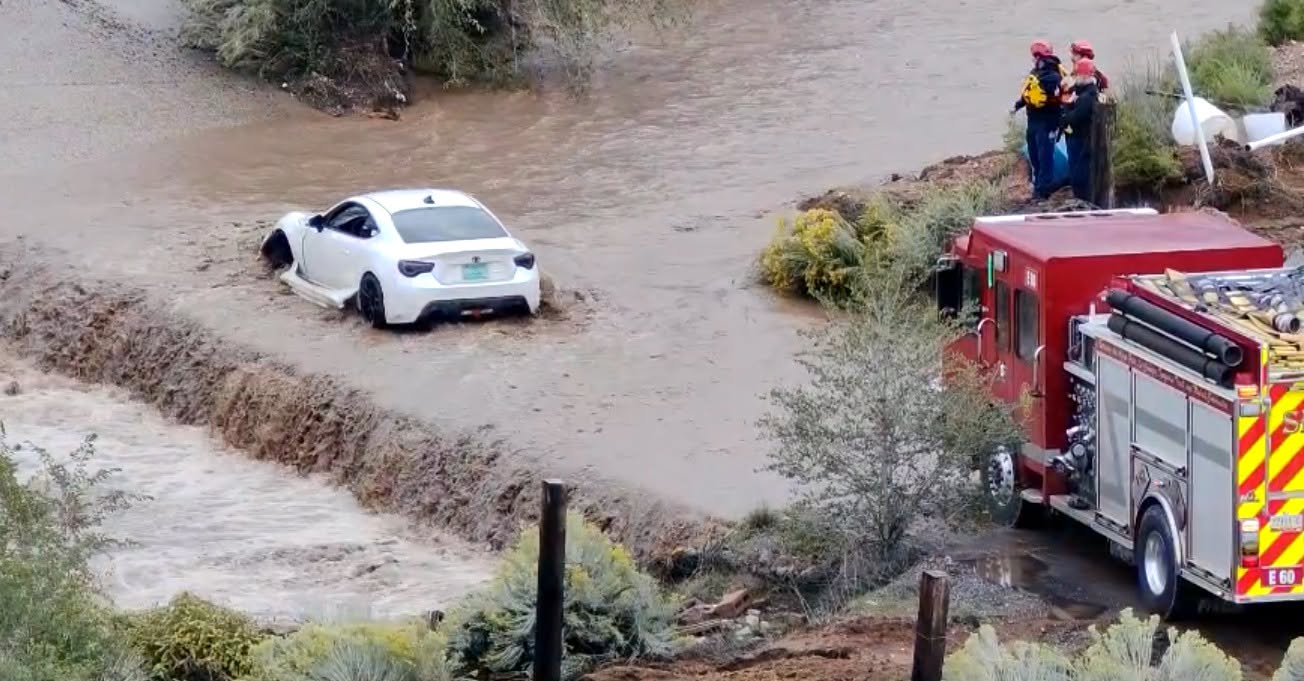
A Flash Flood Emergency hit northern Alabama on June 7 after 5 to 9 inches of rain, and crews rescued 14 people trapped in two flooded caves in Jackson County. The same multi-day setup drove swift water rescues in Central Texas, where parts of the state topped 9 inches. Read more. |
A fast-moving wildfire (South Fork Fire) in the Nebraska Panhandle burned roughly 23,000 acres across Sioux and Dawes counties by Thursday morning and forced the mandatory evacuation of Fort Robinson State Park. Southwest winds over 50 mph and humidity under 15% drove the fire under a Red Flag warning, and officials directed evacuees to Chadron, Alliance, and Scottsbluff. Read more. |
Forecasted Risks for Next Week
Severe weather returns to the Plains this weekend. A renewed risk on Saturday covers much of Kansas, Iowa, Nebraska, Missouri, and northern Oklahoma, though storms should be less widespread than the midweek outbreak.
The National Hurricane Center is watching the Bay of Campeche for the season's first named storm. A broad area of low pressure could organize in the coming days and become Arthur, the first named system of the 2026 Atlantic season.
Source: X/nse_wx
Disasters in the Headlines
FEMA Report Is a Good First Step Toward Flood Insurance Reform
Disaster Relief on the Move: Why Mobile Response Units Are Changing Emergency Aid Forever
New U.S. Senate Report Offers Insurance Solutions; Insurance Industry Sides With Big Oil in Lawsuit
PRO PERSPECTIVE
The Part of Disaster Response You Cannot Automate

When wildfires overran Los Angeles, most information systems buckled under the load. Watch Duty did not. The platform absorbed 100,000 requests a second and served 8 million people a day at 100 percent uptime. The detail John Mills wants you to hold onto is not the traffic. Every piece of information that moved through the system was vetted by hand, much of it by people living under the same fire they were tracking.
John Mills is co-founder and CEO of Watch Duty, the nonprofit that tracks every wildland fire across the United States. He built Watch Duty after living through fire after fire himself. "This is why I do what I do," he says. The work runs on 300 volunteers and 50 staff who monitor fire service radio around the clock, because that is where tactics get called and resources get dispatched, and because fires do not keep office hours. He draws a hard line against the shortcut everyone expects him to take. "This is not some sort of AI product that spreads misinformation and guesses," he says. "Everything that we do is hand-vetted and touched by a human who oftentimes is living under threat of fire."
Listen before you build
Mills did not reach that conviction in a brainstorm or design studio. He earned it on his own land, which is why his advice to anyone who wants to build in this space is a single word. Listen. Before Watch Duty, he sold printed property signs to Firewise and Fire Safe communities. They replaced the plywood and spray paint people had been using to mark water supply and gate access so fire crews could find their way onto the property.. He sold hundreds. He was not chasing a product. "I jumped into being of service, not into building Watch Duty," he says. The organization arrived only after months of sitting in community meetings with his hands in his pockets, watching what people actually needed. The builders who fail, he warns, are the ones who supply answers before they understand the problem. Opportunity "is often missed because it shows up in overalls and looks like work."
Information is permission to act
The same instinct, trusting the person closest to the fire, decides where Mills lands on the oldest fight in his field: whether giving people too much information too early does more harm than good. He rejects the premise outright. Without information you cannot change behavior at all, and the absence of it is what sets off panic. He has stood on his property watching tankers drop retardant with nothing to tell him where the fire was headed, and watched that silence cascade into fear and frantic phone calls. Good information does the reverse. It lets a rancher, an elderly neighbor, or a disabled resident, all of whom need far more lead time, prepare instead of scramble. "More information is really empowering to changing human behavior," he says.
The reform software cannot buy
An informed resident can act on what they know without asking anyone. A government, Mills says, cannot. In congressional testimony he made the case for a centralized wildfire intelligence center, and asked what such a center should build first, he is clearest about what it should not: a place. Operations centers that require people to drive in and gather collapse when "wind-driven fires are eating a football field a second." Watch Duty stays virtual, and it already out-collects most agencies because it ignores the lines that slow them down. "We don't see borders, boundaries, and jurisdictions," he says. The geographic area coordination centers that manage regional wildfire response are themselves Watch Duty users.
So the capability already exists. What a new center would still lack is the authority to act on what it sees, and that is the reform Mills cares about most. His model is the National Weather Service. When weather spotters see a tornado touch down, they do not call the county supervisors. They press the button. Wildfire decisions, by contrast, are scattered across states and even counties, each with its own evacuation codes and chain of command. No tool fixes that. "It's going to take an act of Congress" he says. "If the government thinks that they can solve this with software alone and not changing the bureaucratic process, we will end up in the same situation. And that is my biggest fear."
Filling the void
The human work behind Watch Duty is not specific to fire, which is why it is expanding. It has already covered a hazmat incident in Garden Grove, and floods have arrived in the app a few weeks ago. Fires were the hard case, he says, because they throw off the least digital information, which is why his teams live on fire service radio. Floods come with more to work from, river gauges and federal warnings, and a team that now includes a paid incident meteorologist, one of only eight in the country The signal mining and the vetting carry straight over.
Mills built Watch Duty to do work the response system had not been built to do, and he advises Bright Harbor for the same reason."Both of our organizations are filling a need that frankly should have been filled by the government," he says, and the fix he describes is coordination: technology that can "weld all these different states together to the Fed" so money and information reach the people doing the work. He is plain that no software buys a way out of it. The hardest part of a disaster was never the technology. It is getting the right people the space to act.
Mississippi - Severe Winter StormSTATUS Major Disaster declared February 6, 2026; IA applications accepted in eligible counties until June 10, 2026. AFFECTED COUNTIES Adams, Alcorn, Attala, Benton, Bolivar, Calhoun, Carroll, Claiborne, Coahoma, DeSoto, Grenada, Holmes, Humphreys, Issaquena, Jefferson, Lafayette, Lee, Leflore, Marshall, Mississippi Choctaw Indian Reservation, Montgomery, Panola, Pontotoc, Prentiss, Quitman, Sharkey, Sunflower, Tallahatchie, Tate, Tippah, Tishomingo, Tunica, Union, Warren, Washington, Yalobusha, Yazoo |
Tennessee - Severe Winter StormSTATUS Major Disaster declared February 6, 2026; IA applications accepted in eligible counties until June 10, 2026. AFFECTED COUNTIES Benton, Carroll, Cheatham, Chester, Clay, Davidson, Decatur, Dickson, Dyer, Fayette, Hardeman, Hardin, Henderson, Hickman, Lewis, Macon, Madison, Maury, McNairy, Montgomery, Perry, Robertson, Rutherford, Shelby, Sumner, Trousdale, Wayne, Williamson, Wilson |
Washington - Severe Storms, Straight-line Winds, Flooding, Landslides, and MudslidesSTATUS Major Disaster declared April 7, 2026; IA applications accepted in eligible counties until June 10, 2026. AFFECTED COUNTIES Chehalis Indian Reservation, Chelan, Grays Harbor, King, Lewis, Lummi Indian Reservation, Muckleshoot Indian Reservation, Nisqually Indian Reservation, Nooksack Indian Reservation, Pacific, Pierce, Puyallup Indian Reservation, Quinault Indian Reservation, Samish (TDSA), Sauk-Suiattle Indian Reservation, Shoalwater Bay Reservation, Skagit, Snohomish, Squaxin Island Indian Reservation, Stillaguamish Indian Reservation, Swinomish Indian Reservation, Thurston, Tulalip Indian Reservation, Upper Skagit Indian Reservation, Whatcom |
Hawaii - Kona Low Weather SystemsSTATUS Major Disaster declared April 7, 2026; IA applications accepted in eligible counties until June 14, 2026. AFFECTED COUNTIES Hawaii, Honolulu, Maui |
Commonwealth of the Northern Mariana Islands - Super Typhoon SinlakuSTATUS Major Disaster declared April 23, 2026; IA applications accepted in eligible counties until June 22, 2026. AFFECTED COUNTIES Northern Islands, Rota, Saipan, Tinian |
Crow Tribe of Montana - Severe Winter Storm and Straight-Line WindsSTATUS Major Disaster declared May 29, 2026; IA applications accepted in eligible counties until August 1, 2026 AFFECTED COUNTIES Crow Indian Reservation |
San Carolos Apache Tribe - Severe Storms and FloodingMajor Disaster declared May 29, 2026; IA applications accepted in eligible counties until August 1, 2026 AFFECTED COUNTIES San Carlos Indian Reservation |
North Carolina - Flooding and Storm Damage from Tropical Storm ChantalSTATUS SBA disaster declaration approved July 26, 2025; applications open for residents and businesses in eight NC counties. The deadline to return economic injury applications has been extended to September 30, 2026. APPLY NOW AFFECTED COUNTIES Alamance, Caswell, Chatham, Durham, Granville, Orange, Person, Wake Counties |
Sign up for This Week in Disasters here.