Are you a disaster survivor looking for help? Click here
This Week in Disasters
Source: Muskingum County Sheriff's Office
Plus, a derecho cut power to 700,000 across the Midwest
Welcome back to This Week in Disasters! This newsletter combines expert perspectives with a weekly roundup of upcoming threats, recent natural disasters, and available survivor assistance. If you’re a Risk, Insurance, Employee Assistance, NGO or Emergency Management professional (or you’re just really curious about disasters in the United States!) you’re in the right place.
Major Disasters of the Last Week
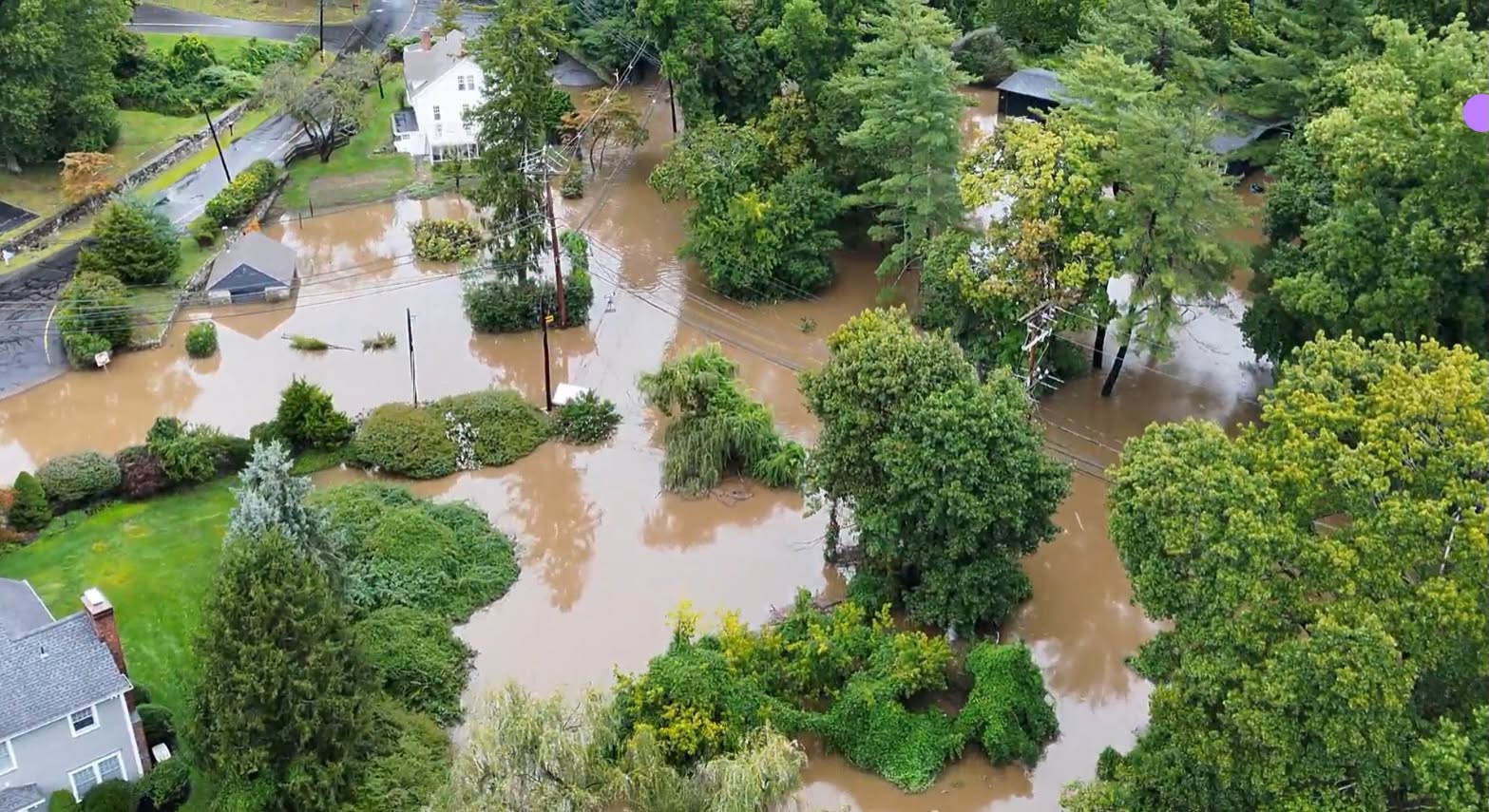
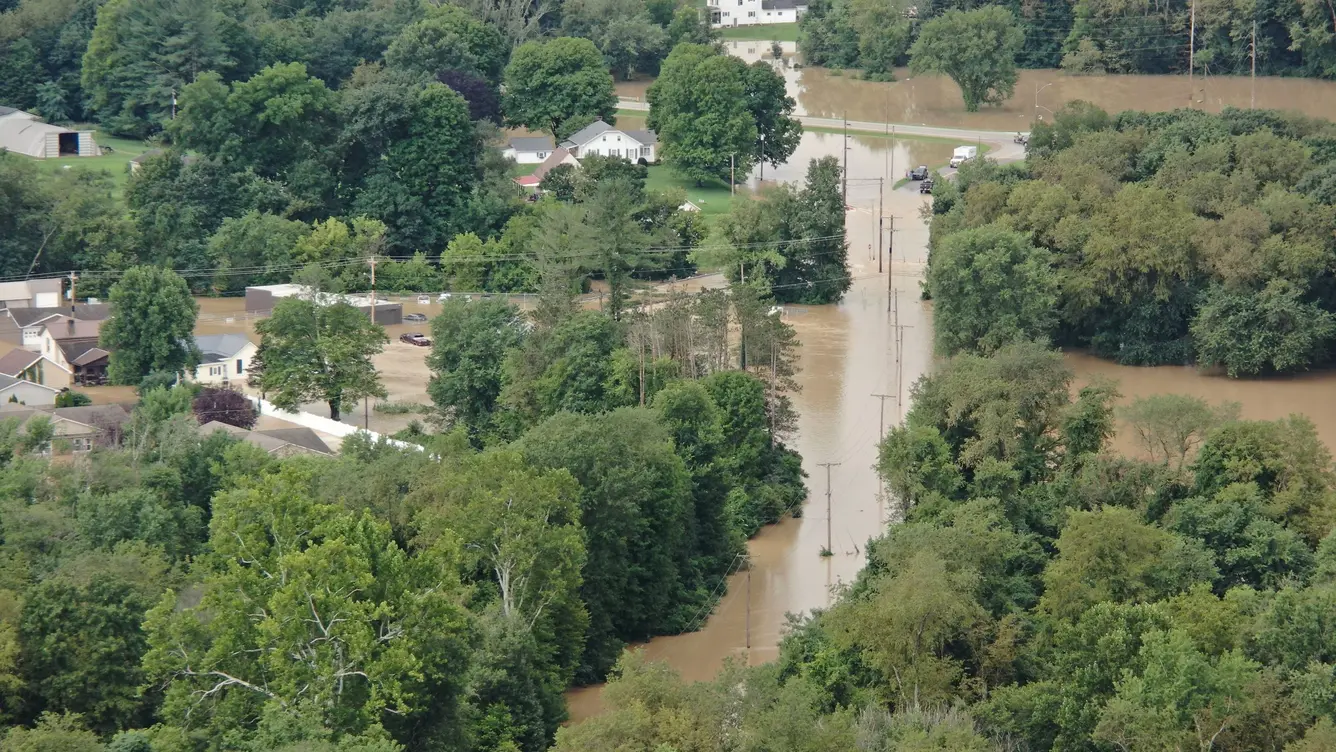
A derecho drove 90 to 100 mph winds across the Midwest and Ohio Valley on Tuesday, knocking out power to more than 700,000 customers in Ohio, Illinois, and Indiana. Torrential rain behind the storm triggered Flash Flood Emergencies across east-central Indiana, where Cambridge City and Muncie took on more than 6.5 inches of rain in hours. Read more. |
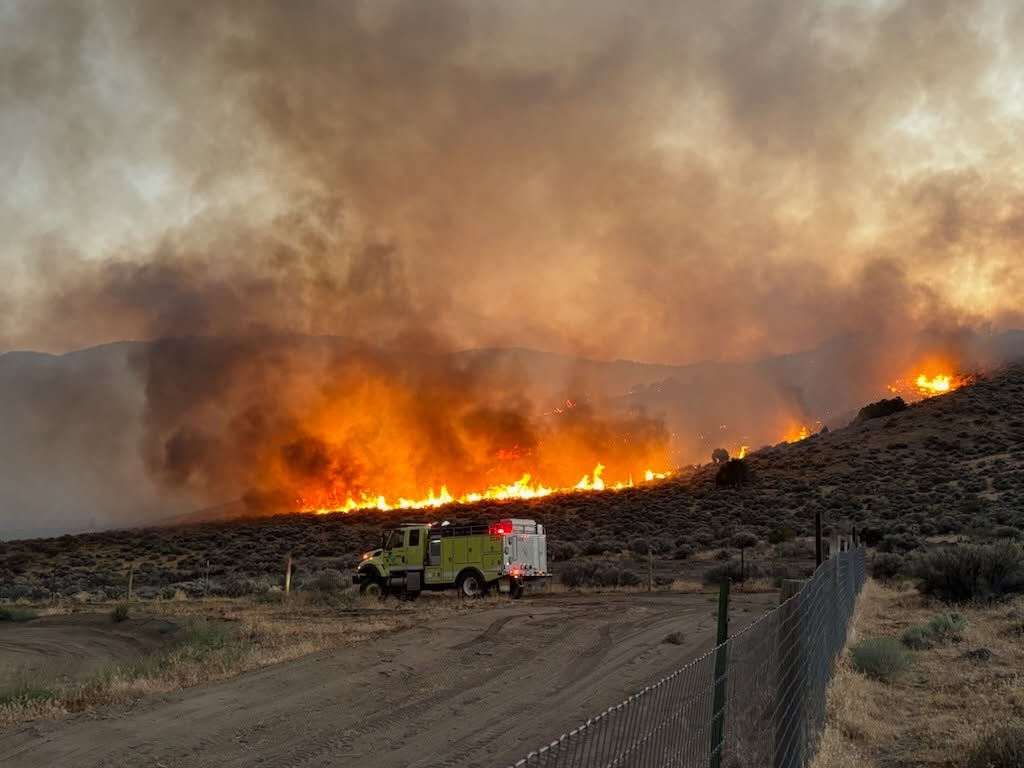
Two wind-driven wildfires north of Reno, Nevada, the Bug Fire and the Stallion Fire, have burned more than 100,000 acres combined and forced roughly 13,000 residents to evacuate. Both fires remain largely uncontained, with crews leaning on water scoopers and air tankers to defend homes across northern Washoe County. Read more. |
The Timber Fire has burned about 4,200 acres of the Los Padres National Forest in California's Big Sur and is 7% contained, closing roughly 10 miles of Highway 1 and prompting evacuations along the Central Coast. No structures have been reported destroyed as crews work to hold the fire east of the highway. Read more. |
The Big Grass Fire on the Oregon–Idaho border became the largest wildfire in Oregon's recorded history this week, surpassing the 2012 Long Draw Fire's roughly 558,000 acres after growing past 579,000 acres. The lightning-caused fire, burning since July 23, is 34% contained and continues to threaten hundreds of homes and force evacuations along the state line. Read more. |
Forecasted Risks for Next Week
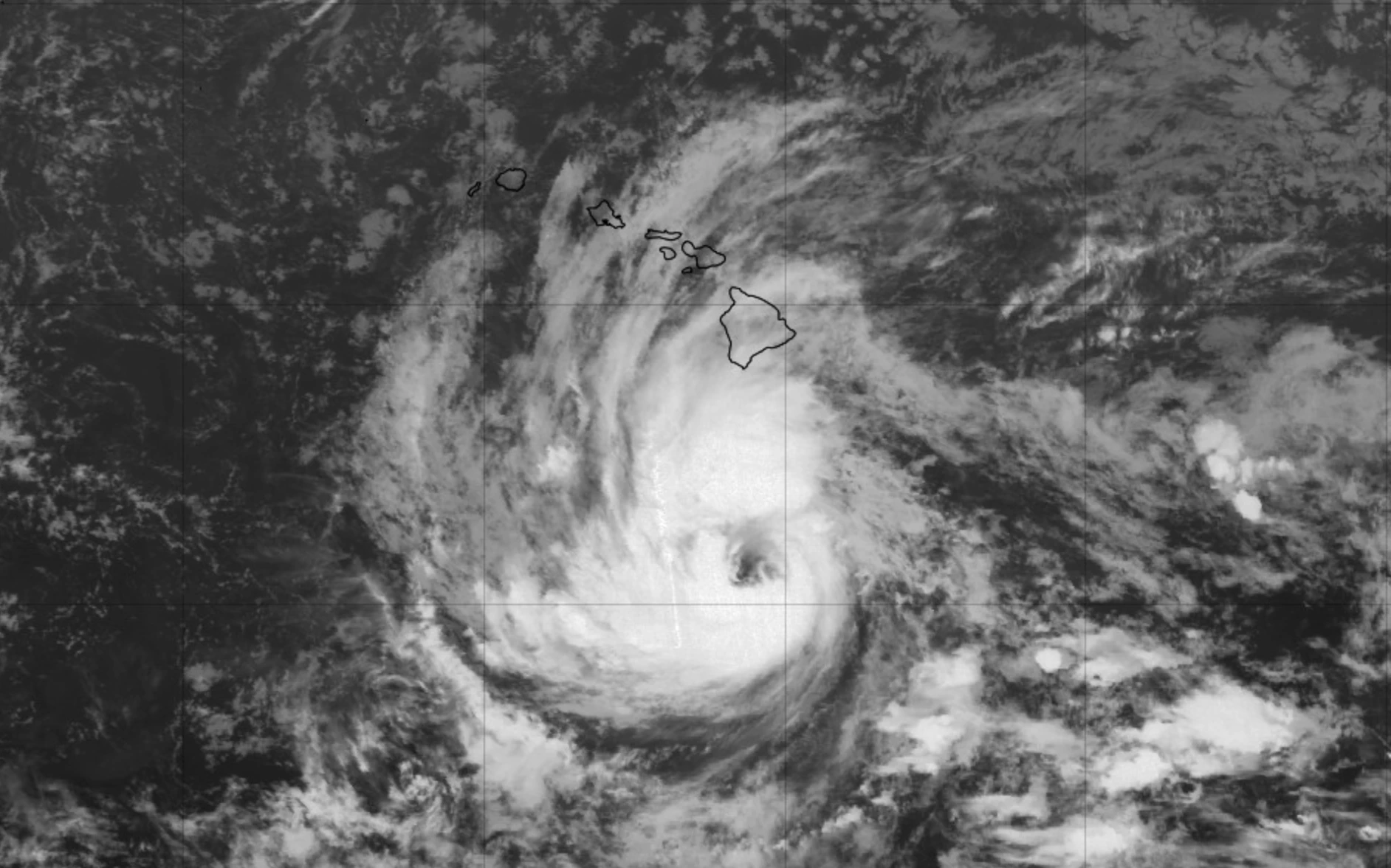
Tropical Storm Lala is closing in on Hawaii's Big Island, now under a Hurricane Warning. Lala is forecast to reach hurricane strength as it nears the island Saturday, with 8 to 12 inches of rain and up to 25 inches possible, and the governor has declared a statewide emergency ahead of life-threatening flooding, mudslides, and surf.
Fire weather remains elevated across the Pacific Northwest and Great Basin. The nation has been at Preparedness Level 5 since mid-July and above-normal fire potential persists across the region, where any wind event could drive rapid growth.
Source: Reno Firefighter's Association
Disasters in the Headlines
Trump’s pick to lead FEMA pledges to be ‘fair and reasonable’ in assessing disaster aid requests
Northern California city declares emergency after malware disrupts 911, public safety systems
Mind the Gap: Cotality Wildfire Risk Report 2026
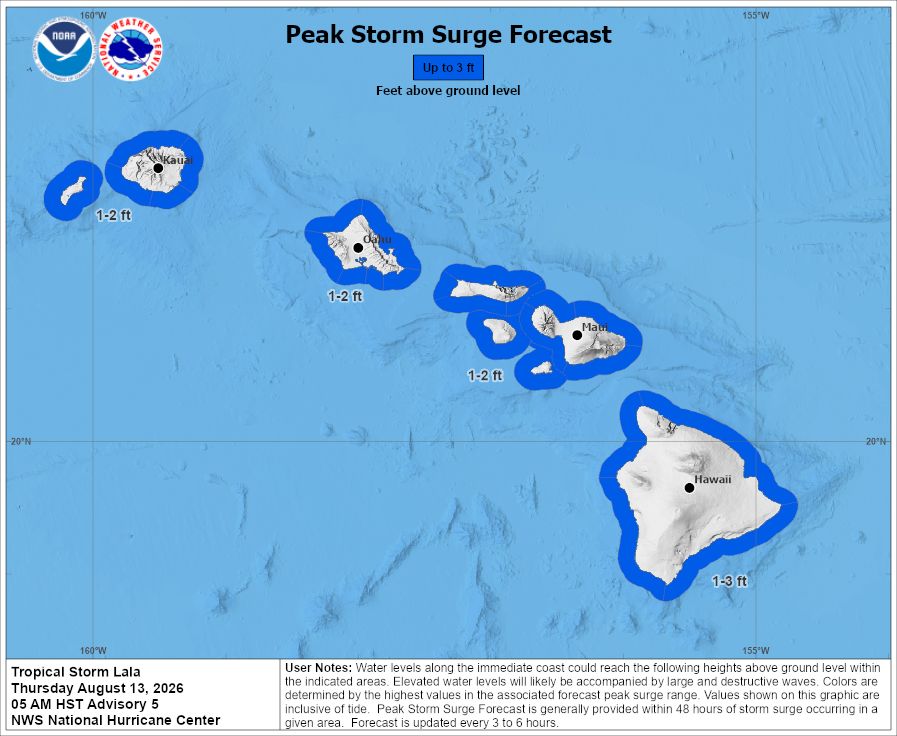
A New Graphic from the National Hurricane Center!
The first ever Peak Storm Surge Graphic issued by the National Hurricane Center released yesterday for the Hawaiian Islands for the approach of Tropical Storm Lala.
PRO PERSPECTIVE
The Emergency Manager Should Never Sit Alone

For Jackie Higgins, the first test of a government's disaster planning is who is in the room. "It should never be just the emergency manager alone sitting in a room," she says. "He or she should be with the CFO, the risk manager, and even someone from the Department of Insurance." She wants all of them at the table for the same reason: insurance works for governments when it enters the conversation before the disaster, as pre-budget support and planning. It fails when it arrives afterward as an afterthought.
Higgins leads Swiss Re's Public Sector Solutions business in the US, helping cities, counties, states, and the federal government prepare for, respond to, and recover from natural disasters like hurricanes, earthquakes, floods, and extreme heat. She came to insurance deliberately and late. After starting at the Office of Management and Budget in the White House and spending more than 25 years in emerging markets debt and equity, she identified insurance as the one financial tool she did not fully understand, and moved inside the industry to learn it. One thread runs through every chapter: making the public sector deliver its services more efficiently and effectively.
Two gaps, side by side
Getting insurance into that early conversation immediately runs into two gaps. The first is informational. Some officials understand their risk well. Many lack the tools to see it, and those who have the tools often face the opposite problem. "There's data overload," Higgins says. Vendors compete to model risk, FEMA flood maps set a baseline that needs augmenting, and no single dataset carries a complete view. Swiss Re benchmarks its own bespoke models against the industry vendor models for exactly that reason. The discipline she coaches clients toward is deciding what data they actually need, which of it is public, and which they must purchase.
The second is the protection gap, and it sits behind the first. Analytics are starting to close the information gap, but knowing the risk raises the harder question of what to do about it. The numbers show how far there is to go: roughly 60 percent of economic losses from disasters go uninsured globally, she says. "Insurance is not going to do all of it, but we need to close that gap."
Parametric curious
Closing it is pushing governments toward products most have never bought. Higgins describes a client base that has become, in her phrase, "parametric curious." Parametric cover pays on a measurable trigger verified by third-party data sources like the National Weather Service and USGS, rather than a claims adjustment. Speed is the point. A flooded building has to dry out before anyone can assess a rebuild, and the fans, hotel rooms, and transportation all cost money a tight budget did not anticipate. The New York City flood program she points to routes parametric proceeds to affected neighborhoods for exactly those costs. "We can send it out super quickly, between three and thirty days," she says, "but then it's the individuals that really need to receive the money."
That last clause is a warning. The payout is the easy half. "The cities have the harder job than we as the insurers," she says. Structuring the product is math, and Swiss Re has that expertise. Designing the program around the product belongs to the city: the outreach, the equity of who receives proceeds, the mechanics of a debit card actually reaching a flooded household. The two efforts run in parallel, and she is clear about which is harder.
A budget line, not a ballot question
Even a well-built program collides with the barrier Higgins considers hardest: culture. Public entities procure services and see the benefit the same year. Insurance inverts that. Taxpayer dollars pay a premium annually for protection at the catastrophic layer, and in most years nothing visible comes back. Election cycles compress the math further. "This is not a political question," she says. "This is a bureaucratic, technocratic decision. Once it becomes a political one, then you only have a short time horizon." Her reframe is blunt: "The concept of using taxpayer funds to pay premiums, just built into your budget every year, is just good financial management practice."
Start with the pain point
The pressure to make that shift is rising. As FEMA's role changes and responsibility moves toward states and localities, Higgins sees risk transfer becoming an integral part of budget and disaster preparation plans. For a county or state that has never bought parametric cover, the first step costs nothing: a conversation about the biggest challenge, the past event that defines it (a Hurricane Harvey, for example), and where the people and property at risk actually sit. The structuring comes later, and it may not end in a sale. "We're not going to sell you a product that's not of value to you," she says. "In some cases it might not be the answer to your problem."
The change she wants ends where her argument began. In most governments today, the risk manager buys insurance on public properties with whatever premium budget the CFO hands down. Higgins imagines one adjustment: the CFO talks to the emergency manager first, has a different conversation, and gives the risk manager more to work with. Some communities are already doing it. "Not as quickly, not as many, but it's definitely happening," she says.
That is the brief for anyone who plans for disasters. Whether the analysis ends in parametric cover, a recovery fund, or no purchase at all, the decision gets better when the CFO, the risk manager, and the emergency manager reach it together. Higgins is not asking governments to buy anything. She is asking them to change who is in the room.
Active Federal Declared Disasters and Deadlines
There is usually a 60 day window to apply for help after a disaster is declared. The following disasters are actively taking applications from survivors for financial support. To apply, survivors can visit DisasterAssistance.gov or call the FEMA Helpline at 1-800‑621‑3362.
Mississippi - Severe Storms, Straight-line Winds, Tornadoes, and FloodingSTATUS Major Disaster declared June 30, 2026; IA applications accepted in eligible counties until August 31, 2026 AFFECTED COUNTIES Franklin, Lawrence, Lincoln, Wilkinson |
Wisconsin - Severe Storms, Tornadoes, and FloodingSTATUS Major Disaster declared June 30, 2026; IA applications accepted in eligible counties until August 31, 2026 AFFECTED COUNTIES Bayfield, Brown, Buffalo, Jackson, Jefferson, Juneau, Kenosha, Manitowoc, Marathon, Milwaukee, Outagamie, Oneida Nation, Racine, Rock, Sauk, Vernon, Washington, Waukesha, Waupaca, Winnebago |
Michigan - Severe Storms, Tornadoes, and FloodingSTATUS Major Disaster declared June 30, 2026; IA applications accepted in eligible counties until August 31, 2026 AFFECTED COUNTIES Alcona, Allegan, Alpena, Antrim, Barry, Benzie, Charlevoix, Cheboygan, Crawford, Emmet, Grand Traverse, Gratiot, Iosco, Kalamazoo, Kalkaska, Manistee, Mecosta, Montcalm, Muskegon, Newaygo, Oceana, Osceola, Presque Isle, Roscommon, Saginaw, Washtenaw, Wexford |
Fort Peck Tribe - Severe Winter Storm and Straightline WindsSTATUS Major Disaster declared May 29, 2026; IA applications accepted in eligible counties until August 31, 2026 AFFECTED COUNTIES Fort Peck Indian Reservation |
Crow Tribe of Montana - Severe Winter Storm and Straightline WindsSTATUS Major Disaster declared May 29, 2026; IA applications accepted in eligible counties until August 31, 2026 AFFECTED COUNTIES Crow Indian Reservation |
Louisiana - Tropical Storm ArthurSTATUS Major Disaster declared June 30, 2026; IA applications accepted in eligible counties until August 31, 2026 AFFECTED COUNTIES Avoyelles, St. Landry, St. Tammany, Terrebonne |
West Virginia - Severe Storm, Straight-line Winds, Tornadoes, Flooding, Landslides, and MudslidesSTATUS Major Disaster declared August 3, 2026; IA applications accepted in eligible counties until October 3, 2026 AFFECTED COUNTIES Lewis, Upshur |
Northern Mariana Islands - Super Typhoon BaviSTATUS Major Disaster declared August 3, 2026; IA applications accepted in eligible counties until October 3, 2026 AFFECTED COUNTIES Rota (Municipality) |
Mississippi - Tropical Storm ArthurSTATUS Major Disaster declared August 3, 2026; IA applications accepted in eligible counties until October 3, 2026 AFFECTED COUNTIES Hancock, Harrison, Pearl River, Stone |
Sign up for This Week in Disasters here.