Are you a disaster survivor looking for help? Click here
This Week in Disasters
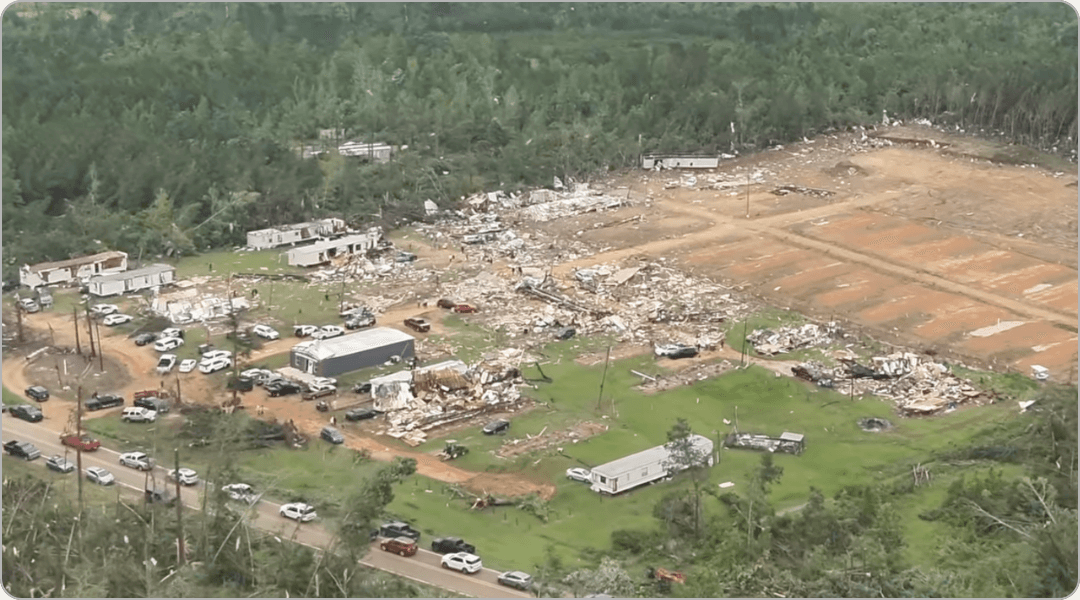
Source: Aftermath of the Mississippi tornadoes. Source: Mississippi Emergency Management Agency
Plus: Mississippi's tornado outbreak, Colorado's late-season blizzard, and a Nevada earthquake swarm that won't quit
Welcome back to This Week in Disasters! This newsletter combines expert perspectives with a weekly roundup of upcoming threats, recent natural disasters, and available survivor assistance. If you’re a Risk, Insurance, Employee Assistance, or Emergency Management professional (or you’re just really curious about disasters in the United States!) you’re in the right place.
FEMA Review Council Releases Final Report
On May 7, the FEMA Review Council released its final report, the product of more than a year of stakeholder engagement and the most significant proposed overhaul of federal disaster policy in years. The ten recommendations would reshape how the federal government, states, and survivors share responsibility before, during, and after a disaster. The full report, presentation, and meeting agenda are available on DHS's publication page. Read takeaways from stakeholders in the Pro Perspective Section below.
Major Disasters of the Last Week
Multiple supercells produced tornadoes across Mississippi the evening of May 6. Governor Tate Reeves reported at least 17 injuries and more than 400 homes damaged, with Lincoln and Lamar counties hit hardest. Read more. |
A spring storm dumped more than 30 inches of snow in parts of the Colorado Rockies, with Estes Park reporting 22 to 31 inches and nearly 3 feet near Rocky Mountain National Park. Cheyenne picked up 8.9 inches, prompting a shutdown of Interstate 80 between Laramie and Cheyenne. Denver International Airport recorded 5.8 inches over two days. Read more. |
A magnitude 5.2 earthquake struck about 12 miles southeast of Silver Springs, Nevada at 1:17 a.m. local time on May 1, the largest event in an aftershock sequence that began with an April 13 magnitude 5.7 main shock. The Nevada Seismological Laboratory at the University of Nevada, Reno reports the responsible fault is extending westward toward Silver Springs, with shallow depths of 2 to 3 miles producing visible surface cracking. The swarm of earthquakes has no clear end date. Read more. |
The South Canal Fire in Lafayette County grew to 1,200 acres at 30% containment by May 7, with heavy smoke closing schools and shutting down U.S. 27 and State Road 51 near Mayo. It is one of several active blazes in north central Florida, alongside the 956-acre Lochloosa West Fire and the Cow Creek Fire near Bronson where structures remain threatened; statewide, Florida has logged nearly 2,000 wildfires and 120,000+ acres burned year-to-date. Read more. |
Forecasted Risks for Next Week
Severe storms continue across the Southeast through Friday. Damaging winds and a few tornadoes are possible across southeast Alabama, south Georgia, and north Florida on May 7 and 8 as the system that struck Mississippi tracks east, with isolated severe potential lingering into the central Gulf coast and South Carolina.
Above-normal wildfire potential continues across the High Plains, Southwest, and Florida. NIFC's May outlook keeps elevated fire potential in place for parts of New Mexico, Arizona, eastern Colorado, west Texas, and Florida, driven by below-normal precipitation and minimum dead-fuel moisture readings.
Severe storms return to the southern Plains by Tuesday and Wednesday as an upper-level system swings in from the west, with potential for supercells, large hail, damaging winds, and tornadoes from north Texas into the western Ozarks. Forecasters see a clear threat building but say it is still too early to pin down exactly where storms will fire.

Rainbow cloud spotted in Indonesia earlier this week.
Disasters in the Headlines
Trump-appointed FEMA Review Council proposes sweeping changes to federal disaster support
FEMA said it answered the phone during the Texas floods. Most callers didn’t get through.
Flag becomes symbol of Helene recovery
PRO PERSPECTIVE
Recommendations on Paper, Reform in Practice
After many months of stakeholder meetings, public comment, and weeks of speculation about what would survive the cutting room, the FEMA Review Council's final report is now in the open. The reaction across emergency management, insurance, legal, and NGO circles is not so much agreement or disagreement. It is a shared question: what happens next?
We brought together five stakeholders working across the disaster ecosystem to share their first read. Their perspectives reflect the breadth of the system the Council is asking Congress to reshape: a former FEMA Administrator, a former Deputy Administrator turned insurance executive, a senior disaster recovery attorney, and two leaders from the country's largest low-income housing advocacy coalition. What emerged was not a single take but a layered look at where the report aligns with momentum already on Capitol Hill, where the recommendations could move the needle for survivors, and where critical voices feel they were left out of the room.
The clearest signal in the report, according to Danielle Aymond, Of Counsel at Baker Donelson, is "the explicit push for legislative action, not just administrative tweaks." That signal points the work toward Congress, where the FEMA Reform Act of 2025 (HR 4669) is already moving on a parallel track. Aymond describes "meaningful alignment" between the Council's recommendations and the bill, "particularly around faster funding delivery, moving away from reimbursement models, and increasing state control."
One notable shift between drafts is also worth flagging. The December version specifically called for FEMA to remain within DHS, while the final report drops that position, bringing it closer to Congress's interest in an independent agency. What remains unresolved, in Aymond's read, are NFIP reform, parametric triggers, and disaster declaration thresholds, which she identifies as "where stakeholders should expect the most negotiation and refinement going forward." She also pointed to a tension inside the report itself, calling the increased direct technical assistance in Recommendation 8 a "direct contradiction" with Recommendations 1 and 10, which shift responsibility outward to states.
The contradiction Aymond flagged is exactly where Noah Patton, Director of Disaster Recovery at the National Low Income Housing Coalition, and Meghan Mertyris, an Analyst with the Coalition's Disaster Housing Recovery Coalition (DHRC), see the deepest risk. Patton argues that pushing responsibility downward will reduce assistance for the households who need it most. "States are not prepared to take on that role," he said, and recent restructuring has made it harder, not easier, for them to build the capacity to try. His concern is blunt: rather than fixing the existing system, the country could end up with "50 plus broken disaster response and recovery systems" instead of one.
Mertyris adds the engagement piece, pointing out that frontline practitioners and survivors submitted significant input during the comment period that "stand[s] in stark, stark contrast to the actual content of the draft report." In her view, the Council "left a lot of valuable insight and partnership on the table." Both look to the bipartisan Fixing Emergency Management for Americans Act as a more workable starting point, particularly its "carrot approach," which rewards states that invest in resilience and mitigation with higher cost shares rather than penalizing those that cannot.
Daniel Kaniewski, founder of Northstar Risk & Resilience and a Bright Harbor advisor, reads the report through both a federal and an insurance industry lens, having served as FEMA's Deputy Administrator for Resilience and later as Managing Director for the Public Sector at Marsh. The recommendations themselves, he says, are "consistent with views that so many of us have within the emergency management community," especially the calls to move assistance faster and reach survivors sooner. The harder question is what comes next. As Kaniewski points out, "it will take a change in the Stafford Act for many of these recommendations to become reality," which means the report's fate runs through the same legislative process Aymond is tracking.
He was also encouraged by what didn't make the final cut. Earlier drafts had floated phasing out the National Flood Insurance Program in favor of private carriers, but the Council ultimately took a more moderate position. NFIP needs reform, Kaniewski agrees, but it also needs to remain in place. As he put it, "NFIP and the private markets need to coexist for quite some time" while private markets gradually take on more flood risk.
Pulling these threads together, three things are worth tracking now. First, the legislative pathway. Roughly a dozen recommendations carry an estimated 150 sub-actions, and the most consequential ones require statutory change. Second, the unresolved trio of NFIP reform, parametric triggers, and declaration thresholds, which will define how close the final law gets to the Council's recommendations. Third, the capacity question. Any shift to states needs a parallel investment in state-level emergency management, or the gap lands on survivors.
What ties all of this together is disaster recovery itself, and Pete Gaynor, President of Bright Harbor and former FEMA Administrator, keeps the focus there. As the proposed reforms move toward operationalization, he says, "improving survivor outcomes [must] remain a priority at every level," and FEMA must stay capable of supporting state, local, tribal, and territorial partners through increasingly complex disasters. Beneath the debates over thresholds, block grants, and where FEMA sits on an org chart, the measure of any of this is whether a family standing in front of a flooded home, a destroyed business, or a wiped-out neighborhood gets the support they need, faster and more fully than the current system allows. Recommendations live or die at that doorstep. The report has been heard. The next chapter will be written by Congress, by the administration, and by states. But the voice that has to carry through every one of those rooms is the voice of the survivor.
Active Federal Major Disasters
There is usually a 60 day window to apply for help after a disaster is declared. The following disasters are still actively taking applications from survivors for financial support.
The following disasters are actively taking applications from survivors for financial support. To apply, survivors can visit DisasterAssistance.gov or call the FEMA Helpline at 1-800‑621‑3362.
Mississippi - Severe Winter StormSTATUS Major Disaster declared February 6, 2026; IA applications accepted in eligible counties until June 10, 2026. AFFECTED COUNTIES Adams, Alcorn, Attala, Benton, Bolivar, Calhoun, Carroll, Claiborne, Coahoma, DeSoto, Grenada, Holmes, Humphreys, Issaquena, Jefferson, Lafayette, Lee, Leflore, Marshall, Mississippi Choctaw Indian Reservation, Montgomery, Panola, Pontotoc, Prentiss, Quitman, Sharkey, Sunflower, Tallahatchie, Tate, Tippah, Tishomingo, Tunica, Union, Warren, Washington, Yalobusha, Yazoo |
Tennessee - Severe Winter StormSTATUS Major Disaster declared February 6, 2026; IA applications accepted in eligible counties until June 10, 2026. AFFECTED COUNTIES Benton, Carroll, Cheatham, Chester, Clay, Davidson, Decatur, Dickson, Dyer, Fayette, Hardeman, Hardin, Henderson, Hickman, Lewis, Macon, Madison, Maury, McNairy, Montgomery, Perry, Robertson, Rutherford, Shelby, Sumner, Trousdale, Wayne, Williamson, Wilson |
Washington - Severe Storms, Straight-line Winds, Flooding, Landslides, and MudslidesSTATUS Major Disaster declared April 7, 2026; IA applications accepted in eligible counties until June 10, 2026. AFFECTED COUNTIES Chehalis Indian Reservation, Chelan, Grays Harbor, King, Lewis, Lummi Indian Reservation, Muckleshoot Indian Reservation, Nisqually Indian Reservation, Nooksack Indian Reservation, Pacific, Pierce, Puyallup Indian Reservation, Quinault Indian Reservation, Samish (TDSA), Sauk-Suiattle Indian Reservation, Shoalwater Bay Reservation, Skagit, Snohomish, Squaxin Island Indian Reservation, Stillaguamish Indian Reservation, Swinomish Indian Reservation, Thurston, Tulalip Indian Reservation, Upper Skagit Indian Reservation, Whatcom |
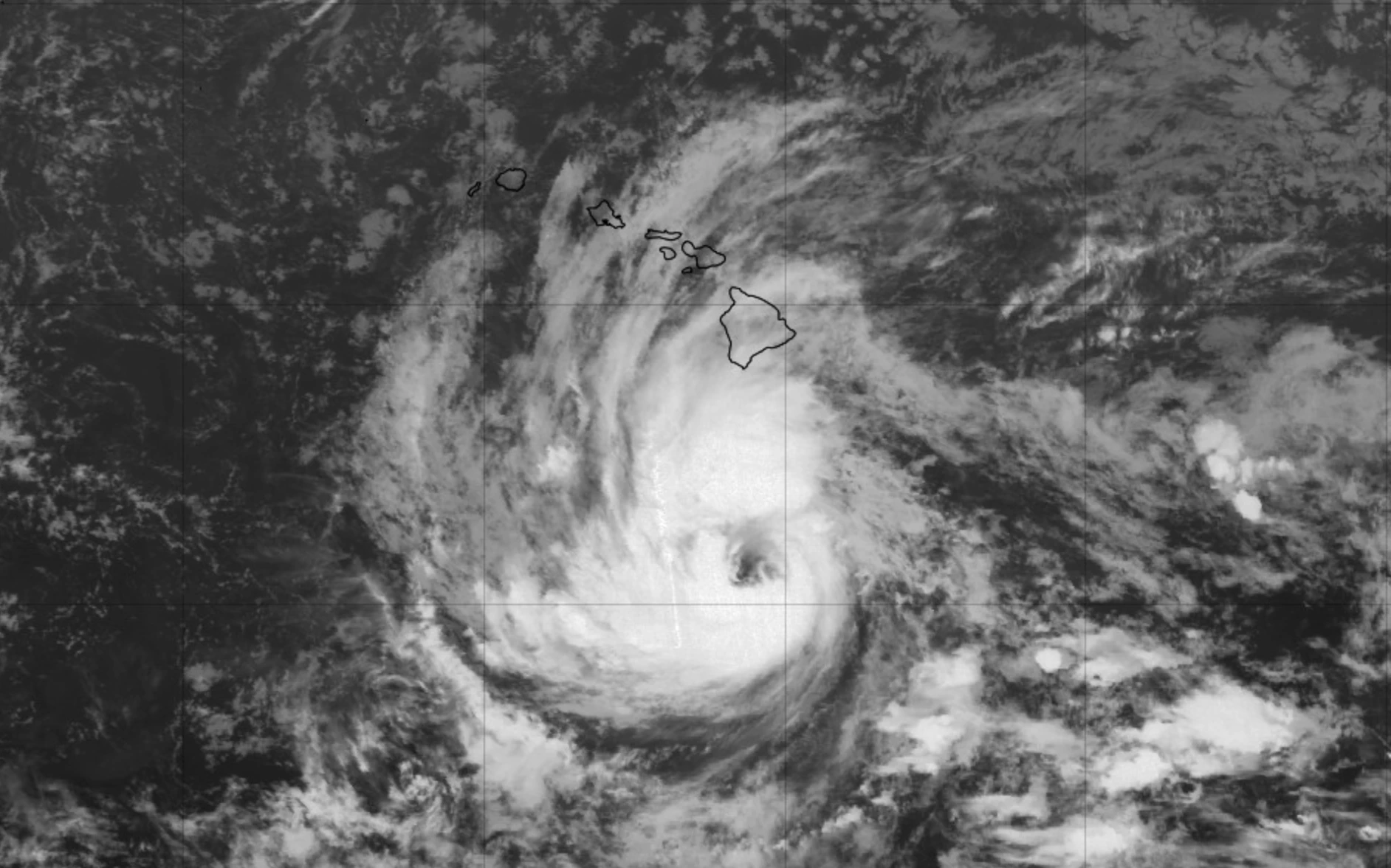
Hawaii - Kona Low Weather SystemsSTATUS Major Disaster declared April 7, 2026; IA applications accepted in eligible counties until June 14, 2026. AFFECTED COUNTIES Hawaii, Honolulu, Maui |
[NEW] Commonwealth of the Northern Mariana Islands - Super Typhoon SinlakuSTATUS Major Disaster declared April 23, 2026; IA applications accepted in eligible counties until June 22, 2026. AFFECTED COUNTIES Northern Islands, Rota, Saipan, Tinian |
North Carolina - Flooding and Storm Damage from Tropical Storm ChantalSTATUS SBA disaster declaration approved July 26, 2025; applications open for residents and businesses in eight NC counties. The deadline to return economic injury applications has been extended to September 30, 2026. APPLY NOW AFFECTED COUNTIES Alamance, Caswell, Chatham, Durham, Granville, Orange, Person, Wake Counties |
Sign up for This Week in Disasters here.