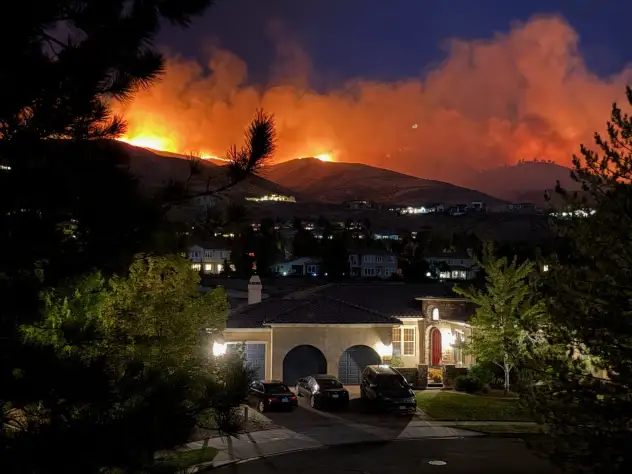
This Week in Disasters
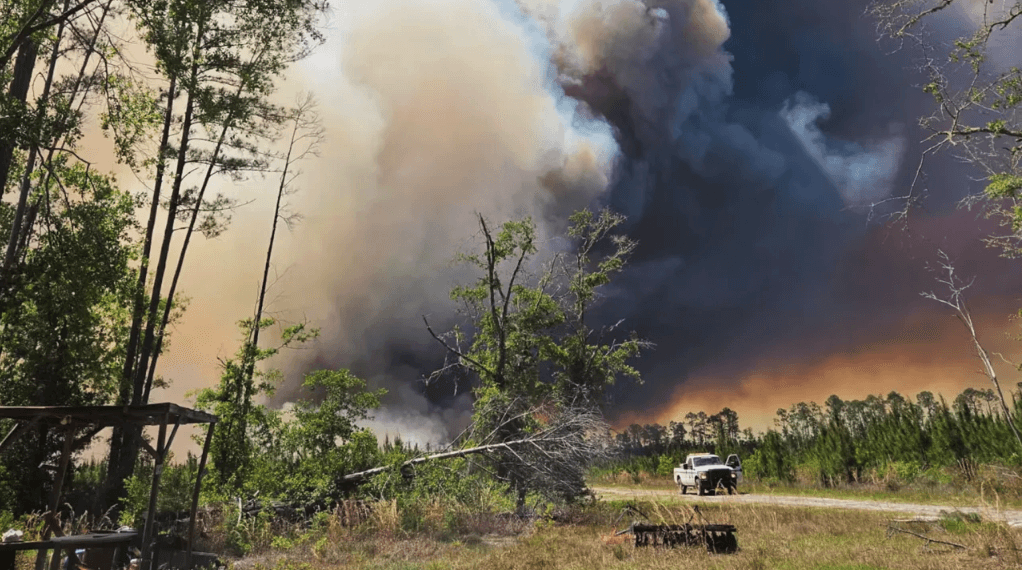
Source: Pineland Road Fire. Source: Georgia Forestry Commission
Plus: the Pacific Palisades rebuild, from someone living it while helping neighbors do the same
Welcome back to This Week in Disasters! This newsletter combines expert perspectives with a weekly roundup of upcoming threats, recent natural disasters, and available survivor assistance. If you’re a Risk, Insurance, Employee Assistance, or Emergency Management professional (or you’re just really curious about disasters in the United States!) you’re in the right place.
Major Disasters of the Last Week
The Pineland Road Fire and Highway 82 Fire are still burning in Georgia. Together they burned more than 50,000 acres and destroyed more than 120, the most lost to wildfire in the state’s history. Read more. |
The Highway 41 Fire in Everglades National Park took advantage of dry fuels, low relative humidity, and shifting winds on Wednesday to grow from 5,000 to 8,500 acres. The price to fight this wildfire has already reached $1 million. Read more. |
A tornado devastated Mineral Wells, Texas on Tuesday, April 28, injuring several people and damaging homes and industrial areas on the sixth straight day of a severe storm outbreak across the central and southern US. The same system brought grapefruit-sized hail to parts of Texas and Missouri, additional tornadoes in Oklahoma, Illinois, and Arkansas, and followed earlier deadly storms including an EF4 tornado in Enid, Oklahoma and a fatal EF2 in North Texas. Read more. Read more. |
Softball-sized hail up to 4.75 inches battered Springfield, Missouri on April 28, 2026, in what officials called the city's worst hailstorm in history, killing an emu at the Dickerson Park Zoo, knocking out power to thousands, and damaging hundreds of vehicles and aircraft. Read more. |
Forecasted Risks for Next Week
A widespread storm will bring soaking rain from Texas to Florida in the coming days, easing drought and wildfire risk. Flash flood warnings will be in effect.
May 2026 is forecast to be one of the coolest in 15 years across the eastern two-thirds of the US, particularly the Midwest and Northeast, where about 141 million people will see below-average temperatures driven by a weakened polar vortex from a late-February sudden stratospheric warming event. Meanwhile, the Pacific Northwest is expected to run hotter and drier than average, raising wildfire concerns amid already widespread drought after an unusually dry winter.
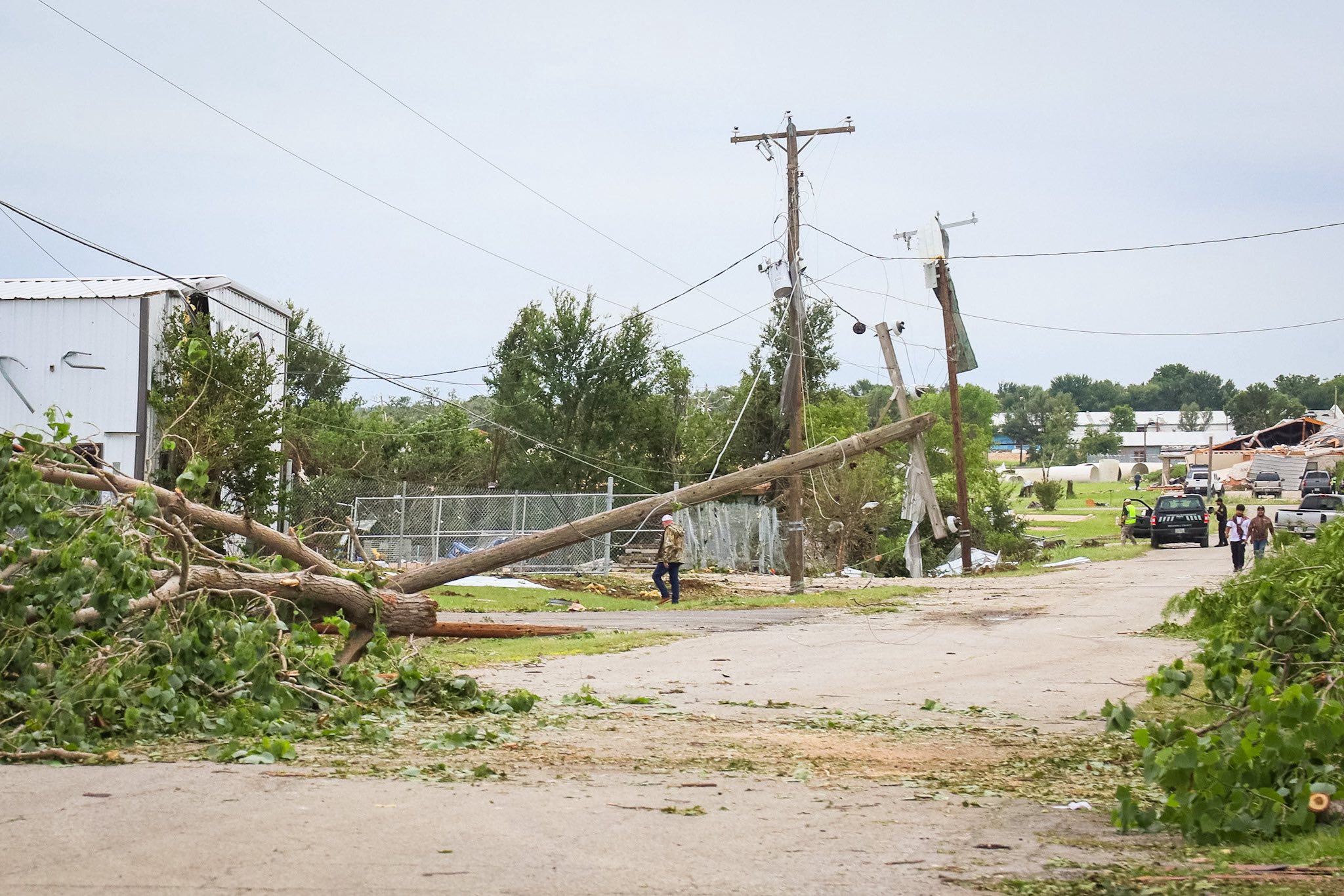
Aftermath of the Mineral Wells tornado. Source: Texas Division of Emergency Management
Disasters in the Headlines
House Votes to End Record-Breaking Homeland Security Shutdown
State emergency chief details Kerr County failures, calls for overhaul of Texas disaster response
Interactive map shows how vulnerable your neighborhood is to disaster
Los Angeles County officials offer fire survivors possible penalty cancellation on property taxes
FEMA reinstates whistleblowers as Trump administration reverses Noem’s policies | CNN Politics
PRO PERSPECTIVE
Permits are Moving. He's Helping Hundreds Decide What's Next.

When Anthony Marguleas tells a client to slow down on a major decision, he's speaking from the same experience. He has worked Pacific Palisades real estate for more than 30 years, helped close to 1,800 families buy and sell homes, and lost his own house in the January 2025 fires. Today he is rebuilding while advising hundreds of survivors weighing the same choice he faced: rebuild or sell. His framing for that conversation is unusual coming from a real estate professional. Before any numbers come out, he asks one question: "If everything was equal financially, where would you want your life to be in three to five years?" As he puts it, "it's a life decision disguised as a real estate decision."
That orientation matters for anyone in the recovery ecosystem, because Marguleas argues the real obstacle to rebuilding isn't the permit office. From what he is seeing on the ground, Los Angeles created an expedited rebuild track after the fires for owners replacing what they lost, with a softer ceiling for homes built up to 110 percent of their original footprint. On paper that program is the exception, but in practice he says the city is moving nearly every Palisades rebuild through it, including larger projects. His own approval, for a home built at 130 percent of his prior footprint, came back in 45 days. Citywide, the Palisades is now clearing roughly 100 permits a month at about three and a half months per turnaround, a pace he expects to climb toward 200.
What is actually holding rebuilds back is what happens before the permit application is even filed. Loss-of-use funds run out, mortgage forbearance has ended for most homeowners, and many families are now carrying a mortgage on a destroyed home and rent on a temporary one while waiting for the insurance side of the equation to catch up.
There is a counterintuitive pattern in his own client base. Families with total losses are often further along than families with significant smoke damage. A total loss is straightforward to settle because there is nothing left to assess, while partial damage requires layered inspections and detailed scoping of what is salvageable versus what has to be torn out, often with disagreement at every step. Hundreds of smoke-damaged homes in the Palisades have not yet begun remediation as a result. As Marguleas puts it, "it's much easier for an insurance company to say, yeah, you've lost your home, we're going to pay you a certain amount, and you can get started." The delay is a feature of how partial-loss claims work, and one of the clearest places where tighter coordination between carriers, adjusters, contractors, and homeowners could meaningfully shorten recovery timelines.
That same delay creates an opening for what Marguleas calls "bottom dwellers," speculators who began calling within 72 hours of the fire. His warning sign is simple: urgency. Anyone pushing a homeowner to sell, sign, or commit before they have had time to think is the wrong partner. California's anti-solicitation rules now make unsolicited offers on off-market fire properties illegal, and land-title scams have become common enough that Marguleas verifies government-issued ID, a tax bill, and a passport photo before listing any lot. The professionals around survivors can reinforce the same instinct: there is almost never a legitimate reason to rush a major life decision.
Underneath the data, his work has shifted closer to counseling than brokerage. "We really become more like psychologists," he says. Every listing he signs includes a clause letting the seller cancel at any point before an offer is accepted, no fee owed, because families often realize mid-process that they are not ready to let go. He describes walking a burned lot with sellers when the incoming buyer called to say how excited they were to build something new on the site. The sellers cried. "It's very hard for a buyer to put themselves in a seller's shoes and understand that they didn't just lose a house. They lost the memories of what went on in that house." Anyone working downstream of a disaster, whether in claims, case management, or recovery programs, is engaging with people in grief, and the empathy gap between insider and outsider experience is wider than most realize.
For himself, the choice was never close. His four children grew up in the Palisades, walked to the local schools, and tattooed the family's address onto their bodies. "Not rebuilding was never an option for us," he says. His message to the professionals working alongside survivors is shaped by that same perspective. Keep showing up with empathy.
A year past the fire, his single piece of advice for anyone still weighing their next move is the one most disaster timelines don't seem to allow for. Wait. Get good information. Make the decision once.
Active Federal Major Disasters
There is usually a 60 day window to apply for help after a disaster is declared. The following disasters are still actively taking applications from survivors for financial support.
The following disasters are actively taking applications from survivors for financial support. To apply, survivors can visit DisasterAssistance.gov or call the FEMA Helpline at 1-800‑621‑3362.
Mississippi - Severe Winter StormSTATUS Major Disaster declared February 6, 2026; IA applications accepted in eligible counties until June 10, 2026. AFFECTED COUNTIES Adams, Alcorn, Attala, Benton, Bolivar, Calhoun, Carroll, Claiborne, Coahoma, DeSoto, Grenada, Holmes, Humphreys, Issaquena, Jefferson, Lafayette, Lee, Leflore, Marshall, Mississippi Choctaw Indian Reservation, Montgomery, Panola, Pontotoc, Prentiss, Quitman, Sharkey, Sunflower, Tallahatchie, Tate, Tippah, Tishomingo, Tunica, Union, Warren, Washington, Yalobusha, Yazoo |
Tennessee - Severe Winter StormSTATUS Major Disaster declared February 6, 2026; IA applications accepted in eligible counties until June 10, 2026. AFFECTED COUNTIES Benton, Carroll, Cheatham, Chester, Clay, Davidson, Decatur, Dickson, Dyer, Fayette, Hardeman, Hardin, Henderson, Hickman, Lewis, Macon, Madison, Maury, McNairy, Montgomery, Perry, Robertson, Rutherford, Shelby, Sumner, Trousdale, Wayne, Williamson, Wilson |
Washington - Severe Storms, Straight-line Winds, Flooding, Landslides, and MudslidesSTATUS Major Disaster declared April 7, 2026; IA applications accepted in eligible counties until June 10, 2026. AFFECTED COUNTIES Chehalis Indian Reservation, Chelan, Grays Harbor, King, Lewis, Lummi Indian Reservation, Muckleshoot Indian Reservation, Nisqually Indian Reservation, Nooksack Indian Reservation, Pacific, Pierce, Puyallup Indian Reservation, Quinault Indian Reservation, Samish (TDSA), Sauk-Suiattle Indian Reservation, Shoalwater Bay Reservation, Skagit, Snohomish, Squaxin Island Indian Reservation, Stillaguamish Indian Reservation, Swinomish Indian Reservation, Thurston, Tulalip Indian Reservation, Upper Skagit Indian Reservation, Whatcom |
Hawaii - Kona Low Weather SystemsSTATUS Major Disaster declared April 7, 2026; IA applications accepted in eligible counties until June 14, 2026. AFFECTED COUNTIES Hawaii, Honolulu, Maui |
[NEW] Commonwealth of the Northern Mariana Islands - Super Typhoon SinlakuSTATUS Major Disaster declared April 23, 2026; IA applications accepted in eligible counties until June 22, 2026. AFFECTED COUNTIES Northern Islands, Rota, Saipan, Tinian |
North Carolina - Flooding and Storm Damage from Tropical Storm ChantalSTATUS SBA disaster declaration approved July 26, 2025; applications open for residents and businesses in eight NC counties. The deadline to return economic injury applications has been extended to September 30, 2026. APPLY NOW AFFECTED COUNTIES Alamance, Caswell, Chatham, Durham, Granville, Orange, Person, Wake Counties |
Sign up for This Week in Disasters here.