Are you a disaster survivor looking for help? Click here
This Week in Disasters
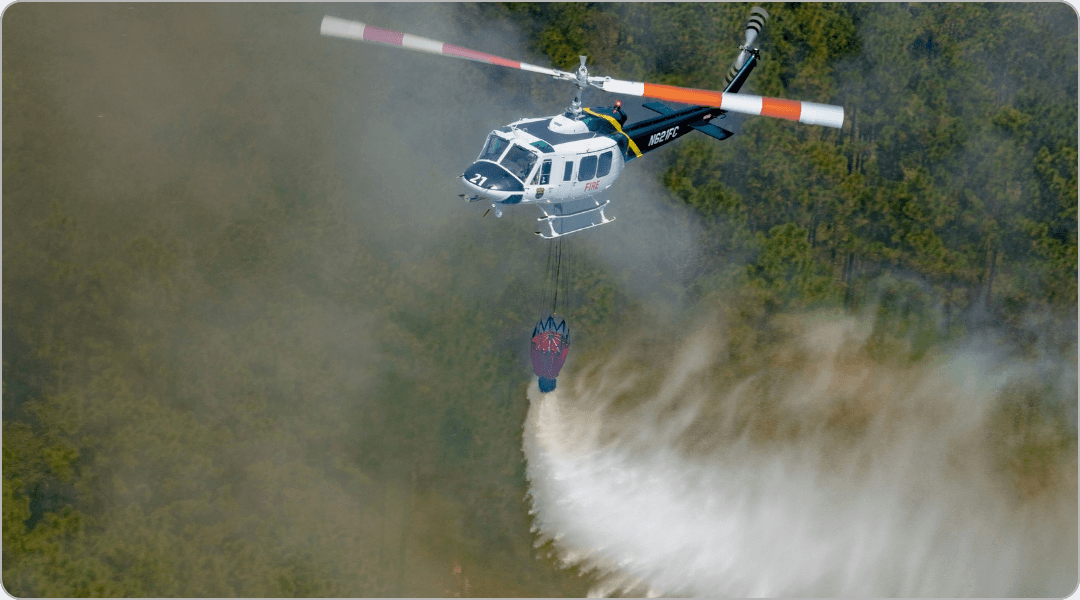
Source: Florida Forest Service
Plus: a shadow administrator at FEMA
Welcome back to This Week in Disasters! This newsletter combines expert perspectives with a weekly roundup of upcoming threats, recent natural disasters, and available survivor assistance. If you’re a Risk, Insurance, Employee Assistance, or Emergency Management professional (or you’re just really curious about disasters in the United States!) you’re in the right place.
Major Disasters of the Last Week
Three large fires opened in three days as critical fire weather settled over the Southeast. The Highway 82 Fire in Brantley County, GA has burned over 5,000 acres and is only 15% contained with 48 homes destroyed and 1,000 homes threatened; the Pineland Road Fire in Clinch and Echols Counties, GA reached over 29,000 and is just 10%; and the Railroad Fire Complex in Putnam and Clay Counties, FL grew to over 4,000 acres and is about 55% contained. FMAGs were approved for all three between April 21 and 22. Read more. |
A severe weather outbreak unleashed at least 80 tornadoes in a single day last Friday, stretching from Oklahoma to Michigan and leaving a trail of damage across the Midwest. The twisters combined tracks was about 650 miles. Read more. Read more. |
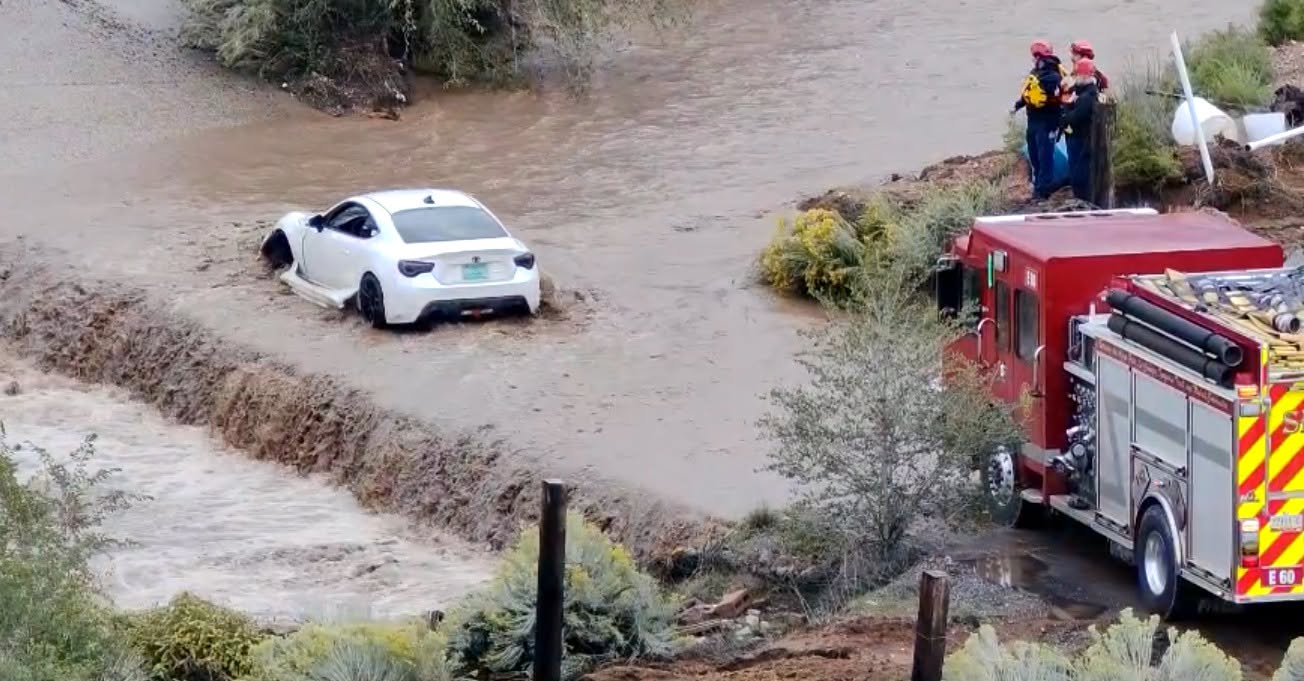
Heavy rainfall of 3–5 inches on April 20 triggered flash flood warnings across Bexar, Comal, and Guadalupe counties, with flood emergencies issued for San Antonio, New Braunfels, and Schertz as creeks overtopped overnight. Read more. |
A fast-moving wildfire forced evacuations near Red Lodge on April 20, with smoke visible for miles across Carbon County. The fire has burned over 1,200 acres and is at 10% containment, showing an early start to the Rockies fire season. Read more. |
Several homes and structures were destroyed as long-tracked tornadoes moved through northern Oklahoma on Thursday. Read more. |
Forecasted Risks for Next Week
Active burn bans and elevated fire danger in the Carolinas and southern Virginia through the weekend as 25–30% minimum humidity combines with gusty WSW winds; both Carolinas have burn bans in effect indefinitely.
Severe weather threat returning to the Upper Midwest and Mississippi Valley Sunday and Monday as a secondary frontal system moves through Minnesota and Wisconsin, the same area still drying out from this month's flooding.
Critical fire weather across the High Plains and northern Rockies through the weekend with gusty winds, single-digit humidity, and persistent drought from east-central New Mexico into central South Dakota.
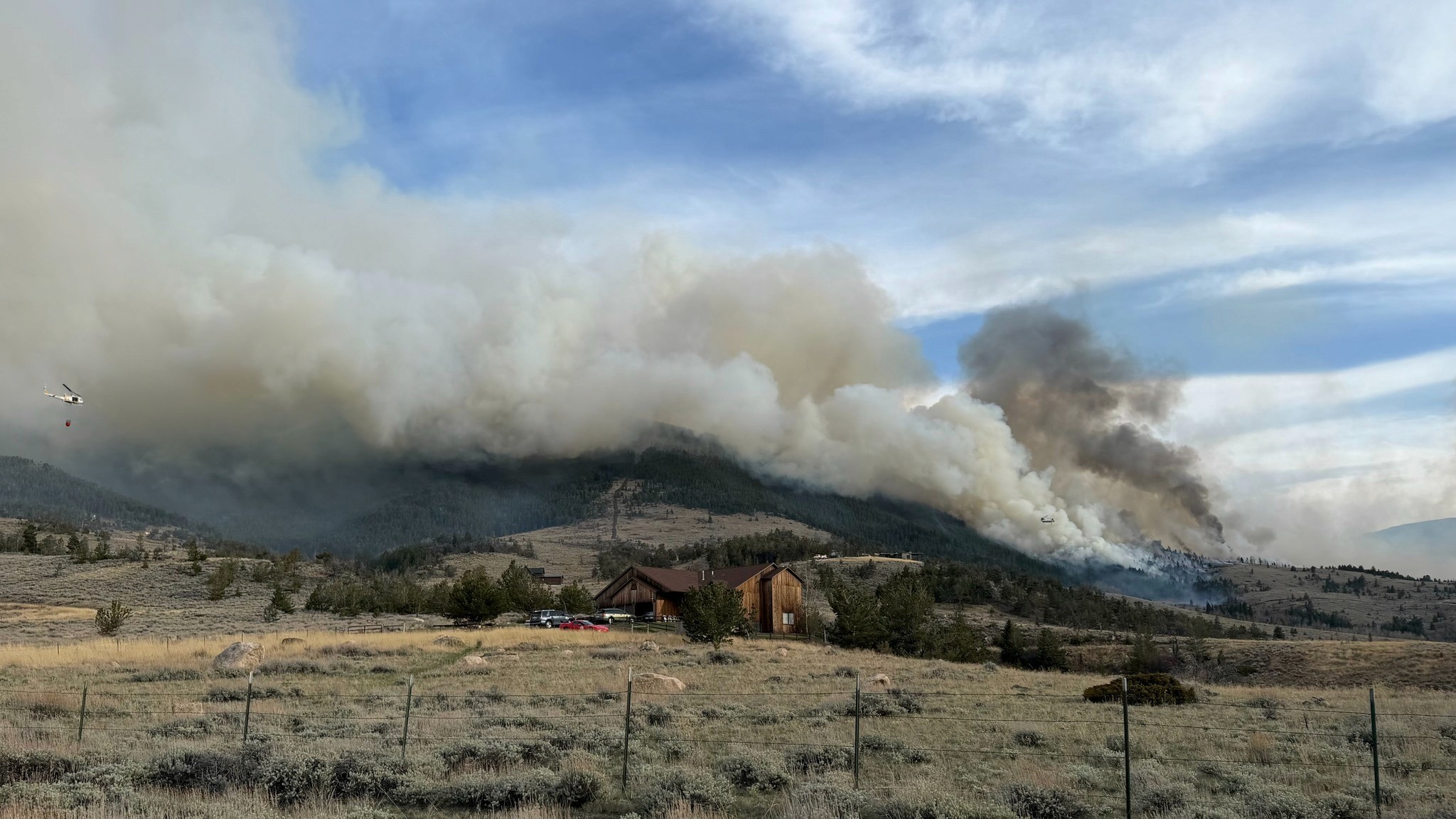
East Side Fire. Source: Custer Gallatin National Forest
Disasters in the Headlines
Climate risk is already reshaping the U.S. housing market?
Court filing backs up claims of ‘shadow administrator’ at FEMA
Typhoon Sinlaku Highlights Importance of Voluntary, Faith-Based, and Non-Governmental Partnerships
PRO PERSPECTIVE
Before the storm: a different way to think about corporate disaster giving
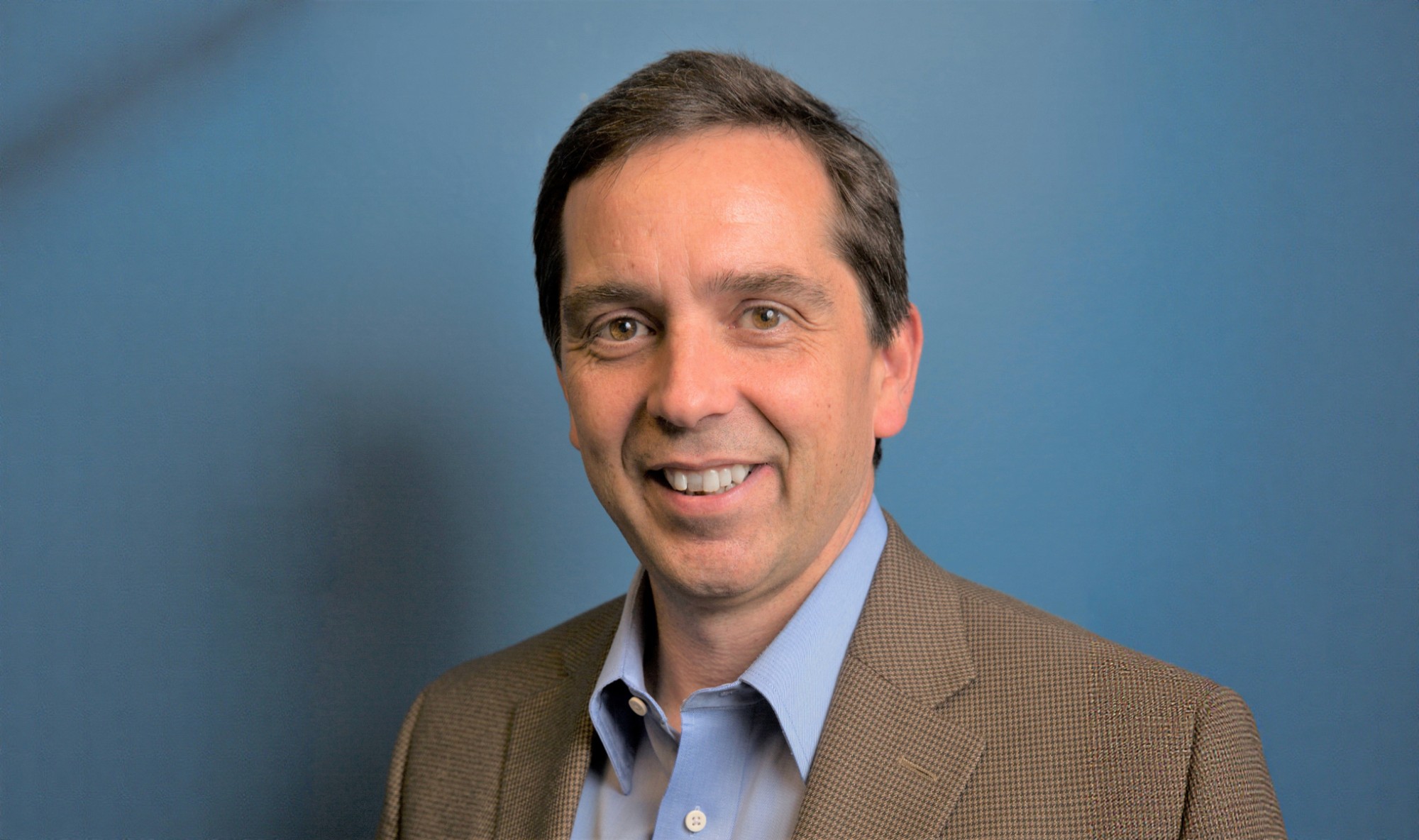
Ask any corporate giving officer what their disaster response strategy looks like and you'll usually hear some version of the same thing. They have partners they trust, a matching gift program ready to go, and funds they can push out fast when something hits. Which is exactly the problem, according to Jim Starr, CEO of America's Charities. By the time companies are pushing, the window to do the most good is mostly closed.
Starr spent years at the American Red Cross leading volunteer management before moving to America's Charities, where his organization recently crossed $1 billion raised through workplace giving since 1980. Most of his days now are spent saying the same quiet thing to corporate partners over and over: fund the work before the event, not after it.
"In a disaster, speed and availability are crucial," he said. "How fast can a relief effort get stood up? How fast can you get people and supplies to the impacted area? How fast can you move dollars to those impacted? And having those things ready, and by ready, I mean funded, is absolutely critical."
The logic lands. The calendar doesn't. As Starr put it, nothing spurs action like a burning platform, and the relief sector has spent decades watching corporate dollars arrive in a predictable rush after the cameras show up.
The money shows up. It just shows up too late.
Ask any corporate giving officer what their disaster response strategy looks like and you'll usually hear some version of the same thing. They have partners they trust, a matching gift program ready to go, and funds they can push out fast when something hits. Which is exactly the problem, according to Starr of America's Charities. By the time companies are pushing, the window to do the most good is mostly closed.
Starr spent years at the American Red Cross leading volunteer management before moving to America's Charities, where his organization recently crossed $1 billion raised through workplace giving since 1980. Most of his days now are spent saying the same quiet thing to corporate partners over and over: fund the work before the event, not after it.
"In a disaster, speed and availability are crucial," he said. "How fast can a relief effort get stood up? How fast can you get people and supplies to the impacted area? How fast can you move dollars to those impacted? And having those things ready, and by ready, I mean funded, is absolutely critical."
The logic lands. The calendar doesn't. "Nothing spurs action better than a burning platform," Starr said, describing the pattern he's watched for years. "The flood of resources pours in in the immediate aftermath of a disaster."
Operating in the unknown
The case for pre-disaster readiness has always been strong. What's changed is how much of the downstream system companies can count on being there when they need it.
A lot of corporate disaster programs were designed around a set of assumptions that used to be relatively stable. A federal disaster declaration would come through in a predictable window. Federal dollars would flow. Employer Emergency Assistance Funds (EAFs), structured around federally qualified events, would activate in lockstep. Workplace giving programs like the Combined Federal Campaign would quietly raise hundreds of millions a year in the background. None of those assumptions are broken, exactly. But none of them are as firm as they used to be either.
FEMA is in the middle of a period of transition, and the operational effect on Starr's world is less about any single policy change and more about uncertainty itself. "What we're seeing happening with the changes at FEMA, it's impacting things like the amount of time it takes to get a disaster federally declared," he said. "Which as you know impacts the timing and the amount of government assistance that can be provided to those who've been impacted." For companies whose EAFs are structured to activate only on a federal trigger, that ambiguity stalls the very thing the fund was built to do: get help to employees fast.
The Combined Federal Campaign sits in a similar unknown. The program, which has raised hundreds of millions for nonprofits over its history, may not run. "That could be a significant blow to the nonprofit sector at large," Starr said, "but also all of those organizations that are involved in disaster relief."
The through line is that companies can't build a modern disaster response around infrastructure they can't predict. Which is why Starr's team has started helping clients rewire the triggers themselves. Rather than waiting on Washington, they're pointing companies toward state-level declarations as qualifying events. "The states are much more agile and ready to declare an emergency event than the federal government is," Starr said. That matters most for the smaller events that rarely make national news. "We saw it a while back in California where assistance was delayed. But where we also see it is in these kinds of smaller disasters. A lot of those are the winter storms or tornadoes and things of that nature. And frankly, they're just not getting to the federal level or federal declaration."
The shift is the same core idea applied one layer deeper: if you want help to move fast, you build the mechanism that moves fast, and you don't tie it to anything you can't control.
What companies doing this well actually do
The pattern Starr sees in the companies that stand out isn't about bigger checks. It's a different posture toward the work.
They treat disaster preparedness as part of their ongoing giving, not something they switch on when CNN shows up. They build campaigns that can activate at the first threat of a storm rather than the first images of damage, and they pair them with matching gifts to multiply what employees contribute. They vet and train volunteer teams in advance, because as Starr noted, you can't show up with a hundred employees and expect a relief organization to absorb them on the day of. "They have to be ready to go when that disaster strikes."
And they fund Emergency Assistance Funds for their own people. This one matters more than it tends to get credit for.
"Not only is it helping the employees that have been impacted by the disaster, and not only helping the company by helping their employees, it's actually helping the broader community," Starr said. The logic is almost counterintuitive. Employees with access to a company fund aren't competing for scarce community relief dollars, which means those dollars reach people with nowhere else to turn.
The companies that do all this well tend to know their local disaster ecosystem well. They know which nonprofits operate in their markets, who the vulnerable populations are, and what the recovery timeline looks like months after the news cycle has moved on. "They're engaged with that community before, during, and after a disaster," Starr said. "It's more than just writing a check."
The harder problem
Stepping back from any individual company's program, Starr sees a broader gap the sector hasn't solved for. There isn't, at the moment, a clear national authority for disaster relief the way there arguably once was. "I'm not sure that it's FEMA at the moment. It has been in the past. And frankly, I'm not 100 percent sure it really should be," he said. The space, as he described it, is "a little fragmented."
He does see real opportunity for locally rooted organizations to fill more of that ground. "Those that are closest on the ground know where the needs are greatest. They also know the network that's in place to be able to provide assistance and can get those activated a lot faster." The catch, he said, is visibility. "It is a lot harder for smaller, more locally based organizations to be known to those larger corporate and foundation funders."
Which circles back to attention, the quiet constant in every part of this conversation. "No one really pays attention to the incredible work of the disaster relief sector until a disaster strikes," Starr said. He pointed to Hurricane Helene, where the work continues in communities most of the country has long since stopped thinking about. "There are still devastated and impacted communities that need a lot of work and a lot of assistance. And no one really knows about it other than those that are directly involved." Even the start of hurricane season barely registers. "There'll be a little bit of a flurry of stuff, maybe an article in USA Today, and other than that, you'll hear nothing until a hurricane's within striking distance."
For emergency managers, insurers, and corporate partners, the practical message is narrower than the cultural one. The federal picture will keep shifting. The news cycle will keep moving on. The infrastructure that moves fastest during a disaster is the infrastructure that was already in place before it started, and the companies building that infrastructure now are the ones whose people and communities will be standing first when the next event arrives.
Active Federal Major Disasters
There is usually a 60 day window to apply for help after a disaster is declared. The following disasters are still actively taking applications from survivors for financial support.
The following disasters are actively taking applications from survivors for financial support. To apply, survivors can visit DisasterAssistance.gov or call the FEMA Helpline at 1-800‑621‑3362.
Mississippi - Severe Winter StormSTATUS Major Disaster declared February 6, 2026; IA applications accepted in eligible counties until June 10, 2026. AFFECTED COUNTIES Adams, Alcorn, Attala, Benton, Bolivar, Calhoun, Carroll, Claiborne, Coahoma, DeSoto, Grenada, Holmes, Humphreys, Issaquena, Jefferson, Lafayette, Lee, Leflore, Marshall, Mississippi Choctaw Indian Reservation, Montgomery, Panola, Pontotoc, Prentiss, Quitman, Sharkey, Sunflower, Tallahatchie, Tate, Tippah, Tishomingo, Tunica, Union, Warren, Washington, Yalobusha, Yazoo |
Tennessee - Severe Winter StormSTATUS Major Disaster declared February 6, 2026; IA applications accepted in eligible counties until June 10, 2026. AFFECTED COUNTIES Benton, Carroll, Cheatham, Chester, Clay, Davidson, Decatur, Dickson, Dyer, Fayette, Hardeman, Hardin, Henderson, Hickman, Lewis, Macon, Madison, Maury, McNairy, Montgomery, Perry, Robertson, Rutherford, Shelby, Sumner, Trousdale, Wayne, Williamson, Wilson |
Washington - Severe Storms, Straight-line Winds, Flooding, Landslides, and MudslidesSTATUS Major Disaster declared April 7, 2026; IA applications accepted in eligible counties until June 10, 2026. AFFECTED COUNTIES Chehalis Indian Reservation, Chelan, Grays Harbor, King, Lewis, Lummi Indian Reservation, Muckleshoot Indian Reservation, Nisqually Indian Reservation, Nooksack Indian Reservation, Pacific, Pierce, Puyallup Indian Reservation, Quinault Indian Reservation, Samish (TDSA), Sauk-Suiattle Indian Reservation, Shoalwater Bay Reservation, Skagit, Snohomish, Squaxin Island Indian Reservation, Stillaguamish Indian Reservation, Swinomish Indian Reservation, Thurston, Tulalip Indian Reservation, Upper Skagit Indian Reservation, Whatcom |
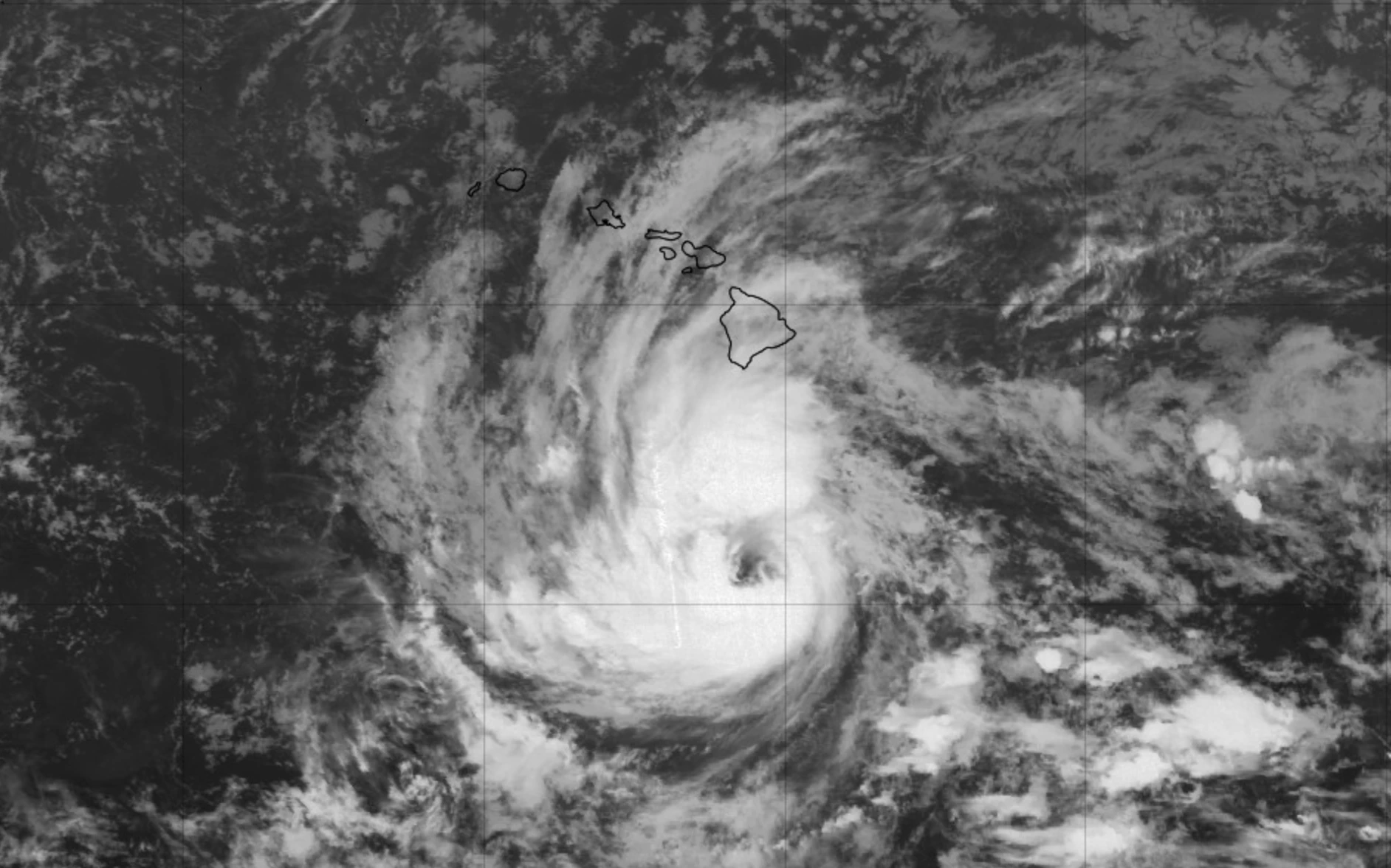
Hawaii - Kona Low Weather SystemsSTATUS Major Disaster declared April 7, 2026; IA applications accepted in eligible counties until June 14, 2026. AFFECTED COUNTIES Hawaii, Honolulu, Maui |
[NEW] Commonwealth of the Northern Mariana Islands - Super Typhoon SinlakuSTATUS Major Disaster declared April 23, 2026; IA applications accepted in eligible counties until June 22, 2026. AFFECTED COUNTIES Northern Islands, Rota, Saipan, Tinian |
North Carolina - Flooding and Storm Damage from Tropical Storm ChantalSTATUS SBA disaster declaration approved July 26, 2025; applications open for residents and businesses in eight NC counties. The deadline to return economic injury applications has been extended to September 30, 2026. APPLY NOW AFFECTED COUNTIES Alamance, Caswell, Chatham, Durham, Granville, Orange, Person, Wake Counties |
Sign up for This Week in Disasters here.