Are you a disaster survivor looking for help? Click here
This Week in Disasters
Source: Source: NASA Earth Observatory/Michala Garrison
Plus: new disaster declarations
Welcome back to This Week in Disasters! This newsletter combines expert perspectives with a weekly roundup of upcoming threats, recent natural disasters, and available survivor assistance. If you’re a Risk, Insurance, Employee Assistance, or Emergency Management professional (or you’re just really curious about disasters in the United States!) you’re in the right place.
Major Disasters of the Last Week
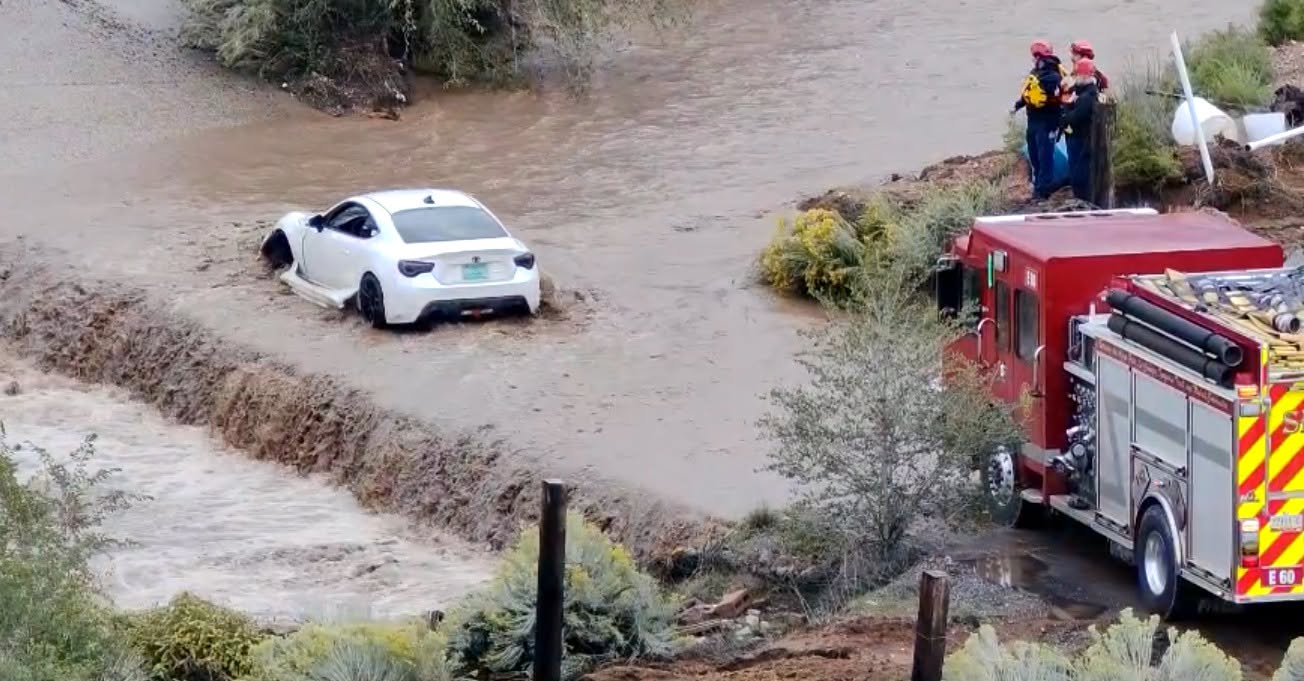
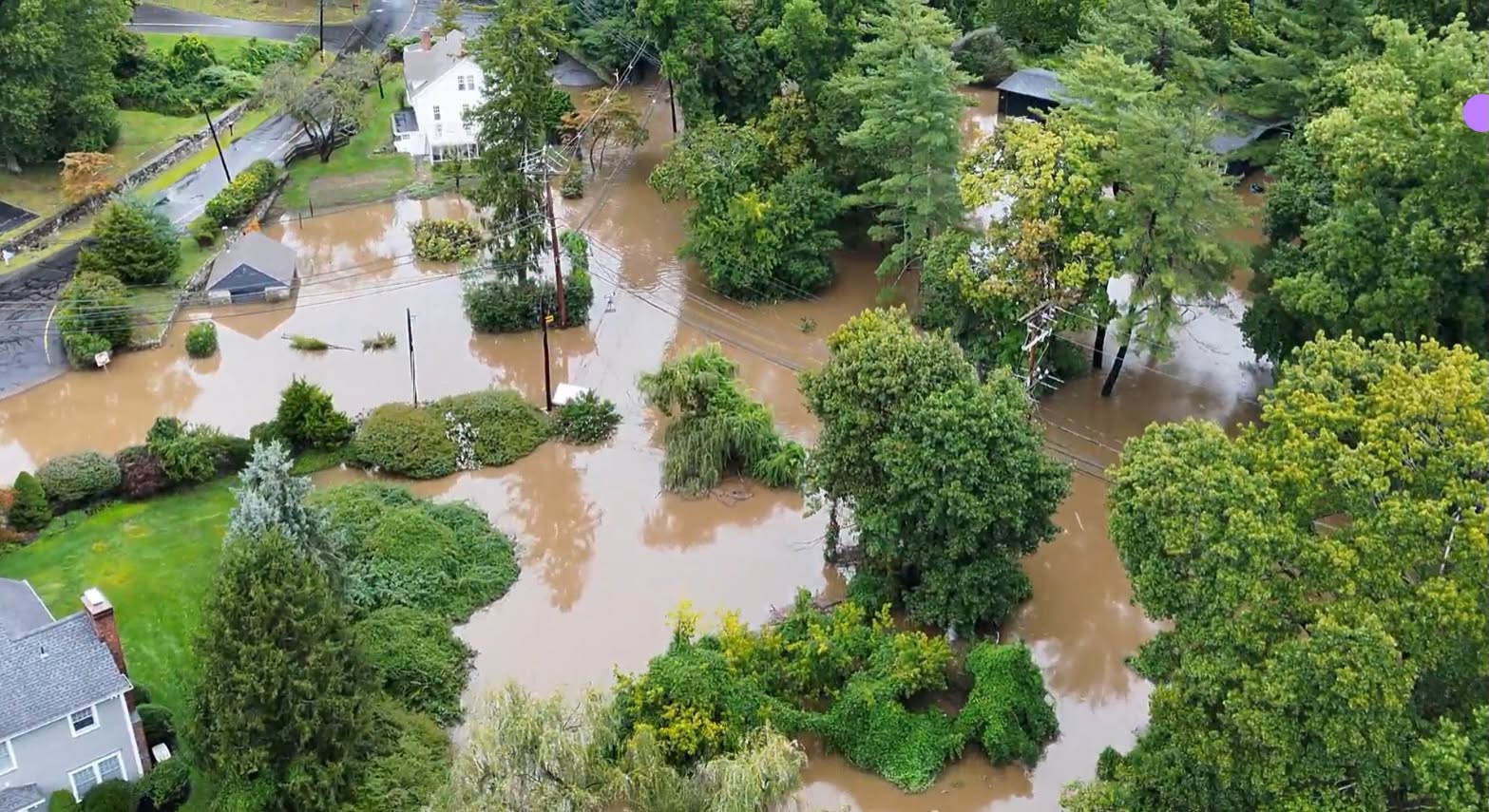
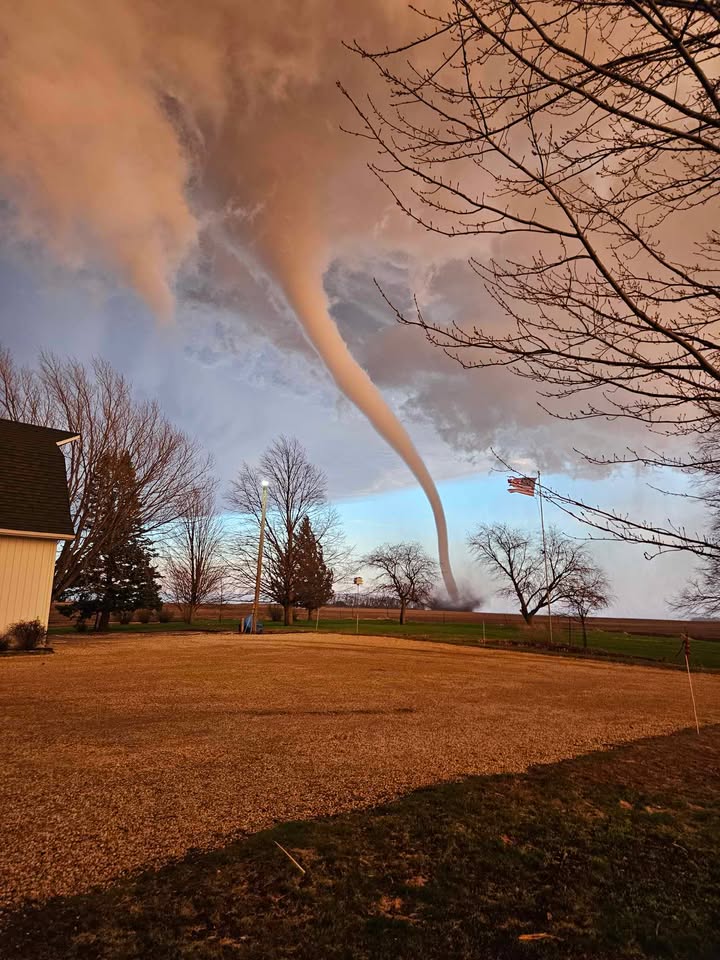
A multi-day severe weather outbreak has battered the central U.S. from the southern Plains to the Great Lakes, producing tornadoes, baseball-sized hail, and damaging winds across Kansas, Iowa, Wisconsin, Michigan, Missouri, and Illinois. Flooding is worsening across the Great Lakes region amid one of the wettest starts to spring on record, with water rescues, dams at risk in Wisconsin, and tens of thousands without power. Read more. |
|---|
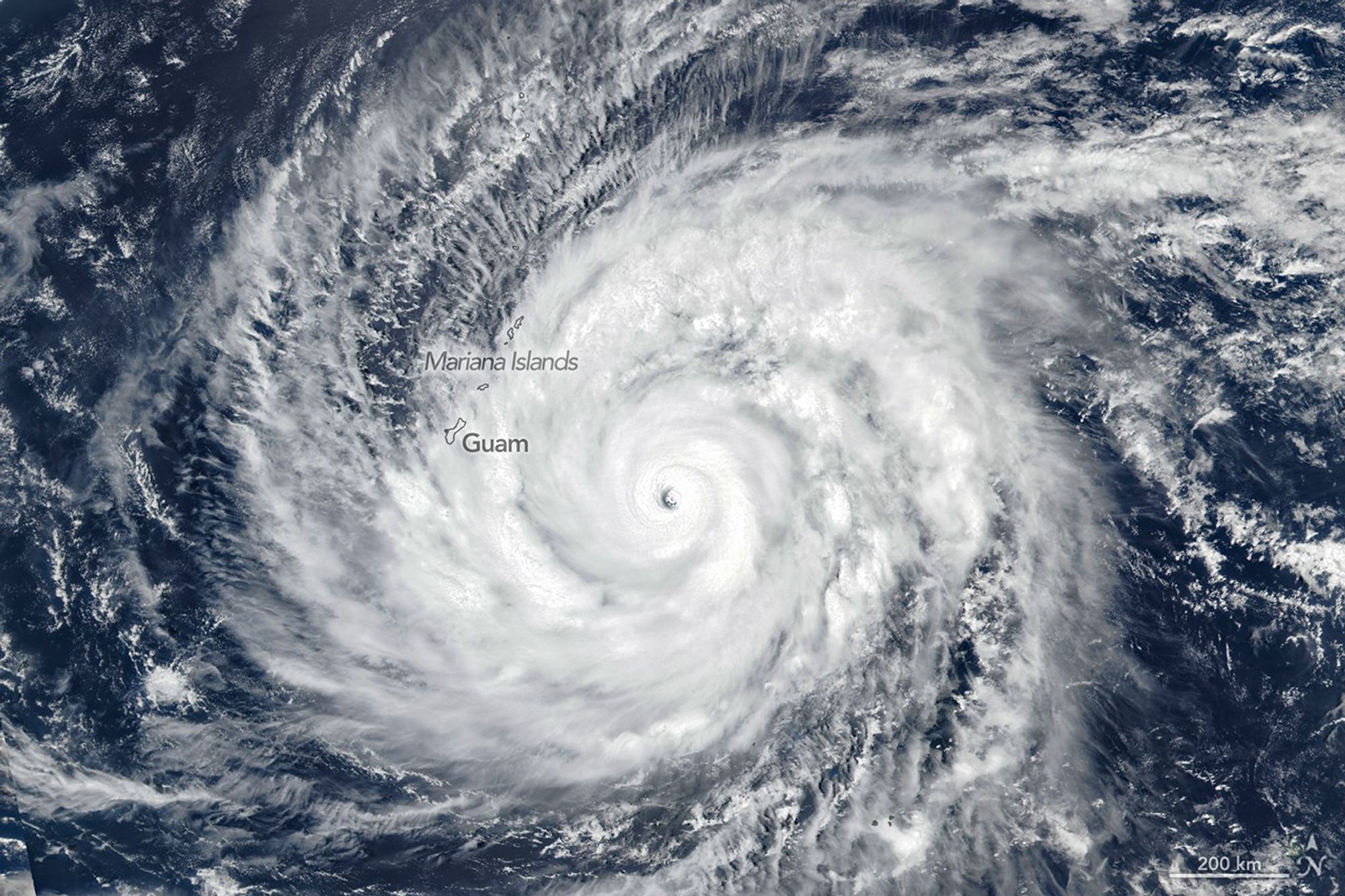
Super Typhoon Sinlaku, the strongest tropical cyclone on Earth this year, battered the Northern Mariana Islands of Saipan and Tinian with sustained winds up to 150 mph, tearing off roofs, downing power lines, and causing widespread flooding across a region home to nearly 50,000 people. Guam also saw flash flooding and tropical-force winds, with the Red Cross sheltering more than 1,000 residents across the affected islands and President Trump approving emergency disaster declarations ahead of the storm. Read more. |
Forecasted Risks for Next Week
A more serious round of severe thunderstorms is expected Friday from the Southern Plains to the upper Mississippi Valley, with both supercells capable of strong tornadoes and squall lines bringing damaging winds and embedded tornadoes. Activity could start as early as midday and continue well into the night.
A sharp cold snap will follow the eastern U.S. heat wave this weekend, with temperatures plunging 50 to 60 degrees and freeze conditions expected from the Great Lakes to the Northeast by Monday and Tuesday
Source: IowaWeather.com/Andrew Anderson via X
Disasters in the Headlines
Trump wants to shutter FEMA. Will Markwayne Mullin get it done?
California leaders promised fire recovery in record time. Los Angeles isn’t seeing it.
Parts of Northern Marianas could be without power for weeks after super typhoon
Trump to nominate Cameron Hamilton to run FEMA after he was pushed out as acting leader nearly a year ago
PRO PERSPECTIVE
The Debt That Outlasts the Disaster

When Hurricane Harvey tore through Houston in 2017, the staff at Money Management International did what most people do in a crisis: they called someone who had been through it before. MMI counselors in Texas started ringing their colleagues in Florida and Louisiana, asking for guidance on insurance claims, FEMA appeals, and the financial maze of rebuilding. That moment of informal peer support became the seed of something larger.
"We realized that the skills that our counselors had from already having recovered is something that the community needed," says Kate Bulger, Vice President of Business Development at MMI and the leader of Project Porchlight. Within a year, MMI had formalized the model. Project Porchlight launched in 2018 as a free, one-on-one financial counseling program for disaster survivors, backed by a partnership with Fannie Mae and rooted in a simple premise: that financial recovery is just as real and just as urgent as physical recovery, and that no one should have to figure it out alone.
What Porchlight Actually Does
MMI is a nonprofit financial counseling organization with a national footprint. Project Porchlight sits within that infrastructure, connecting disaster survivors with trained counselors who stay with them for as long as the recovery takes. There are no income requirements, no documentation hurdles. Clients come in by phone, online, or through referrals from mortgage servicers, credit card companies, Red Cross, or FEMA itself. The first counselor a person speaks with is typically the same counselor who will walk with them for months, sometimes years.
That continuity matters because the financial aftermath of a disaster is not a short-term problem. "It doesn't matter how much insurance somebody has. It doesn't matter how many grants somebody has. Nobody ever has the right amount from outside groups to pay for their recovery," Bulger explains. Most survivors end up carrying additional debt. Porchlight helps them manage it, whether that means negotiating lower interest rates and balances on unsecured debt, pursuing mortgage modifications, or connecting clients to creditor hardship programs. Debt management plans through the program can last up to four years.
The Insurance Gap Nobody Wants to Talk About
Eight years into this work, Bulger has a clear view of where the system fails survivors — and it fails them twice. Once before the disaster strikes, and again when they try to collect help in its aftermath.
The first failure is coverage. Only 4% of Americans carry flood insurance, even though essentially the entire country carries some degree of flood risk. Most people don't discover that flood is excluded from standard homeowners policies until water is already in the house. By then, the gap is no longer a policy abstraction. It is a financial crisis.
The second failure comes during recovery. The policy construct known as duplication of benefits prevents survivors from applying certain forms of assistance toward needs that differ from the original award category. In practice, it blocks people from using available help where they actually need it most. "Folks might have needs that are much greater, much more critical than whatever it is they were given money for initially," Bulger says. "It keeps a lot of people out of the help they really need."
The Reluctance to Ask
Bulger points to something else she did not expect to find: the selflessness of survivors. Repeatedly, Porchlight counselors hear some version of the same thing. A person waited to reach out because they assumed someone else had been hit harder, someone more deserving. "It often takes some convincing to get people to realize they qualify for the help and they should take it," she says.
That hesitation has practical consequences. A 2022 study MMI conducted found that 21% of disaster-affected individuals who wanted financial help did not even know it was available. The barrier was not reluctance. It was ignorance of the resource itself. And underneath both, Bulger says, runs something harder to measure: "The financial challenges and the shame that comes along with having financial challenges stops people from getting help and makes people feel even more isolated and alone in their recovery."
To close that gap, MMI expanded into end-to-end online counseling, an experiment that produced a striking result. Phone volume held steady. Online counseling did not cannibalize existing demand. Instead, it brought in a new population entirely, one that would never have called or walked into an office, but was willing to engage through a screen. That channel now accounts for roughly 30% additional client volume.
What Lenders Should Know
For financial institutions managing portfolios in disaster-affected regions, Bulger's guidance is direct: communicate early and often. Servicers and banks cannot identify affected borrowers without hearing from them. Clients who reach out before they fall behind have significantly more options than those who go silent. "Nobody wants to be the financial institution that didn't help disaster survivors," Bulger says. Almost every creditor has a hardship program in place for disaster-affected customers. The only way into them is a phone call.
Where things break down is predictable. "As soon as it feels like you're on opposite sides, that's the time to reach out and get help," Bulger says. Porchlight functions in part as a translator between survivors and financial institutions, helping both parties find workable paths forward rather than letting the relationship calcify into conflict.
Bulger is measured in her assessment of where federal policy is headed, though she holds a clear-eyed optimism. She has worked across multiple administrations and found that the people doing the work, regardless of who is in office, are genuinely committed to improving outcomes for survivors. The message she most wants survivors, counselors, and policymakers to carry: "Post-disaster debt and post-disaster financial challenges are not their fault, but they are things that people can help them solve."
Active Federal Major Disasters
There is usually a 60 day window to apply for help after a disaster is declared. The following disasters are still actively taking applications from survivors for financial support.
The following disasters are actively taking applications from survivors for financial support. To apply, survivors can visit DisasterAssistance.gov or call the FEMA Helpline at 1-800‑621‑3362.
[NEW] Mississippi - Severe Winter StormSTATUS Major Disaster declared February 6, 2026; IA applications accepted in eligible counties until June 10, 2026. AFFECTED COUNTIES Adams, Alcorn, Attala, Benton, Bolivar, Calhoun, Carroll, Claiborne, Coahoma, DeSoto, Grenada, Holmes, Humphreys, Issaquena, Jefferson, Lafayette, Lee, Leflore, Marshall, Mississippi Choctaw Indian Reservation, Montgomery, Panola, Pontotoc, Prentiss, Quitman, Sharkey, Sunflower, Tallahatchie, Tate, Tippah, Tishomingo, Tunica, Union, Warren, Washington, Yalobusha, Yazoo |
[NEW] Tennessee - Severe Winter StormSTATUS Major Disaster declared February 6, 2026; IA applications accepted in eligible counties until June 10, 2026. AFFECTED COUNTIES Benton, Carroll, Cheatham, Chester, Clay, Davidson, Decatur, Dickson, Dyer, Fayette, Hardeman, Hardin, Henderson, Hickman, Lewis, Macon, Madison, Maury, McNairy, Montgomery, Perry, Robertson, Rutherford, Shelby, Sumner, Trousdale, Wayne, Williamson, Wilson |
[NEW] Washington - Severe Storms, Straight-line Winds, Flooding, Landslides, and MudslidesSTATUS Major Disaster declared April 7, 2026; IA applications accepted in eligible counties until June 10, 2026. AFFECTED COUNTIES Chehalis Indian Reservation, Chelan, Grays Harbor, King, Lewis, Lummi Indian Reservation, Muckleshoot Indian Reservation, Nisqually Indian Reservation, Nooksack Indian Reservation, Pacific, Pierce, Puyallup Indian Reservation, Quinault Indian Reservation, Samish (TDSA), Sauk-Suiattle Indian Reservation, Shoalwater Bay Reservation, Skagit, Snohomish, Squaxin Island Indian Reservation, Stillaguamish Indian Reservation, Swinomish Indian Reservation, Thurston, Tulalip Indian Reservation, Upper Skagit Indian Reservation, Whatcom |
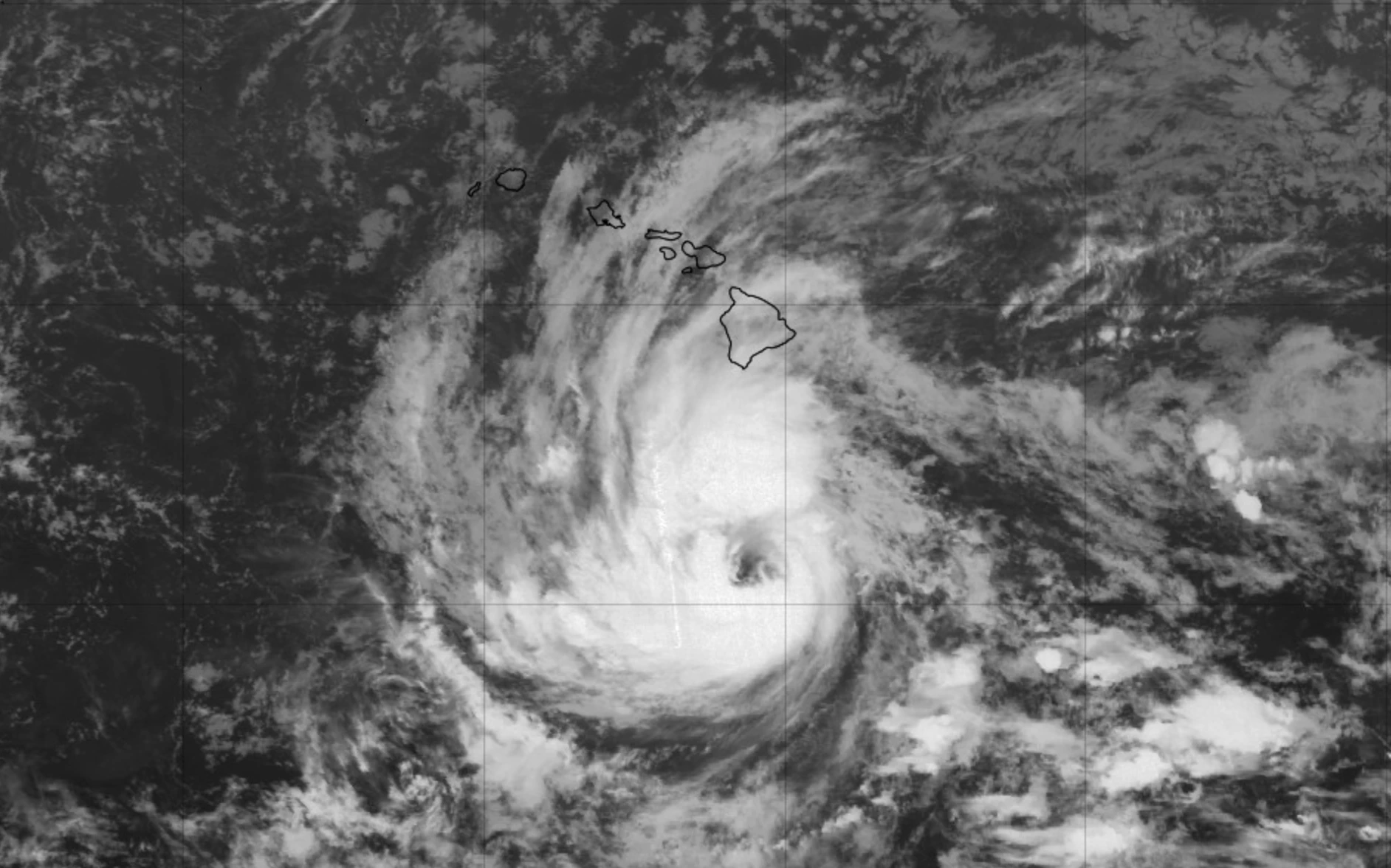
[NEW] Hawaii - Kona Low Weather SystemsSTATUS Major Disaster declared April 7, 2026; IA applications accepted in eligible counties until June 14, 2026. AFFECTED COUNTIES Hawaii, Honolulu, Maui |
North Carolina - Flooding and Storm Damage from Tropical Storm ChantalSTATUS SBA disaster declaration approved July 26, 2025; applications open for residents and businesses in eight NC counties. The deadline to return economic injury applications has been extended to September 30, 2026. APPLY NOW AFFECTED COUNTIES Alamance, Caswell, Chatham, Durham, Granville, Orange, Person, Wake Counties |
Sign up for This Week in Disasters here.