Are you a disaster survivor looking for help? Click here
Rebuild
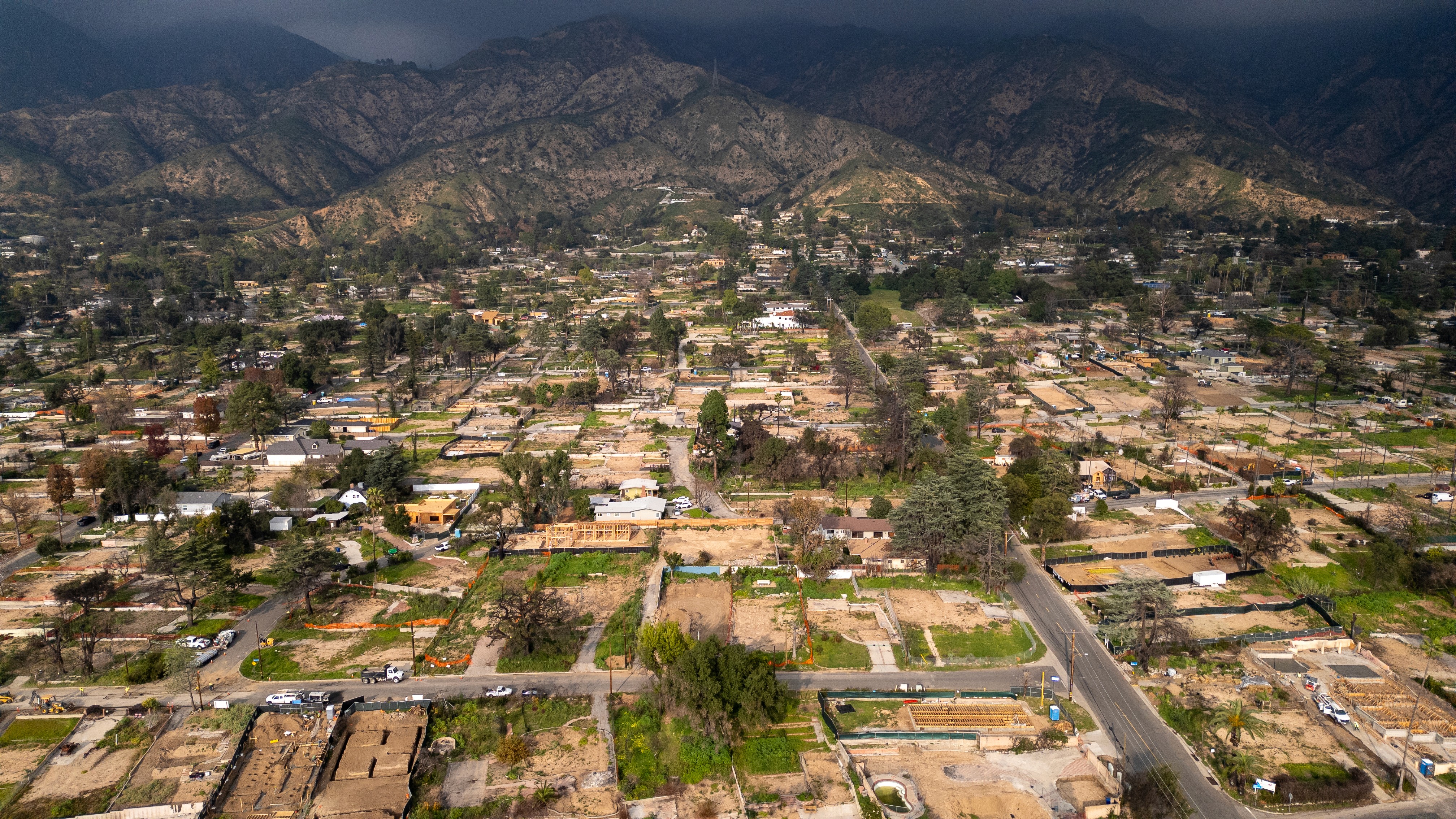
January of 2025 brought unprecedented devastation all over Los Angeles County as multiple wildfires consumed over 40,000 acres and destroyed more than 12,000 structures. The fires, fueled by a combination of high winds and dry conditions, happened during a perfect storm for runaway blazes. The Palisades and Eaton Fires forced nearly 200,000 people to evacuate, reduced entire neighborhoods to ash, and ultimately claimed dozens of lives as emergency crews struggled to contain the spread.
What made these wildfires particularly catastrophic was their overlap into dense, urban areas. The disaster exposed critical failures in emergency infrastructure, insurance systems, and disaster cleanup, ultimately raising questions about whether our recovery systems can adapt to increasingly frequent climate-driven catastrophes.
A year on from this tragic event, we wanted to point a spotlight on survivors and the great work organizations have done around supporting LA fire victims over the past year.
Mutual aid organizations filled immediate gaps
One of the most inspiring things we saw soon after the evacuations lifted was the buzz of activity among survivors. Neighbors quickly gathered in digital spaces, spinning up Slack and Telegram groups, sharing key information to help dispel confusion and aid each other. Residents who worked in the legal profession, or had experience with the insurance industry, or heck, even those with no prior experience but who wanted to help all banded together to talk, pooling knowledge and resources.
When the fires were finally under control and no one quite knew what to do next, hundreds of survivors came together to help each other out.
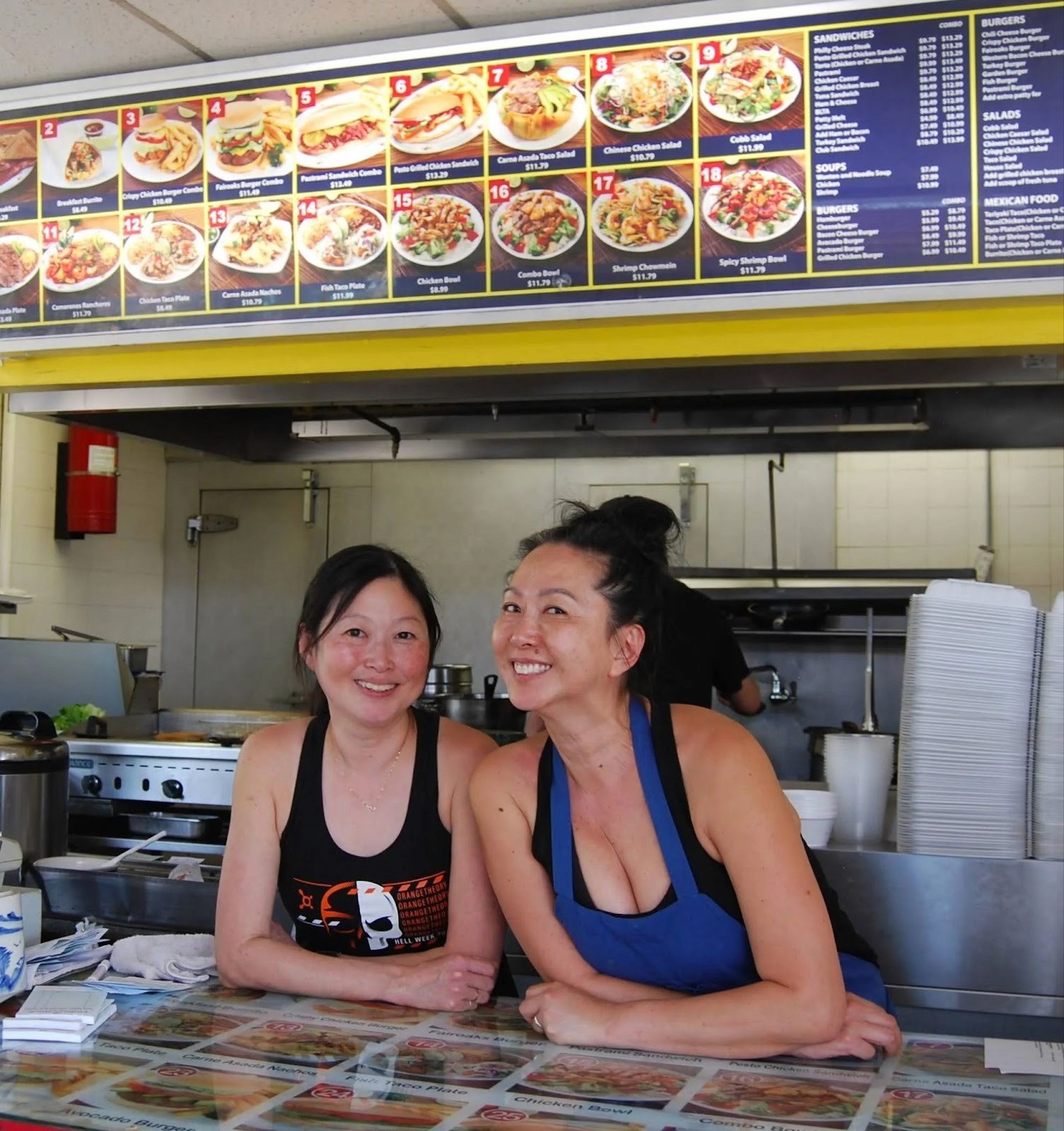
Fair Oaks Burgers owners (and sisters) Judy and Christy Lee
Fair Oaks Burgers in Altadena was one such story. Days after the fires, while still in shock, the family restaurant become a food distribution center. It seemed natural, since they all wanted to get back to work and everyone could use a meal, so they reopened their restaurant, serving free food to neighbors.
“We bought a plancha. We cooked outside. Rain didn't matter. We were giving out meals four days a week and we started a free Farmers Market on Saturdays for the people that were in the community living here, because we didn't want them to feel so alone or isolated.”
— Judy Lee, co-owner of Fair Oaks Burger
Within days of their reopening, World Central Kitchen, a nonprofit organization that provides fresh meals in response to crises all around the globe contacted the owners to help them continue that work so they could continue to feed the community. Since then, Fair Oaks has utilized SBA loans and insurance proceeds to keep their business re-open.
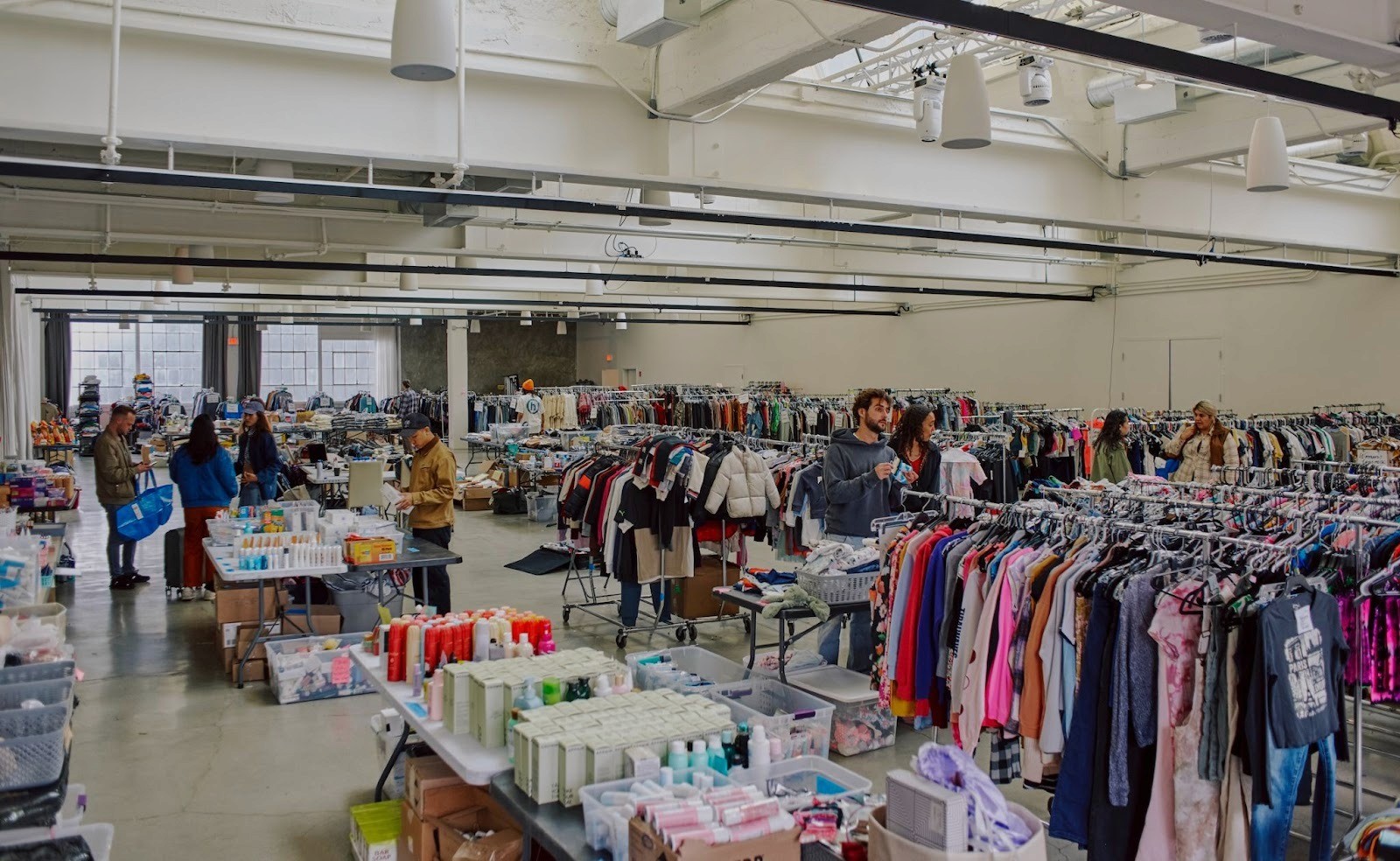
24LA’s warehouse of essential items
24LA is another organization that spun up soon after the fires subsided. The two young founders repurposed a bar into a grassroots donation center to give away clothing and essential items to anyone displaced by the fires. Many survivors only had the clothes on their back when they were forced into temporary housing so this kind of service became absolutely vital. Donations came flooding in, both from residents willing to share as well as companies wanting to help, and they quickly filled a warehouse with free goods. Since the fires, they’ve helped over 12,500 people receive over $3 million in donated goods, sorted and distributed by hand to neighbors.
Door of Hope is a housing assistance organization helping low-income survivors rebuild after the Eaton fires. They help prevent homelessness by keeping families together, offering rental aid, housing, and assistance to clients in navigating available post-fire aid.
“Being in solidarity with people that have gone through this, to see how committed people are to maintaining their life and their community in Altadena has really been heartwarming and gives me a lot of hope that my friends will eventually get back”
— Megan Katerjian, CEO Door of Hope
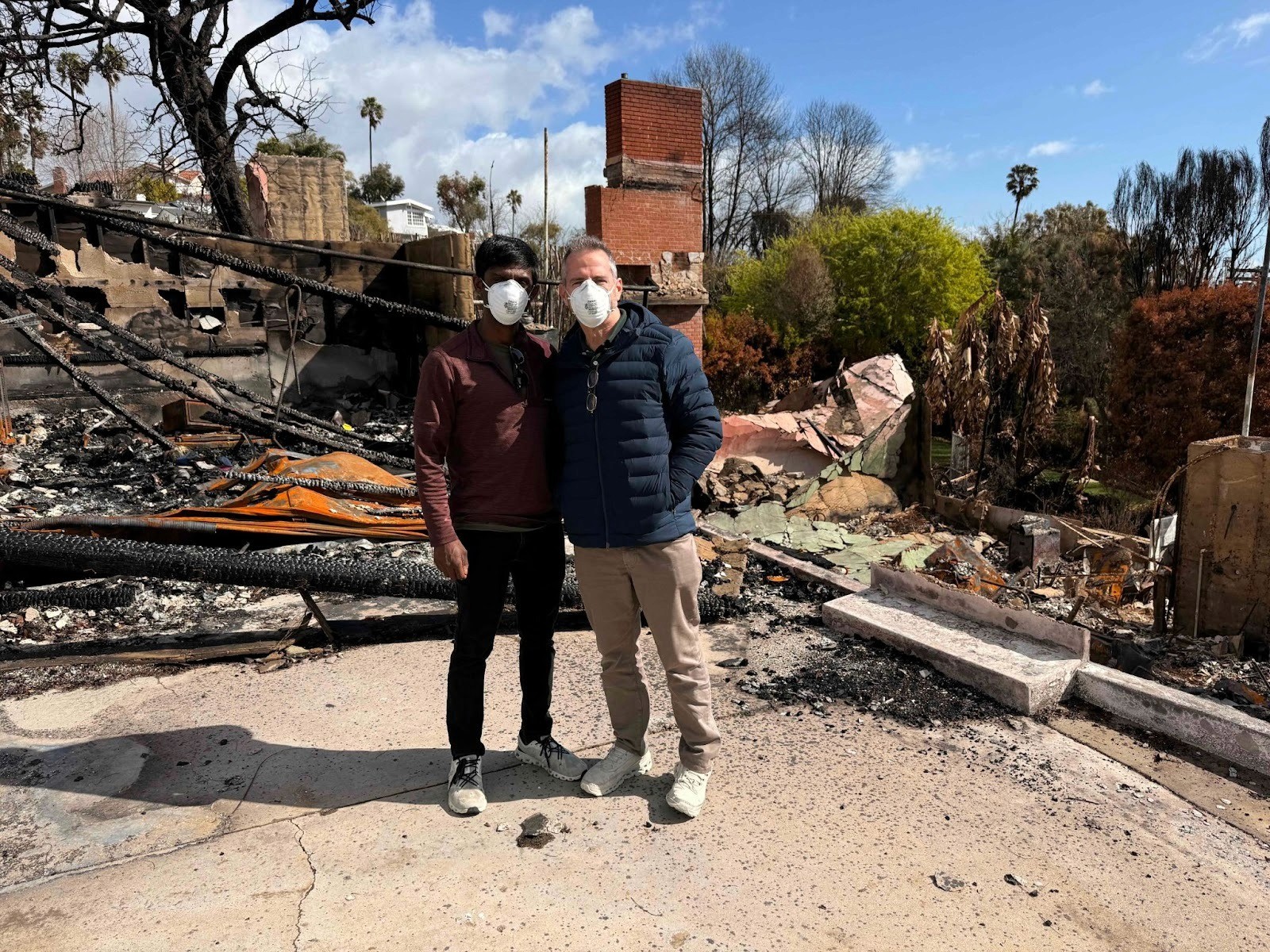
Bevel founders Aravindh Dorai and Adam Freed at the site where Adam’s childhood home burned down
Bevel began when the parents of one of their cofounders lost their home in the Palisades fire and they needed to prepare inventory lists for insurance claims. The team at Bevel created an free, easy to use inventory app that we’ve highlighted in the past as the absolute best. It’s a tool that accomplishes a task that everyone in the home insurance industry says is the most important thing you can do to prepare before a disaster. With Bevel’s inventory app, you just upload a photo of any room of your home, and through a mix of artificial intelligence it will automatically scan and catalog everything it can see, creating surprisingly accurate estimates for insurance replacement purposes.
An uncertain road still lies ahead
The stories of neighbors coming together to help one another warms our hearts but the rebuilding process ahead is still a long one with a whole host of unknowns.
As the New York Times recently reported, there isn’t an industry standard for what constitutes a “safe” or “clean” home that has suffered toxic smoke damage, so in absence of that, insurance payouts often aren’t paying for full cleanup and one year later, some residents are being forced to return to homes that might still be hazardous to their health.
“If you're a tenant of a structure that was damaged by smoke, ash and lead, but it didn't burn down, Southern California Edison doesn't provide any housing support. And that's not a bridge to recovery, that's a cliff.”
— Eaton Fire Survivors conference speaker, clip 1067
The situation is also somewhat worse for renters, as most aid in the fire’s aftermath was aimed at homeowners. Due to an immediate lack of housing, real estate demand shot up and rental prices in the affected areas have skyrocketed. Additionally, landlords are nervous about taking on large rebuilding projects so the rental markets in cities affected by wildfire will be slow to recover, if at all.
Fire survivors trying to rebuild and return home are often at odds with insurance companies, their estimators and adjusters, and Southern California Edison, the power company trying to settle with residents who offer payouts if homeowners agree to not bring suits against them. It’s a tense situation for many that is still playing out today.
Thankfully, California’s official government site is tracking the progress on rebuilding and we’ll continue to support survivors as Los Angeles does its best to return things to normal.