Are you a disaster survivor looking for help? Click here
This Week in Disasters
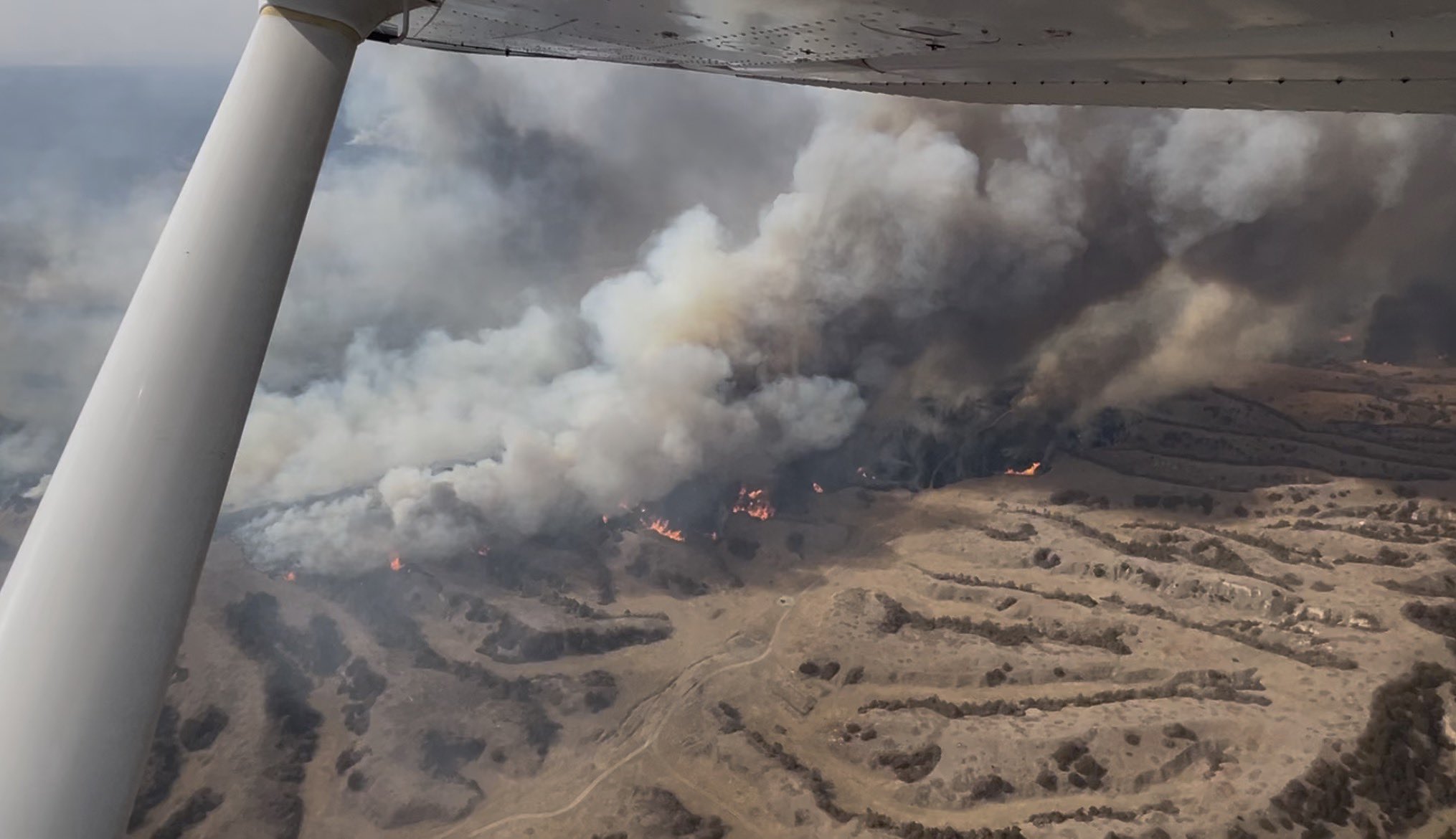
Source: The Morrill Fire. Source: Nebraska State Patrol
Plus, making risk solvable: a new physics for property protection
Welcome back to This Week in Disasters! This newsletter combines expert perspectives with a weekly roundup of upcoming threats, recent natural disasters, and available survivor assistance. If you’re a Risk, Insurance, Employee Assistance, or Emergency Management professional (or you’re just really curious about disasters in the United States!) you’re in the right place.
Major Disasters of the Last Week
A Major Kona storm battered Hawaii,bringing winds over 135 mph, up to 44 inches of rain on Maui, and widespread flooding that damaged homes, farms, and businesses across the islands. The storm shattered a 75-year-old rainfall record dating back to 1951, triggered emergency declarations, knocked out power for over 100,000 customers, and left travelers stranded statewide. Read more. |
One of the biggest storms of 2026 tore through the central and eastern U.S.,generating over 700 severe weather reports, canceling more than 4,300 flights, and knocking out power to over 500,000 customers as damaging winds, tornadoes, and heavy snow forced school closures across dozens of states. Read more. |
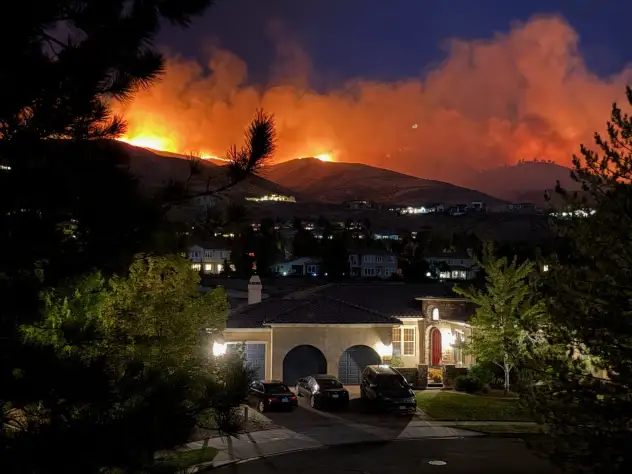
Historic wildfires have scorched over 800,000 acres across Nebraska, with the Morrill Fire alone burning more than 643,000 acres,which is to become the largest wildfire in state history. At least one person has been killed and evacuations have been ordered across multiple counties. Read more. |
The Qury Fire in Custer, South Dakota has burned over 9,000 acreswith 6 homes destroyed and 400 mandatory evacuations. Read more. |
A second major storm in a week is bringing catastropic floods to Oahus's North Shore,destroying homes, cutting off towns, and prompting mandatory evacuations for Waialua and Haleiwa due to dangerously high water levels at the Wahiawa Dam. Read more. |
Forecasted Risks for Next Week
Moisture from a Hawaii-connected atmospheric river will bring periods of heavy rain, rising rivers and flooding concerns across western Washington.
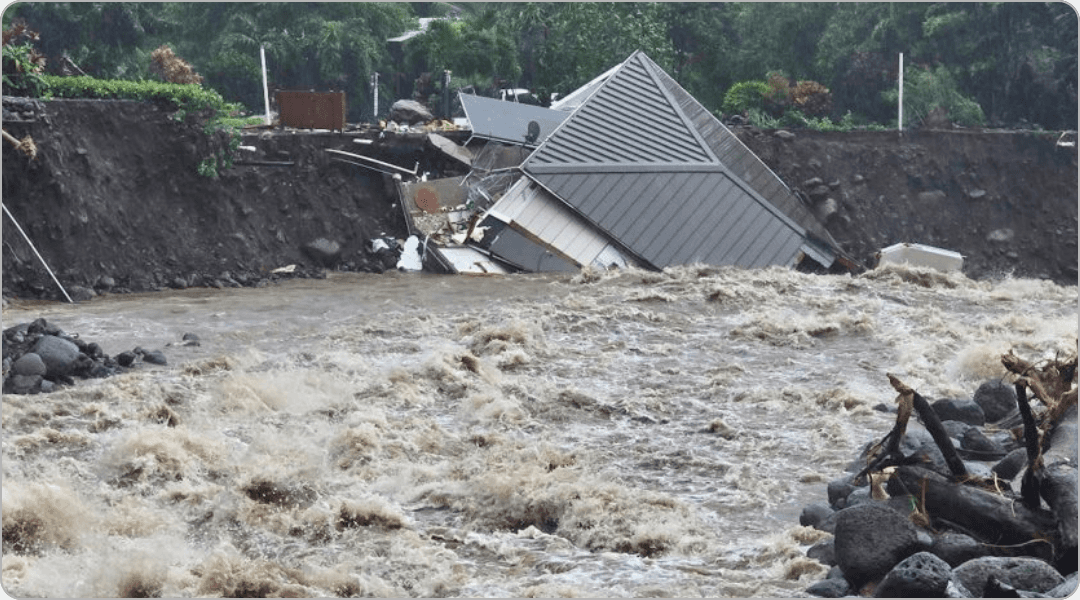
Source: City of Maui
Disasters in the Headlines
Trump’s Homeland Security Pick Says He’d End Policy That Slowed Disaster Aid
FEMA Provides Update on Building Resilient Infrastructure and Communities Program
In Ski Towns, a Bad Snow Year Is Worsening Wildfire Fears
The New York Times
How Do We Pay For Disasters? A Comprehensive Look at Recovery Funding After Hurricane Harvey
Place + Resilience
After record WA flooding, promising signs emerge at restoration site
The Seattle Times
PRO PERSPECTIVE
Making Risk Solvable: A New Physics for Property Protection
The insurance crisis in wildfire-prone states is not news. Carriers retreating, premiums spiking, communities left exposed. Emergency managers and resilience professionals know this story well. What is less familiar is the argument that the crisis is, at its core, a data problem. And that the solution might come not from policy reform, but from physics.
Jason Mueller, Co-Founder and CPO, and Dan Kahn, Head of Growth, of Stand, a company they describe, deliberately, as a property protection business that also happens to offer insurance. After launching in California roughly a year ago and recently entering Florida, Stand has crossed $3.5 billion in insured value. In that first year, they recorded zero claims.
Stand was built on a straightforward but contrarian premise. "A dollar invested upfront goes far better than waiting for the damage to happen and then scrambling to figure out how to fix it on the back end," Jason explained. That belief shapes everything from how they price risk to how they talk with homeowners.
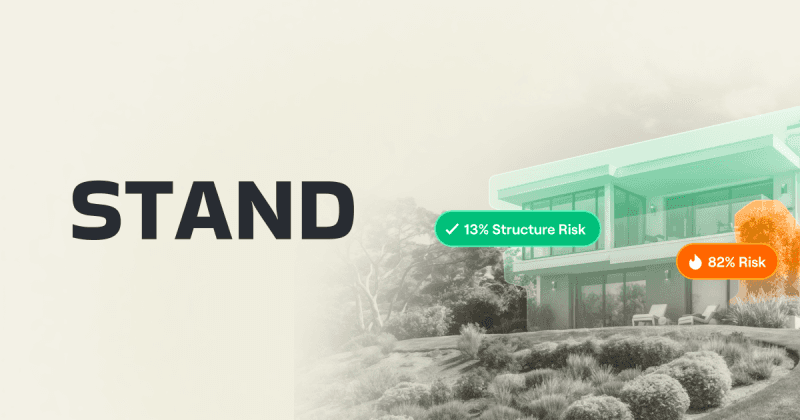
Where legacy carriers rely on broad, location-based models — zip code assessments that, as Jason noted, "often disagree with one another and change dramatically year over year" — Stand builds a high-fidelity digital twin of each individual property and simulates worst-case conditions against it. The question they are answering is not simply: what is the probability of a fire here? It is: if a fire comes, what is the probability this specific home burns?
"You might have the highest risk threshold for a community in the whole state," Dan said, "but you still probably have a less than 1% chance of a fire in any given year. What if your home only has a one-in-100 shot of burning in the event of a fire? Now you start to do that math."
The model works at extraordinary resolution. It differentiates between tree species, crown density, pruning condition, and structural materials. It accounts for the behavior of single versus double-pane windows under ember exposure. It simulates thermal combustion between specific features on a given parcel. The team behind it includes scientists from NASA, SpaceX, and Boeing.
What This Means in Practice
For brokers and homeowners, the immediate implication is a different kind of conversation. Rather than receiving a blanket non-renewal or a rate that reflects nothing more than geography, Stand can say: here is the specific tree that concerns us. Remove it, and here is what changes in your risk profile and your premium.
"We were hopping on calls with our end-insured and our brokers and saying, this is the tree that gives us pause," Dan said. "How do we make it easy for you to remove it? How do we get to yes?"
The result has been a 90%+ mitigation compliance rate among their customers within 60 days of binding. That number is significant. It suggests that homeowners, when given precise guidance grounded in visible science, will act. "When we show the physics video of the peril moving through their property, they actually see how things move," Jason said. "It is an empowering thing."
For emergency managers and resilience professionals, the operational relevance goes further. Stand is already in conversations with emergency management departments and is developing tools to analyze risk at the community level, not just the individual parcel. Their model can identify the weakest points within a given neighborhood, simulate conflagration dynamics across adjacent properties, and assess what percentage of homes in a given area meet current building code standards.
"Our hope is that we can provide that insight even if we are not insuring the property," Jason said.
The Alignment Challenge
Dan framed the broader challenge with clarity: "How do you align the homeowner with all of the emergency providers, with the capital stack, with the communities to create a full flywheel effect?"
That question sits at the center of what Stand is building toward. Their near-term roadmap includes a homeowner portal that will allow real-time risk modeling, an expansion into convective storm, hurricane, and hail perils using the same physics engine, and a move toward continuous monitoring rather than annual point-in-time underwriting.
The longer arc is more ambitious still. Jason put it plainly: "If we do our jobs right, insurance might not exist at some point, certainly not in the way it does today. We want to build the platform that makes that reality."
Active Federal Major Disasters
There is usually a 60 day window to apply for help after a disaster is declared. The following disasters are still actively taking applications from survivors for financial support.
The following disasters are actively taking applications from survivors for financial support. To apply, survivors can visit DisasterAssistance.gov or call the FEMA Helpline at 1-800‑621‑3362.
Washington - Flooding (State Assistance)Information: Those whose homes were damaged by December's historic flooding should apply for in state assistance for their immediate needs. Impacted individuals should visit SAHelp.org and enter their zip code to start the process. AFFECTED COUNTIES King, Snohomish, Skagit, Whatcom |
Alaska - Severe Storms, Flooding, and Remnants of Typhoon HalongSTATUS Major Disaster declared October 22, 2025; IA applications accepted in eligible counties until April 3, 2026. AFFECTED COUNTIES Lower Kuskokwim Regional Educational Attendance Area, Lower Yukon Regional Educational Attendance Area, Northwest Arctic |
North Carolina - Flooding and Storm Damage from Tropical Storm ChantalSTATUS SBA disaster declaration approved July 26, 2025; applications open for residents and businesses in eight NC counties. The deadline to return economic injury applications is April 27, 2026. APPLY NOW AFFECTED COUNTIES Alamance, Caswell, Chatham, Durham, Granville, Orange, Person, Wake Counties |
Sign up for This Week in Disasters here.