Are you a disaster survivor looking for help? Click here
This Week in Disasters
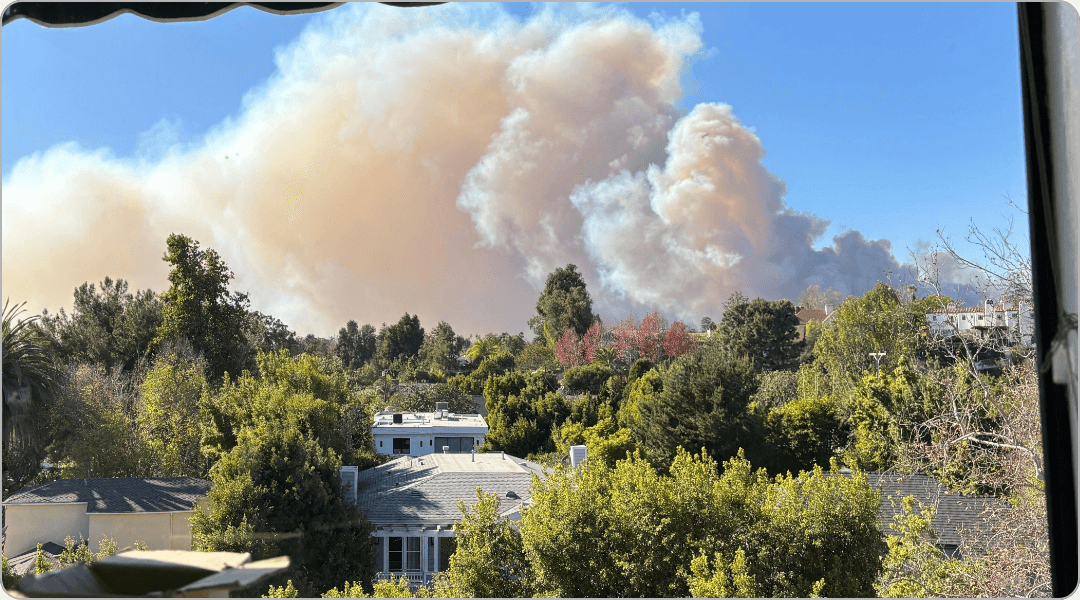
Photo: Taken at Brentwood School during the LA fires
Plus, what recovery really looked like after the LA fires
Welcome back to This Week in Disasters! This newsletter combines expert perspectives with a weekly roundup of upcoming threats, recent natural disasters, and available survivor assistance. If you’re an HR, Risk, Insurance, Employee Assistance, or Emergency Management professional (or you’re just really curious about disasters in the United States!) you’re in the right place.
Major Disasters of the Last Week
High winds, thunderstorms, and hail in OklahomaWind gusts up to 60 mph and penny size hail was reported in the Oklahoma City metro area. A tornado was confirmed near Purcell, Oklahoma Thursday morning along with severe thunderstorms. One vehicle was blown over and some structures damaged. Read more... |
Heavy rain and unusually high tides battered much of California on Saturdaycausing flooding and mudslides that disrupted travel in some coastal areas. Read more... |
Forecasted Risks for Next Week
A pair of potent storm systems will sweep from Texas through the Midwest and into the eastern U.S., bringing a mix of snow, flooding rain, severe thunderstorms (including damaging winds and potential tornadoes) and travel-disrupting weather to well over 100 million people across the central and eastern United States
Cold weather advisory issued for the Bay Area and extreme cold warning issued for parts of the Central Coast including Monterey and Big Sur.
Disasters in the Headlines
Exclusive: DHS begins slashing FEMA disaster response staff as 2026 begins
Failures of the past haunt L.A.’s fire recovery agenda for 2026
In Ash and Twisted Metal, Finding the Courage to Rebuild
Rolling Stone
One year after the Los Angeles Fires
Place + Resilience
On One-Year Anniversary of California Wildfires, SBA Extends Disaster Relief Deadlines as Local Bureaucrats Stall Recovery
U.S. Small Business Administration
Climate and Weather Disasters Cost the U.S. $115 Billion in 2025
Time (We have our own year in review too. You can check it out here.)
PRO PERSPECTIVE
What Recovery Really Looked Like After the LA Fires
But we’re focusing somewhere else today: how survivors actually moved forward once the headlines and tents were gone.
When we listened closely to survivors, a clear pattern emerged. People felt confused or stymied by fragmented and overly rigid recovery programs. For many, progress only began when a person took the time to listen.
“Everywhere I turned I hit a dead end until someone listened to my story.” Margot Mandel, Palisades Fire survivor
That moment of being heard unlocked access to options and expertise survivors did not know existed and could not have navigated alone.
Recovery also depended on coordination across many sources of help.
“After losing everything, support came from organizations, public servants, business and neighbors. Without their advice, funding, and resources, we never would have been on the way to recovery.” Kim Mischook, Eaton Fire survivor
Stability also came from unexpected places. While formal systems worked through timelines, individuals were quietly bridging the gaps.
“We were able to stay at a woman's house for 3 months post-fires because she wanted to help people that were impacted as she raised her children in Pacific Palisades. Another family in San Diego allowed us to stay in their back house (ADU) for over a month and a half while we figured out next steps. In total, we stayed freely for 4-5 months in the homes of people we've never met.The kindness is unprecedented and it was extremely helpful for me and my wife as we navigated the loss of our ability to live and afford Los Angeles.” Anonymous, Palisades Fire survivor
The hardest part of recovery was not resilience. It was navigating the complexity of insurance claims, FEMA appeals, and overlapping agencies without clear guidance.
Recovery does not move at the speed of programs. It moves at the speed of understanding.
When survivors are equipped with the information and tools to navigate complex systems, forward progress becomes possible.
Active Federal Major Disasters
There is usually a 60 day window to apply for help after a disaster is declared. The following disasters are still actively taking applications from survivors for financial support.
The following disasters are actively taking applications from survivors for financial support. To apply, survivors can visit DisasterAssistance.gov or call the FEMA Helpline at 1-800‑621‑3362.
Washington - Flooding (State Assistance)INFORMATION Those whose homes were damaged by December's historic flooding should apply for in state assistance for their immediate needs. Impacted individuals should visit SAHelp.org and enter their zip code to start the process. AFFECTED COUNTIES King, Snohomish, Skagit, Whatcom ELIGIBILITY
|
Alaska - Severe Storms, Flooding, and Remnants of Typhoon HalongSTATUS Major Disaster declared October 22, 2025; IA applications accepted in eligible counties until February 20, 2026. AFFECTED COUNTIES Lower Kuskokwim Regional Educational Attendance Area, Lower Yukon Regional Educational Attendance Area, Northwest Arctic |
North Carolina - Flooding and Storm Damage from Tropical Storm ChantalSTATUS SBA disaster declaration approved July 26, 2025; applications open for residents and businesses in eight NC counties. The deadline to return economic injury applications is April 27, 2026. APPLY NOW AFFECTED COUNTIES Bollinger, Butler, Cape Girardeau, Carter, Cooper, Dunklin, Howell, Iron, Mississippi, New Madrid, Oregon, Ozark, Reynolds, Ripley, Scott, Shannon, Stoddard, Vernon, Washington, Wayne |
Sign up for This Week in Disasters here.
Need more support for your employees or constituents? Bright Harbor can help.