Are you a disaster survivor looking for help? Click here
Recovery
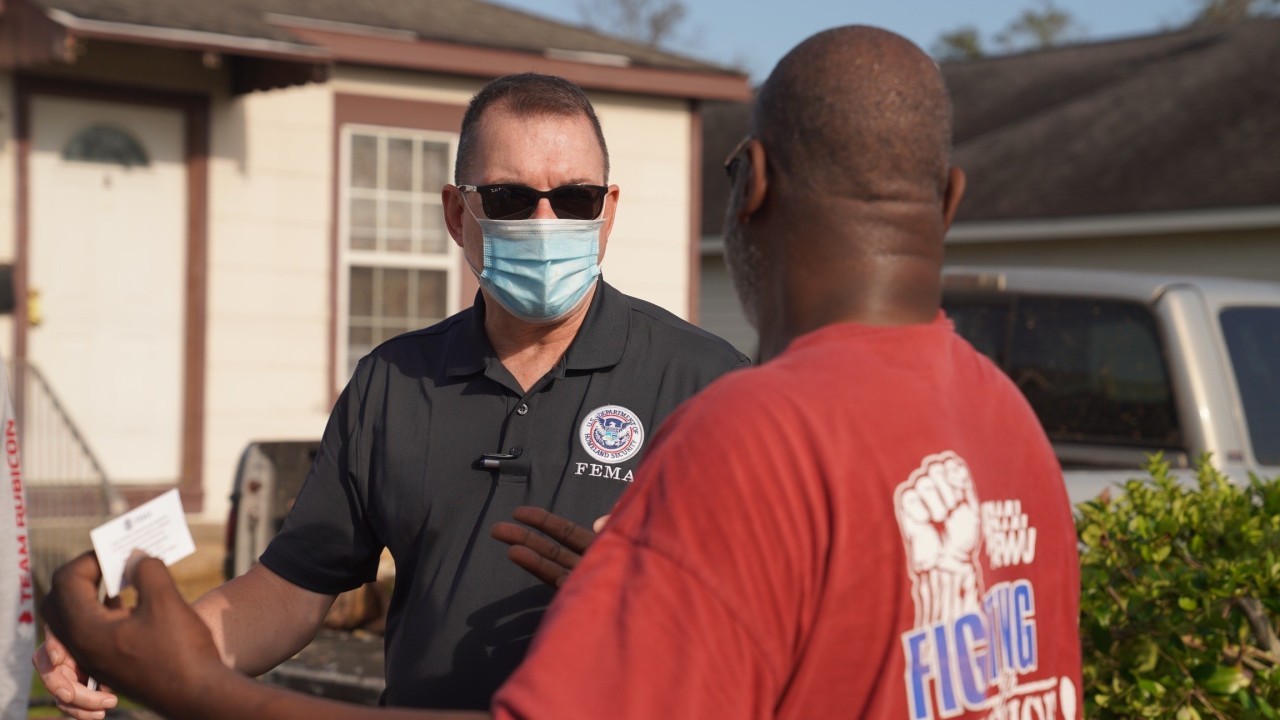
Hurricane Laura, Lake Charles, LA (Photo Courtesy FEMA)
As FEMA faces uncertainty and an unclear path forward, 2026 becomes a reset year that does not wait for institutional clarity, but instead rebuilds disaster recovery around the survivor. This moment calls for approaches that prioritize navigation, clarity, and human centered recovery, regardless of how systems are reorganized. As disaster recovery is reimagined, survivors should not be forced to wait for the final draft.
When the System Is Unclear, Survivors Need Navigation
Periods of transition reveal a central truth of disaster recovery: survivors do not experience FEMA, HUD, SBA, and nonprofit organizations as distinct entities, nor do they experience recovery as a set of clearly defined programs. Instead, they experience confusion, delays, overlap, and gaps, often while navigating as many as eight federal agencies and ten more at the state and local level. When the recovery system is complex, fragmented, or in flux, survivors need clear navigation more than additional programs.
A truly survivor centric approach must offer a single, trusted point of contact paired with a flexible funding stream that prioritizes the survivor’s needs, as defined by their unique circumstances and priorities. In a reset year, guidance matters more than governance. When institutions are uncertain, survivors need clarity about what comes next and support to move forward.
Centering the Survivor Means Simplifying the Journey
Rebuilding recovery around the survivor means redesigning the experience, not just funding the outcome. Survivor-centered recovery reduces friction instead of adding layers. It means fewer dead ends, fewer repeated forms, and fewer moments where people fall through the cracks. 2026 should be the year we stop asking survivors to adapt to systems and start adapting systems to survivors. A reset year is about making recovery make sense to the people living it.
Lived Experience as Infrastructure
When institutions are reorganizing, lived experience becomes the most reliable infrastructure we have. During my time as FEMA Administrator, some of the most valuable insights came directly from survivors navigating recovery in real time. Again and again, survivors described the same challenges: inadequate insurance, slow and uneven program delivery, and a maze of overlapping regulations. These insights should not be anecdotal, they should inform how recovery actually works on the ground. Survivors are not at the margins of disaster recovery; they are its core. In moments of uncertainty, the most stable blueprint is how people actually move through disaster and recovery.
From Waiting for Direction to Creating Momentum
A reset year does not mean pausing; it means moving forward differently. Communities and survivors cannot wait for complete policy clarity to begin rebuilding their lives. Delays in recovery drain personal finances, drive up the cost of materials and labor, and compound stress in an already overwhelming situation. 2026 must be about maintaining momentum by centering what survivors need now, not what systems may be able to deliver later. Recovery cannot be put on hold while institutions find their footing.
A Bridge Between Today’s Reality and Tomorrow’s System
Organizations like Bright Harbor play an important role as a bridge between survivors and systems, between uncertainty and progress. This work is not about replacing FEMA or other institutions; it is about ensuring survivors are not stranded during transition. By focusing on navigation, coordination, and survivor-centered design, recovery can keep moving forward regardless of who is in charge. The Year of the Disaster Survivor is a commitment to continuity when systems are in transition. If disaster recovery is being reimagined, survivors should not have to wait for the final draft.
Interested in partnering to deliver clearer, faster, survivor-focused recovery? Reach out to Bright Harbor to learn how we support disaster survivors. E-mail: pete@brightharbor.com