This Week in Disasters
A Tornado in Florida. More Rain in Hawaii. And Severe Weather to Come.
Apr 10, 2026
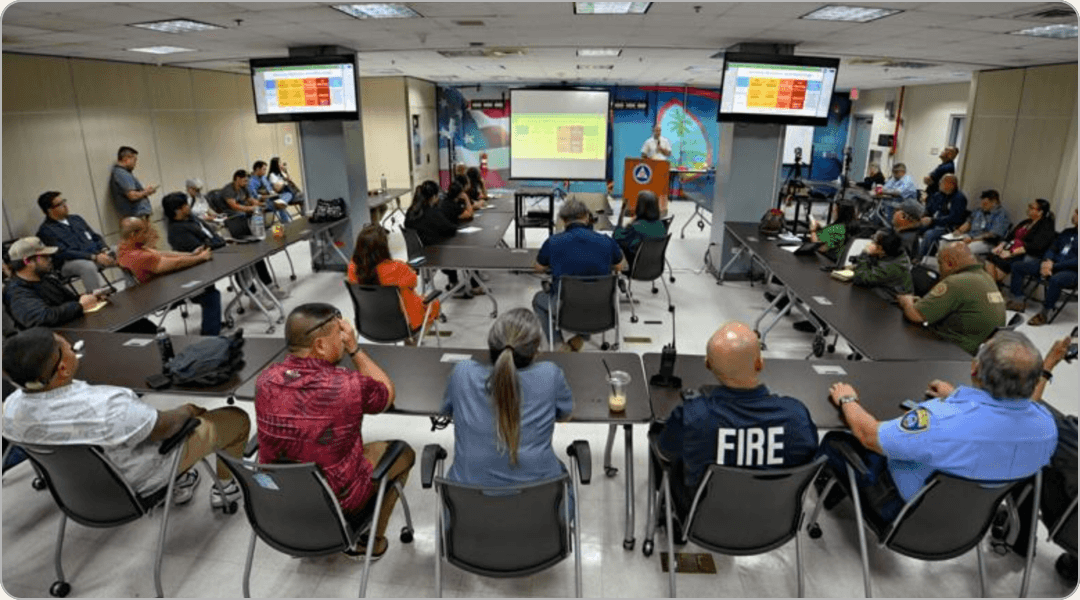
Brandon Aydlett, meteorologist-in-charge at the National Weather Service, presents information on a tropical disturbance 90W. Source: Emergency Operations Center in Agana Heights
Plus: last week, we talked about the gaps in disaster recovery with Daniel Kaniewski. This week he talks about what it means for people responsible for protecting their communities, employees, and families.
Welcome back to This Week in Disasters! This newsletter combines expert perspectives with a weekly roundup of upcoming threats, recent natural disasters, and available survivor assistance. If you’re a Risk, Insurance, Employee Assistance, or Emergency Management professional (or you’re just really curious about disasters in the United States!) you’re in the right place.
Major Disasters of the Last Week
A weather system created the perfect setup for powerful thunderstorms over South Florida. Leftover winds from earlier storms in the Gulf of Mexico helped spark new storms late in the afternoon. One of those storms grew strong enough to produce a small tornado in the Palm Springs North neighborhood of northern Miami-Dade County. The tornado had winds of 85 mph and only stayed on the ground for about half a mile before it died out, making it an EF0 tornado. Read more. |
|---|
Days of persistent rain have soaked much of Florida, with the latest 24-hour rainfall totals topping 6 inches. A slow-moving system has allowed moisture from the Gulf and the Atlantic to stream into the region, leading to heavy rainfall, localized flooding, and saturated soils. Read more. |
Forecasted Risks for Next Week
A multi-day severe weather threat set to impact millions across the Plains over the weekend is expanding, bringing an increased threat of large hail, damaging winds, and tornadoes from the Midwest to the southern Plains. Spanning more than 1,000 miles, the storm system is set to affect over a dozen states across the region from Monday through Tuesday.
A tropical depression in the Western Pacific, currently about 610 miles southeast of Guam, is forecast to undergo significant intensification over the coming days. The system is expected to reach tropical storm strength as early as tomorrow, with a major typhoon potentially developing by Sunday. Forecasters are giving it a high probability of continued development within the next 24 hours.
A flood watch remains in effect for the entire Hawaiian Islands through Friday, with Kauai expected to see the heaviest rainfall totals. Rain will persist into the weekend, though coverage should become less widespread as conditions gradually improve.
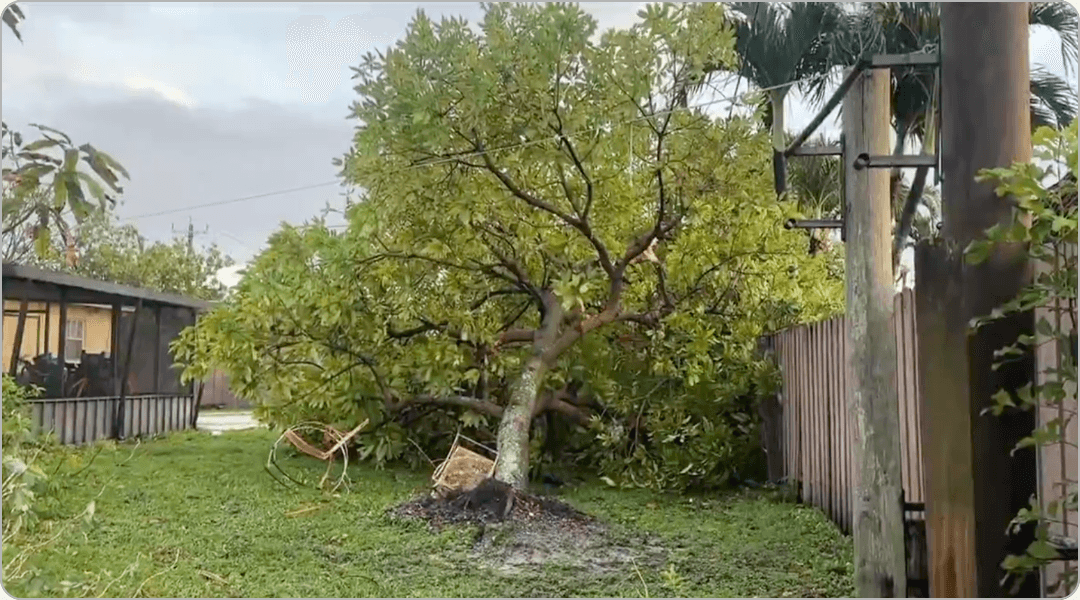
Aftermath of the EF0 Tornado in Florida. Source: Florida Storm Chasers
Disasters in the Headlines
The US just experienced its hottest March on record
Trump approves disaster declaration for Hawaii over storm damage
Trump’s FY27 budget slashes climate and disaster funding, shifting costs to cities and states
2026 Hurricane season: Colorado State University forecasts El Niño to dominate and suppress Atlantic activity
PRO PERSPECTIVE
You Know the Gap Is Real. Now Here's What to Do About It.

Last week, Dan Kaniewski laid out the diagnosis: 70% of disaster losses in America are uninsured, the National Flood Insurance Program is $20 billion in debt and drastically under-enrolled, and the only path back to affordable coverage in high-risk markets runs through risk reduction.
The question is what that means for people responsible for protecting their communities, employees, and families.
Risk reduction doesn't have to start at scale.
When people hear "reduce your risk," they picture expensive retrofits, community-scale infrastructure projects, and years of permitting. Those interventions matter. But Kaniewski is direct: meaningful risk reduction can start small, and it has to start before the disaster. Where to start depends entirely on the hazard you're facing.
"With any risk reduction measure, it is totally dependent on the hazard," he says. "It depends on if we're talking about wind or flood or wildfire. And what I would say, there are relatively simple measures and relatively inexpensive measures that can be done for each hazard."
Wind is a useful example. The most vulnerable part of a home is the roof. A full replacement is the best mitigation approach, but for homeowners where that's not affordable, finding and replacing loose shingles is a meaningful first step. A roof that stays structurally intact but leaks can still cause serious damage.
Wildfire works differently. "The community's risk is your risk and vice versa," Kaniewski says. A home's exposure is tied to its neighbors' exposure. Individual actions matter, but the biggest gains come from neighbors acting together on things like defensible space and ember-resistant features.
The conversation most people never have.
Most homeowners have never asked their insurer a direct question about risk. That's the gap Kaniewski keeps coming back to. Pick up the phone before a disaster forces the conversation. Ask your insurer or insurance agent what your current policy actually covers and what it doesn't. Ask whether specific risk reduction steps might qualify you for a premium discount. Ask about flood, explicitly, even if you don't think you're in a flood zone.
"You might be surprised to see you'll get a reduced insurance premium as a result," Kaniewski says. "And the best way to have that conversation isn't after the disaster. It's obviously before."
Why the pieces have to fit together.
Kaniewski's larger point, shaped by a career that started at the scene of house fires and ran through two stints at FEMA and six years placing insurance for governments, is that the protection gap won't close by pulling on any single lever.
Hazard mitigation, preparedness planning, and insurance work together or they don't work. A community that invests in mitigation becomes more insurable. A homeowner who demonstrates reduced risk earns better terms. A government that prioritizes resilience protects its tax base and reduces its dependence on federal assistance that may or may not come.
"Until we understand how insurance interfaces with all these other aspects of resilience and preparedness," he says, "we're not going to be able to get out of this risk crisis."
We can start to address system problems with better individual decisions.
The protection gap is a system problem. But system problems are made up of individual decisions: the homeowner who never called their agent, the employer who never offered pre-disaster guidance, the emergency manager who never connected insurance education to their preparedness planning. Those decisions are changeable. The time to change them is before the next event. That window is open right now.
Active Federal Major Disasters
There is usually a 60 day window to apply for help after a disaster is declared. The following disasters are still actively taking applications from survivors for financial support.
The following disasters are actively taking applications from survivors for financial support. To apply, survivors can visit DisasterAssistance.gov or call the FEMA Helpline at 1-800‑621‑3362.
Washington - Flooding (State Assistance)STATUS Those whose homes were damaged by December's historic flooding should apply for in state assistance for their immediate needs by April 27, 2026. Impacted individuals should visit SAHelp.org and enter their zip code to start the process, or call 833-719-4981. AFFECTED COUNTIES King, Snohomish, Skagit, Whatcom |
Alaska - Severe Storms, Flooding, and Remnants of Typhoon HalongSTATUS Major Disaster declared October 22, 2025; IA applications accepted in eligible counties until April 3, 2026. AFFECTED COUNTIES Lower Kuskokwim Regional Educational Attendance Area, Lower Yukon Regional Educational Attendance Area, Northwest Arctic |
North Carolina - Flooding and Storm Damage from Tropical Storm ChantalSTATUS SBA disaster declaration approved July 26, 2025; applications open for residents and businesses in eight NC counties. The deadline to return economic injury applications is April 27, 2026. APPLY NOW AFFECTED COUNTIES Alamance, Caswell, Chatham, Durham, Granville, Orange, Person, Wake Counties |
Sign up for This Week in Disasters here.